Parktown, Johannesburg – In a significant procedural ruling that underscores the commission’s commitment to transparency, the Madlanga Commission of Inquiry has officially rejected an application by North West businessman Suleiman Carrim to testify behind closed doors. The commission has ruled that Carrim must face public questioning, dismissing his claims of severe death threats and safety fears as insufficient grounds to breach the fundamental principle of open justice.
The decision, handed down by Commission Chairperson Justice Mbuyiseli Madlanga, sets the stage for a potentially explosive public hearing. Carrim is considered a central figure in the commission’s probe into the allegations of misconduct and maladministration that have plagued the North West provincial government, particularly concerning the controversial actions of former Health MEC, Dr. Magome Masike.
The Argument for Secrecy
Carrim’s legal team had approached the commission with an urgent application, painting a dire picture of their client’s predicament. They argued that Carrim had received multiple death threats directly linked to his impending testimony, which is expected to shed light on the alleged looting of health department coffers.
His lawyers contended that testifying in the full glare of television cameras and the public gallery would place his life—and the lives of his family members—in imminent danger. They proposed that he give his evidence in camera, or at the very least, that his identity be shielded from the public broadcast.
“We are not dealing with hypothetical fears here,” Carrim’s counsel reportedly argued. “These are tangible threats that have been reported to the police. To force him into the open is to place a target on his back.”
The Commission’s Firm Rebuttal
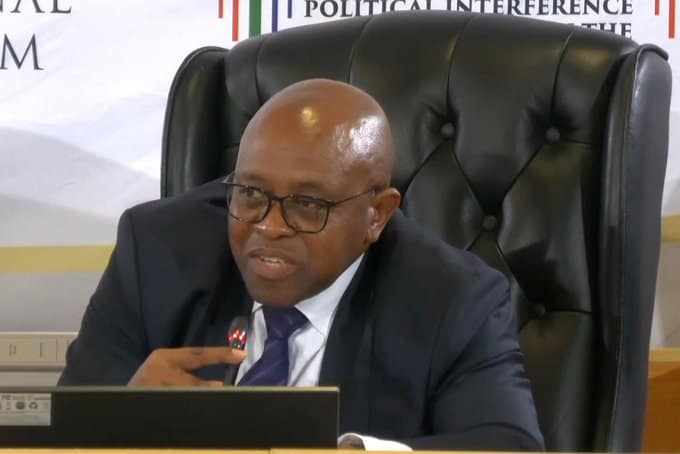
However, Justice Madlanga was not persuaded. In a ruling that was read out at the commission’s headquarters in Parktown, the chair emphasized that the entire mandate of the inquiry rests on public confidence—a confidence that would be irrevocably damaged if key witnesses were allowed to testify in the shadows.
“While the commission is deeply sympathetic to any individual who feels their safety is compromised, the administration of justice and the pursuit of the truth cannot be relegated to secret chambers without the most compelling of reasons,” the ruling stated.
Justice Madlanga noted that Carrim had not provided sufficient particularity regarding the threats to justify such an extraordinary deviation from the norm. The commission acknowledged that Carrim is entitled to police protection and that measures can be put in place to secure the premises, but it drew a hard line at closing the proceedings to the public and the media.
“This is a public inquiry, funded by public money, investigating matters of intense public interest. To shut the doors now would be to defeat the very purpose of our establishment,” the ruling added.
What Carrim is Expected to Reveal
The businessman is expected to be a star witness regarding the financial dealings within the North West Department of Health. Sources close to the inquiry suggest Carrim is poised to testify about irregular tender processes, payments for services not rendered, and the alleged influence peddling by powerful political figures in the province.
His testimony is seen as crucial to corroborating evidence already heard regarding the conduct of former MEC Masike, who has faced allegations of steering tenders to preferred service providers. The commission is also investigating the collapse of healthcare services in the province, which led to national government intervention.
Implications of the Ruling
The decision has been met with mixed reactions. Civil society organizations, including Corruption Watch and the Council for the Advancement of the South African Constitution (CASAC) , have welcomed the ruling, arguing that secret testimony would have set a dangerous precedent.
“Transparency is the disinfectant that cleanses corruption,” a legal analyst commented. “If every witness who felt nervous could hide in a closed session, the commission might as well be meeting in a soundproof bunker. The public has a right to see who said what about whom.”
Conversely, some legal minds have raised concerns about witness protection. They argue that while transparency is vital, the commission must ensure that Carrim is not left exposed. The burden will now fall on the South African Police Service (SAPS) to provide adequate security for Carrim before, during, and after his appearance.
The Road Ahead
With his bid for secrecy denied, Suleiman Carrim is now expected to be scheduled to appear before the commission in the coming weeks. All eyes will be on the North West delegation and the political heavyweights implicated in the testimony.
As the commission continues its work, the message from the chair is clear: in the pursuit of accountability, there will be no hiding place. For Carrim, the moment of truth is approaching, and it will be witnessed by the entire nation.
About The Author