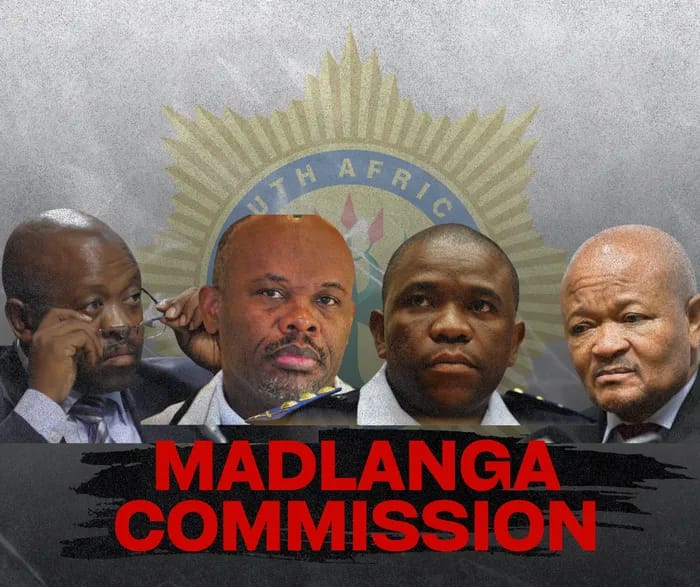
In a highly unusual and secretive session, the Madlanga Commission resumed its hearings on Monday with testimony from three undisclosed detectives, marking a critical and clandestine phase in its investigation into criminal cartels and alleged political interference within the South African Police Service (SAPS).
The proceedings are being conducted in camera, with Witnesses A, B, and C testifying from a remote location. While their faces are hidden from view, their voices are being broadcast live to the public, a compromise that underscores the sensitive nature of their evidence. These witnesses, active or former detectives, are expected to provide a rare, ground-level account of their direct experiences investigating crimes linked to the powerful syndicates at the heart of the commission’s mandate, as well as the alleged obstruction and interference they faced.
Commission spokesperson Jeremy Michaels confirmed that this arrangement would continue until Wednesday. While the public and media are permitted in the auditorium at the Brigitte Mabandla Justice College, the core testimony is shielded. Michaels assured that exhibits would be displayed on screen and that a full transcript of the testimony would be made public after the witnesses had concluded their evidence.
This move to secrecy follows last week’s abrupt adjournment of public proceedings. Justice Mbuyiseli Madlanga had confirmed that the commission would temporarily retreat behind closed doors to hear evidence so sensitive that its public disclosure could, in the words of chief evidence leader Advocate Matthew Chaskalson SC, “compromise police investigations that are already at an advanced stage.”
Chaskalson clarified that the confidentiality was not to protect the witnesses’ identities, but to safeguard the integrity of active police operations that run parallel to the commission’s work. “Public disclosure at this stage could compromise police investigations,” he stated, adding, “We hope that, well before the commission concludes, these investigations will reach a stage where this evidence can be shared publicly.”
The decision, while contentious, was ultimately accepted by media houses, including Independent Newspapers, which withdrew an initial plan to challenge the ruling after consultations with the commission. Chaskalson emphasized the strategic necessity of the move, noting, “It makes thematic sense to hear this evidence now – even if secrecy is temporarily necessary,” to maintain the narrative coherence of the final report.
Justice Madlanga had hinted at the gravity of this phase last Thursday, telling attendees, “This is the first time those implicated will hear this information,” before adjourning the session. The secret testimony signals that the commission is now delving into the operational heart of the alleged corruption, with detectives prepared to name names and detail the mechanics of how cartel investigations were allegedly sabotaged from within.
About The Author