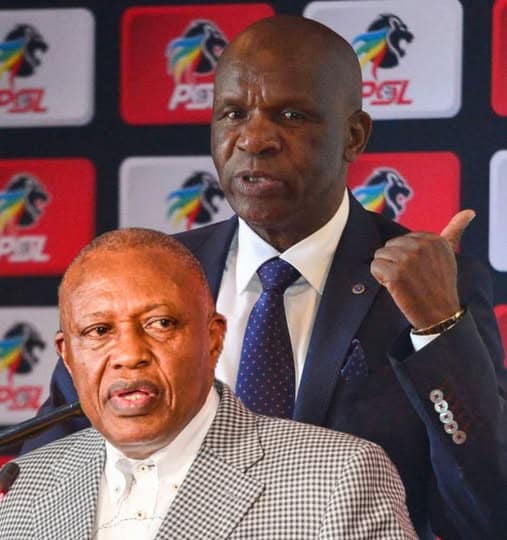
The simmering tensions between South Africa’s football clubs and its governing body have erupted into open warfare, with Black Leopards FC chairman and founder, David Thidiela, vowing to take his grievances straight to the world’s highest football authority, FIFA. In a dramatic ultimatum that has sent shockwaves through the local sporting community, Thidiela has called on Sports Minister Gayton McKenzie and the Confederation of African Football (CAF) for immediate intervention, failing which he will trigger a global investigation into the Premier Soccer League’s (PSL) governance.
The fiery Limpopo-based club owner’s threat represents the most significant escalation in years of ongoing disputes between several club owners and the PSL executive, alleging a pattern of autocratic rule, a lack of transparency, and decisions that consistently favour a select few powerful clubs at the expense of the wider league.
A Litany of Grievances: Beyond the Boardroom
Thidiela’s grievances, shared by a silent chorus of other club bosses, are not abstract. They centre on several key, contentious issues:
- Financial Imbalance and Broadcasting Revenue: A perennial point of contention is the perceived inequitable distribution of the league’s massive broadcasting revenue. Thidiela and others argue that the current model disproportionately benefits the so-called “Big Three” (Kaizer Chiefs, Orlando Pirates, and Mamelodi Sundowns), leaving smaller clubs like Black Leopards in a perpetual state of financial precariousness, even when they were in the top flight.
- Disciplinary Inconsistencies: Thidiela has pointed to what he calls “selective justice” in the PSL’s disciplinary committee, citing instances where similar infractions by different clubs have resulted in wildly varying punishments. He alleges that influential clubs often receive more lenient treatment, creating an unlevel playing field.
- Voting Rights and Democratic Deficit: At the heart of the conflict is the very structure of the PSL’s decision-making. Critics claim that a small, powerful bloc of clubs holds a de facto veto over major decisions, marginalizing the voices of the majority and making genuine reform impossible. Thidiela has framed this as a fundamental issue of democracy within the league.
The Three-Tiered Ultimatum
Frustrated by what he describes as hitting a “brick wall” within local channels, Thidiela has laid out a clear, three-pronged strategy for escalation:
- First Port of Call: The Ministry of Sport. He has publicly called on the newly appointed Sports Minister, Gayton McKenzie, to use his office to mediate and address the “systemic abuse of power.” This places direct political pressure on the PSL, an entity that has traditionally operated with significant autonomy.
- Continental Appeal: Confederation of African Football (CAF). Should the ministry fail to act, the next step is an appeal to CAF, the continent’s governing body. This would internationalize the dispute and potentially lead to sanctions or a directive for the PSL to reform its statutes.
- The Nuclear Option: FIFA. The final and most drastic step is a formal complaint to FIFA. World football’s governing body takes a dim view of third-party interference, but it also has strict statutes requiring member associations (like SAFA, which oversees the PSL) to manage their affairs with transparency and democracy. A FIFA investigation could, in an extreme scenario, lead to the suspension of South African football from all international competitions, a risk that makes Thidiela’s threat so potent.
A High-Stakes Gambit
The PSL has yet to issue an official response, but the threat has put the entire South African football ecosystem on high alert. For Sports Minister Gayton McKenzie, this is an early test of his administration’s willingness to wade into the complex and often murky waters of football politics.
Thidiela’s move is a high-stakes gambit. While it champions the cause of smaller clubs, it risks destabilizing the entire league. However, it has successfully shone a glaring spotlight on the internal power dynamics of South African football, forcing a conversation that many in power would prefer to keep behind closed boardroom doors. The world of South African football now holds its breath, waiting to see if its leaders will reform from within, or if a club from Limpopo will be the catalyst for a revolution mandated from Zurich.
About The Author