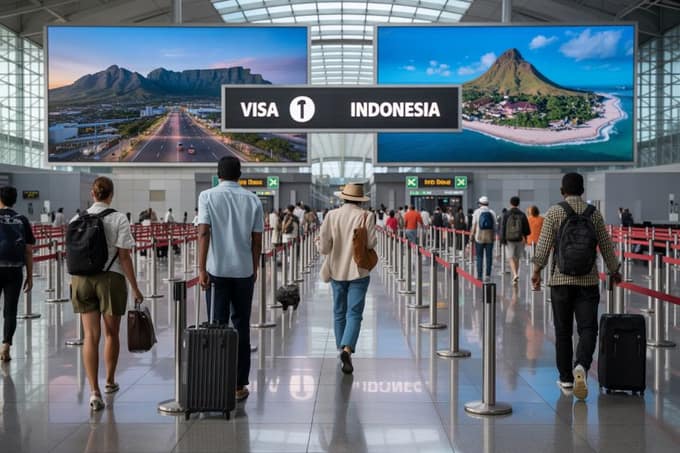
In a significant move set to strengthen bilateral relations and unlock new opportunities for travelers and businesses alike, the governments of Indonesia and South Africa have officially implemented a mutual visa-free entry agreement. The landmark policy, which came into force this week, allows ordinary passport holders from South Africa to enter Indonesia for tourism, family visits, and certain business activities without a prior visa, for stays of up to 30 days.
Beyond the Beaches: Unlocking a Gateway of Opportunities
While the immediate image conjured is of South Africans vacationing on Bali’s famed shores or exploring the cultural riches of Yogyakarta, officials from both countries emphasize the agreement’s broader strategic importance.
“This is more than just a tourism facilitator; it is a bridge connecting two dynamic economies and cultures,” stated Indonesia’s Director General of Immigration. “We are removing barriers to person-to-person contact, which is the foundation of stronger trade, investment, and mutual understanding.”
For South Africans, the change eliminates the previous process of applying and paying for a visa-on-arrival or an e-visa, streamlining travel to the vast Indonesian archipelago. The Indonesian Ministry of Tourism and Creative Economy projects a substantial increase in visitor numbers, aiming to diversify its tourism markets beyond traditional sources.
A Two-Way Street: Bolstering Economic and Diplomatic Ties
The agreement is reciprocal, granting Indonesian citizens identical visa-free access to South Africa. This reciprocity is seen as a key driver for enhancing two-way trade and sectoral collaboration.
“South Africa views Indonesia as a pivotal partner within the ASEAN region,” commented a South African Department of International Relations and Cooperation spokesperson. “We anticipate increased business delegations, knowledge exchange in sectors like maritime, agriculture, and creative industries, and a boost in tourism from Southeast Asia to our shores.”
Industry analysts highlight several areas poised for growth:
- Tourism & Hospitality: Direct flight connectivity is expected to be reviewed and potentially expanded to meet rising demand.
- Trade: Easier business travel could accelerate partnerships in commodities, manufacturing, and the digital economy.
- Education & Culture: Simplified travel fosters greater academic exchange and cultural diplomacy initiatives.
Travel Industry Responds with Enthusiasm
The announcement has been met with enthusiasm by the travel sector. South African tour operators are swiftly curating new packages that go beyond Bali, promoting destinations like the volcanoes of Lombok, the diving havens of Raja Ampat, and the rainforests of Sumatra.
“This is a game-changer,” said a Johannesburg-based travel agency manager. “Indonesia is now a much more accessible and attractive option for our clients, competing directly with other long-haul destinations. We’re already seeing a spike in inquiries.”
A Note for Travelers
Authorities remind travelers that the 30-day visa-free stay is non-extendable and intended for the purposes stated. Visitors must still comply with all other entry requirements, including holding a passport valid for at least six months and proof of onward or return travel. For longer stays or other purposes, appropriate visas will still be required.
This bilateral agreement marks a decisive step in deepening Indonesia-South Africa relations, reflecting a shared commitment to open doors—literally and figuratively—for their citizens in the post-pandemic era of global mobility.
About The Author