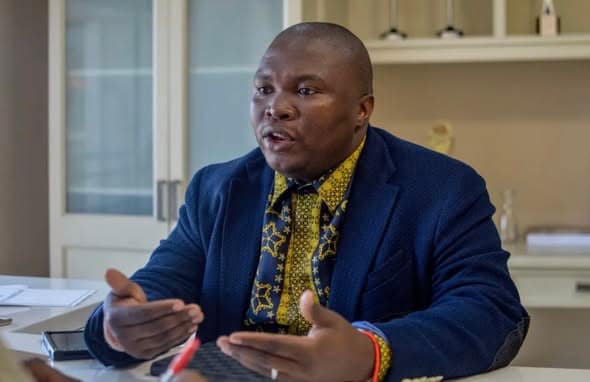
DURBAN – The heated legal war of words between KwaZulu-Natal police commissioner Lieutenant-General Nhlanhla Mkhwanazi and prominent security company owner Calvin Mojalefa Mathibeli has taken a new turn. Mathibeli has launched an appeal against a recent Durban High Court decision that barred him from making further defamatory remarks about the province’s top policeman and ordered him to retract a slew of explosive allegations.
The appeal, filed on Saturday afternoon, directly challenges the Friday ruling by Judge Sanele Hlatshwayo, which granted Mkhwanazi an urgent interdict and delivered a stinging legal rebuke to Mathibeli. The court had found that Mathibeli’s allegations—which included claims that Mkhwanazi was corrupt, involved in unlawful killings, and had orchestrated a plot to have him assassinated—were not only defamatory but also lacked any factual foundation.
Judge Hlatshwayo’s order was comprehensive and forceful. It compelled Mathibeli to “remove, delete, and retract all defamatory publications concerning the applicant from all social media platforms, websites, and digital media within 24 hours”. Furthermore, the businessman was ordered to issue public retractions on the same platforms where the original statements were made, including the television interview on Newzroom Afrika that had first brought the feud into the national spotlight.
Mathibeli, the chairman of the Calvin and Family Group, had remained defiant in the immediate aftermath of the ruling. When first contacted for comment, he stated he was still consulting his legal team. However, that consultation swiftly resulted in a notice of appeal, signaling his determination to continue the fight.
The origins of the dispute trace back to a series of social media posts and a television interview in which Mathibeli launched a blistering attack on the general. Among his most serious allegations were that Mkhwanazi was an “ice boy” for taxi operators and private security owners, that he ordered unlawful killings, and that police operations under his command would first “secure space in mortuaries” before going into the field . In a particularly visceral post, Mathibeli claimed he was aware of “plans being orchestrated by police to have me killed under the guise of a shootout”.
These comments were the culmination of a bitter history between the two men, marked by police raids on Mathibeli’s home and business premises in December and February. Mathibeli claimed these operations, involving K9 units and the Political Killings Task Team, were acts of intimidation executed with fraudulent warrants, during which his staff was assaulted and his family harassed.
Mkhwanazi, approaching the court in his personal capacity, argued that the statements went far beyond legitimate criticism of a public official. Represented by senior counsel Advocate Muzi Sikhakhane SC, he contended that the accusations portrayed him as a “criminal and corrupt public official who abuses police power,” causing ongoing and irreparable harm to his dignity and reputation. “There is no suggestion that if Mathibeli is called before any other legal process, he is gagged from speaking,” Sikhakhane argued during the initial hearing on February 24, emphasizing that the interdict was narrowly tailored to stop the spread of falsehoods, not to silence Mathibeli in legitimate forums like the ongoing Madlanga Commission.
Mathibeli’s defense, led by Advocate Nigel Riley, hinged on the right to freedom of expression. He argued that the interdict was a strategic move to gag him, particularly in the context of the Madlanga Commission of Inquiry into police corruption. In his court papers, Mathibeli maintained that his statements were “substantially true” and published in the public interest, representing his “honest opinion, based on facts”.
However, Judge Hlatshwayo found this defense unsustainable. In a scathing judgment, he noted that Mathibeli had failed to provide any evidence or reliable information to back up the grave accusations. “I find that the respondent’s defences that the statements are true and published in the public interest or that somehow he acted as a whistle-blower are unsustainable,” the judge concluded. The court emphasized that while public officials are open to scrutiny, unverified allegations of criminal conduct fall outside the protection of free speech, especially when weighed against the constitutional right to dignity enshrined in Section 10 of the Constitution.
The court’s order went beyond a simple gag. It stipulated that Mkhwanazi must institute an action for damages against Mathibeli within 60 days, failing which the interdict will lapse. Mathibeli was also ordered to pay the legal costs of the urgent application, including the costs of two counsel.
This is not Mathibeli’s first high-profile defamation battle. In December 2018, the Durban High Court interdicted him from making defamatory statements against former eThekwini mayor Zandile Gumede, following his claims that she was involved in tender irregularities.
Following the latest ruling and subsequent appeal, police had previously signaled their intent to scrutinize Mathibeli’s business interests. In a statement released after the initial allegations, police spokesperson Colonel Robert Netshiunda said Mathibeli’s “utterances were simply an invitation to police in KwaZulu-Natal to start looking into his business dealings,” noting that he was a beneficiary of a health department tender in Gauteng.
As the legal battle now moves to the appeal court, the core tension between protecting reputation and upholding free speech remains at the forefront of a dispute that has gripped the province, pitting one of its most senior law enforcement officers against a wealthy and combative businessman.
About The Author