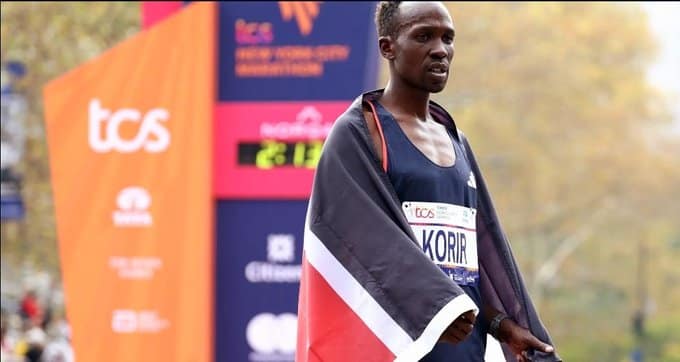
The world of distance running was dealt another seismic blow today as Kenyan marathon star Albert Korir, the reigning champion of the 2021 New York City Marathon, was officially handed a provisional suspension for an anti-doping rule violation. The announcement, confirmed by the Athletics Integrity Unit (AIU), sends shockwaves through the sport and casts a long, familiar shadow over Kenya’s storied legacy as the epicenter of elite marathon running.
Korir, 30, whose surprise victory in New York two years ago was celebrated as a triumph of gritty, tactical racing, returned an adverse analytical finding from a recent out-of-competition test. The specific banned substance has not yet been disclosed by authorities, pending the conclusion of the process. Under World Athletics rules, a provisional suspension is mandatory following such an adverse finding, effectively barring the athlete from competition until the case is resolved through a hearing before the Disciplinary Tribunal.
From Humble Beginnings to the Pinnacle of New York
Korir’s journey to the top of the podium in Central Park was a classic Kenyan narrative of ascension through sheer mileage and determination. Hailing from the running-rich region of Marakwet, he transitioned from a solid, if not spectacular, road runner to a marathon champion with his breakthrough in New York. His win there, characterized by a powerful late-race surge that broke a formidable field, was seen as the arrival of a new, durable force in the event. This suspension now threatens to irrevocably redefine that career-defining moment and all his subsequent results.
A Devastating Blow to a Nation’s Pride and Trust
The news constitutes more than a personal catastrophe for Korir; it is a profound setback for Kenyan athletics at a critical time. The country’s running reputation has been under intense scrutiny for over a decade, grappling with a persistent stream of doping cases that have tarnished its global image and led to Kenya being categorized by World Athletics as a “Category A” federation, subject to the highest level of anti-doping scrutiny.
“This is a devastating punch to the gut for every clean Kenyan athlete,” lamented former Olympic champion Kipchoge Keino, a longstanding advocate for clean sport in the country. “Each time a champion falls like this, it unfairly stains the thousands who train honestly, who sacrifice everything with integrity. It erodes the public’s faith and diminishes the value of true victory.”
The impact is both reputational and economic. Kenyan athletes are among the most sought-after in the lucrative global marathon circuit. Cases like Korir’s provide ammunition to skeptics and complicate the sponsorship landscape, potentially affecting the earning potential of all athletes from the nation. Furthermore, it places increased pressure on Athletics Kenya and the national anti-doping agency to demonstrate the effectiveness of their often-criticized enforcement and education programs.
The Road Ahead: Legal Process and Lasting Scars
Korir now faces a lengthy legal and disciplinary process. His team is expected to request analysis of his B-sample. If the finding is upheld, he will face a standard four-year ban, which could effectively end his career at the elite level. Even if he were to return, the stigma would be indelible.
For the wider sport, this is yet another stark reminder of the insidious doping threat that continues to plague long-distance running. It raises familiar, agonizing questions about the pressures on athletes from powerhouse nations, the effectiveness of the biological passport program, and the constant cat-and-mouse game between dopers and testers.
As the investigation unfolds, the 2021 New York City Marathon victory stands under a dark cloud. What was once a celebration of Albert Korir’s peak performance is now a subject of doubt and a painful footnote in Kenya’s ongoing, fraught battle to preserve the integrity of its greatest sporting export. The provisional suspension is not an endpoint, but the beginning of a long and damaging ordeal for the athlete, his nation, and the sport itself.
About The Author