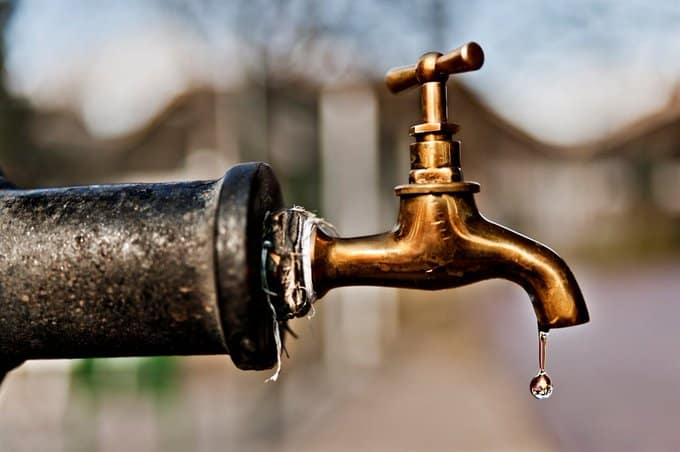
Johannesburg – Gauteng, South Africa’s economic engine, is now racing against a formidable foe: its own unsustainable thirst. The province’s daily water demand has surged past a critical threshold, with the City of Johannesburg identified as the primary driver behind a consumption spike exceeding 1,700 megalitres per day. This alarming surge is pushing the region’s intricate and ageing supply systems to their breaking point, triggering urgent calls for immediate, stringent water restrictions to avert a systemic collapse.
The numbers paint a dire portrait. According to the Department of Water and Sanitation (DWS), total provincial demand has ballooned to approximately 4,563 megalitres daily. This figure dangerously approaches, and in some zones surpasses, the maximum sustainable supply capacity of Rand Water, the bulk water supplier responsible for quenching the thirst of Gauteng’s 16 million residents.
“We are not merely tapping the glass; we are striking it with a hammer,” warned Dr. Anika Visser, a senior water resources analyst at the Water Research Commission. “The 1,700 megalitre mark from Johannesburg alone isn’t just a statistic—it’s a warning siren. It represents a profound mismatch between consumption patterns and the reality of our water infrastructure’s capacity and the natural yield of our catchment areas.”
The Perfect Storm: Demand, Decay, and Dwindling Margins
Experts point to a confluence of factors fueling this crisis. Johannesburg, a sprawling metropolis of contrasts, is at the epicenter of what officials describe as a “perfect storm”:
- Unchecked Urban Consumption: A post-pandemic rebound in economic activity, coupled with a rapidly growing population and high-density urban developments, has driven demand upward. However, water-saving culture has not kept pace. “There remains a pervasive belief that water is an infinite resource in Gauteng,” said City of Johannesburg Water spokesperson, Mandla Ndlovu. “High-use activities, from excessive garden irrigation to non-compliance with existing restrictions, are rampant in both affluent and underserved areas, albeit for different reasons.”
- The Bleeding Network: Perhaps the most critical aggravator is the state of Johannesburg’s water distribution network. Decades of underinvestment and deferred maintenance have resulted in a system haemorrhaging precious water. Estimates suggest that non-revenue water—lost through leaks, burst pipes, and illegal connections—could be as high as 40% in some Johannesburg systems. This means nearly half the treated, pumped water never reaches a billed meter. “We are fighting a war on two fronts,” a senior Rand Water engineer commented on condition of anonymity. “We are trying to meet rising demand while simultaneously watching a large portion of our product literally disappear into the ground. It’s an unsustainable equation.”
- Systemic Strain on Rand Water: Rand Water’s purification and pumping systems are operating at near-maximum capacity for prolonged periods. This leaves almost no buffer for emergency repairs or unexpected spikes in demand. The utility has repeatedly issued alerts about low reservoir levels in municipalities like Johannesburg, Tshwane, and Ekurhuleni, implementing stages of “water throttling” to try and stabilize the network.
Official Alarm and the Call for Drastic Action
The DWS has moved beyond cautionary statements to a stark alert. “The current demand is testing the absolute limits of the integrated Vaal River System,” read a recent department communiqué. “Without immediate and substantial reductions in consumption, we risk moving from managed restrictions to unpredictable, prolonged outages that could affect millions.”
The department, alongside Rand Water and the affected metros, is now advocating for the implementation of Stage 2 water restrictions across Gauteng. These would formally enforce:
- A total ban on the use of hosepipes and irrigation systems for gardens, lawns, and sports fields.
- A prohibition on washing vehicles with municipal water.
- Strict limits on the filling of swimming pools.
- Increased pressure management and scheduled supply interruptions in areas of highest usage and loss.
A Looming “Day Zero” Scenario?
While officials avoid the term “Day Zero”—associated with Cape Town’s 2018 crisis—they acknowledge the parallels. The concern is not that dams will run completely dry, but that the distribution system could become so unstable that reliable, daily supply becomes impossible in large sections of the city.
“The crisis may not start with empty dams, but with empty neighbourhood reservoirs,” explains Dr. Visser. “If demand continues to outstrip supply and system integrity, we will see a rotational crisis where high-lying areas or those at the end of the network go without water for days at a time. Johannesburg’s socio-economic fabric makes this a particularly frightening prospect.”
The City of Johannesburg has pledged to ramp up its interventions, including accelerated leak-repair programmes and the installation of smart water meters in high-consumption areas. However, these are medium-term solutions. The immediate burden, authorities stress, falls on every resident and business.
As Gauteng holds its breath, the message is unequivocal: the record-breaking consumption figures are not a sign of prosperity, but a countdown to a shared crisis. The next few weeks of public response to conservation pleas will determine whether the region faces a managed challenge or a full-blown humanitarian and economic emergency. The tap, for now, is still flowing. But the warning is clear: how the city uses it today will dictate what—if anything—comes out of it tomorrow.
About The Author