The water of the Vaal Dam is opaque even on the clearest days, a murky green that conceals whatever secrets sink beneath its surface. On the afternoon of February 17, 2018, it surrendered one of them: the body of Emmanuel Mbense, a 34-year-old businessman from Vanderbijlpark, his clothing tangled in submerged branches near the shoreline at Loch Vaal.
The initial police report, filed by the duty officer at the Vanderbijlpark SAPS, was brief and clinical. “Body of adult male recovered from dam. No visible signs of foul play. Inquest docket opened pending post-mortem results.” The language was the standard vocabulary of death investigation, the bureaucratic phrases that transform human tragedy into administrative process.
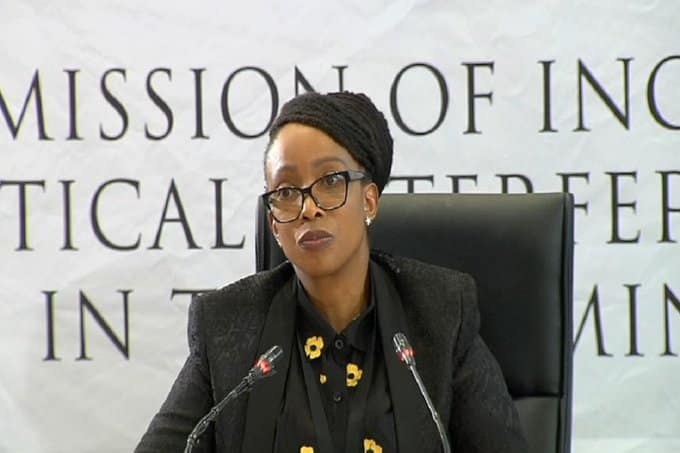
But Nomsa Masuku, the senior IPID investigator who would eventually review the case file nearly three years later, saw immediately that the initial classification was wrong. It was not merely wrong. It was, she testified before the Madlanga Commission, deliberately, inexcusably, and inexplicably wrong.
“There were clear indicators of foul play documented in the very first statements,” Masuku said, her voice steady but her hands gripping the edge of the witness box with visible tension. “The deceased’s brother reported that Emmanuel had received multiple death threats in the weeks before his disappearance. The post-mortem revealed defensive wounds on the forearms and hands. There was bruising inconsistent with drowning. There was—” She paused, consulting her notes even though she had committed every detail to memory years ago. “There was a laceration to the back of the skull consistent with blunt force trauma administered before submersion.”
She looked up, meeting the gaze of Justice Sisi Madlanga. “This was not an inquest. This was a murder investigation that was misclassified at inception, mismanaged throughout, and ultimately abandoned until IPID compelled its reopening.”
The commission room absorbed her testimony in the particular silence that descends when long-suppressed truth finally encounters official acknowledgment. In the public gallery, a woman in a black dress—Emmanuel Mbense’s mother, who had waited eight years for this moment—pressed a handkerchief against her mouth and wept without sound.
The Man Who Drowned on Dry Land
Emmanuel Mbense was not the kind of man who should have ended up in a dam. He was a cautious man, his family testified, a meticulous planner who had built a respectable logistics business from a single delivery van into a fleet of eight trucks. He was a husband and father of three young children, a deacon at the Zion Christian Church congregation in Sebokeng, a man who paid his taxes and voted in every election and believed, with the quiet faith of his generation, that post-apartheid South Africa offered opportunity to those willing to work for it.
His business success had not gone unnoticed. In the competitive world of township logistics, where contracts are won through relationships as much as pricing, Mbense had secured several lucrative agreements with the Gauteng Department of Education for the delivery of textbooks and learning materials. His competitors, according to statements collected by IPID but never acted upon by the initial investigators, had made their displeasure known.
“He told me someone had threatened to put him in the water,” his widow, Lerato Mbense, testified during the inquest proceedings that should never have been inquest proceedings. “I asked him what that meant. He said he didn’t know, but his face told me he knew exactly. He was afraid. My husband was not a man who frightened easily. But in those last weeks, he was afraid.”
On the evening of February 16, 2018, Mbense left his office in Vanderbijlpark at approximately 7:30 PM. He told his wife he had a meeting with a potential client and would be home by 10:00. He did not specify the client’s identity or the meeting location. His cellphone signal was last recorded at 8:47 PM, approximately three kilometers from the Loch Vaal waterfront. He did not return home that night, or ever.
His vehicle, a white Toyota Hilux, was discovered the following morning in the parking area adjacent to the Loch Vaal yacht club. The keys were in the ignition. His wallet, containing R1,200 in cash and multiple credit cards, was in the glove compartment. His cellphone was never recovered.
The Investigation That Wasn’t
The Vanderbijlpark SAPS assigned the case to Constable Johannes Theron, a junior officer with eighteen months of experience and no specialized training in death investigation. His supervisor, who approved the classification of the case as an inquest rather than a murder docket, was Sergeant Mpho Dlamini, a fifteen-year veteran of the service with a previously unblemished record.
The distinction between inquest and murder investigation is not merely semantic. An inquest is an inquiry into the circumstances of a death where no criminal conduct is suspected. It is conducted by a magistrate, not a prosecutor. The evidentiary standard is lower. The investigative resources allocated are minimal. The case file, once the inquest is concluded, is archived and largely inaccessible.
A murder investigation, by contrast, is a criminal prosecution from inception. It is conducted by the South African Police Service under the oversight of the National Prosecuting Authority. It triggers specific forensic protocols, dedicated investigative resources, and formal accountability mechanisms. It presumes, from the first moment, that a crime has been committed and that someone is responsible.
“I cannot explain why Sergeant Dlamini approved the inquest classification,” Masuku testified. “I can only state what the evidence shows. The post-mortem report, which was completed eight days after the body was recovered, documented injuries that were unequivocally inconsistent with accidental drowning. The pathologist noted blunt force trauma to the skull, defensive wounds on both forearms, and bruising around the neck consistent with manual strangulation. This information was available to the investigating officer. It was included in the case file. It did not result in the reclassification of the docket.”
Dlamini, who was called to testify before the commission later in the proceedings, denied any misconduct. He stated that he had relied on the initial assessment of the scene by the attending officers, who had reported no evidence of foul play. He acknowledged that the post-mortem findings should have prompted a re-evaluation but claimed that he was on extended sick leave during the relevant period and that the file was handled by an acting supervisor whose identity he could not recall.
“I made a mistake,” Dlamini said, his voice carefully modulated. “I have reflected on this matter for many years. I accept that I should have done more. But I did not deliberately obstruct justice. I did not participate in any cover-up. I was overworked, under pressure, and I made an error of judgment.”
Masuku, when invited to respond to Dlamini’s testimony, was measured but unmistakable. “An error of judgment is failing to properly complete a routine administrative form. An error of judgment is misplacing a witness statement or forgetting to schedule a follow-up interview. An error of judgment is not ignoring a forensic report that documents multiple injuries consistent with homicide. That is not an error. That is a choice.”
The Family’s Vigil
While the official investigation stalled in the bureaucratic limbo of the inquest process, Emmanuel Mbense’s family pursued their own inquiries. They distributed flyers. They contacted community media. They hired a private investigator, a retired police colonel named Andries Nel, who had worked in the Vanderbijlpark detective branch for twenty-three years.
Nel’s findings, which he submitted to IPID in 2019 and which formed the basis of Masuku’s eventual intervention, were devastating in their specificity. He identified three individuals—all associated with competing logistics companies—who had made threats against Mbense in the months before his death. He documented the inconsistent statements provided by these individuals to the initial investigators. He traced cellphone records that placed one of the individuals in the vicinity of Loch Vaal on the night of Mbense’s disappearance. He compiled a dossier of evidentiary leads that had been either ignored or superficially addressed.
“I have investigated many homicides,” Nel testified. “I have seen cases where evidence is missed due to inexperience or resource constraints. I have seen cases where leads are not pursued because the investigating officer is overburdened or undertrained. I have never seen a case where so much evidence was available and so little of it was acted upon. It was not incompetence. It was something else.”
Nel paused, choosing his next words with evident care. “I do not know what that something else was. I do not know whether Sergeant Dlamini was acting on instructions from higher authority. I do not know whether the initial attending officers deliberately misrepresented the scene. I do not know who benefited from the failure to investigate Emmanuel Mbense’s murder. I only know that the failure occurred, and that it was not accidental.”
The IPID Intervention
Masuku’s involvement in the Mbense case began in March 2021, when IPID received a formal complaint from the family’s legal representatives. The complaint alleged not merely investigative negligence but active obstruction: witness statements that had been altered before filing, physical evidence that had been “lost” before forensic examination, and unexplained delays in the inquest proceedings that had prevented the matter from being referred to the Director of Public Prosecutions.
“I reviewed the complete case file over a period of three weeks,” Masuku testified. “What I found was a pattern of irregularities that extended far beyond the initial classification decision. Witness contact details had been recorded incorrectly, preventing follow-up interviews. Forensic submissions had been delayed until biological evidence had degraded. The inquest magistrate had been provided with an incomplete evidentiary record that omitted the post-mortem findings regarding blunt force trauma.”
Masuku’s investigation, which remains ongoing, has encountered its own obstacles. Key witnesses have become unavailable. Physical evidence has been irretrievably compromised. The three individuals identified by Nel as potential suspects have all, through their legal representatives, declined to provide statements.
“We are pursuing this case with the resources available to us,” Masuku said. “But we are pursuing it eight years after the events in question. Witness memories have faded. Documentary records have been lost. The forensic window has closed. We are attempting to reconstruct a murder investigation that should have been conducted in 2018, using 2026 methodologies and 2026 resources. It is not impossible. But it is significantly more difficult than it should have been.”
The Inquest That Wasn’t Enough
The inquest into Emmanuel Mbense’s death was finally concluded in December 2023, nearly six years after his body was recovered from the Vaal Dam. The magistrate, after reviewing the incomplete evidentiary record presented by the police, returned an open finding: the cause of death was drowning, but the circumstances surrounding the drowning could not be determined with sufficient certainty to warrant referral for prosecution.
“The inquest process is not designed to adjudicate criminal responsibility,” the magistrate noted in his written finding. “It is designed to establish, to the extent possible, the facts surrounding a death. In this case, the available evidence is insufficient to determine whether the deceased entered the water voluntarily, was forced into the water, or was already deceased when placed in the water. The matter is therefore left open.”
The family received the finding with the particular anguish of those who have spent years seeking justice and received only procedural resolution. Lerato Mbense, who had attended every day of the inquest proceedings, who had listened to the testimony of pathologists and scene investigators and police officers, who had examined photographs of her husband’s body recovered from the cold water of the dam—she received the magistrate’s open finding in silence, then walked from the courthouse and did not speak for three days.
“They took his life,” she said, when she finally broke her silence. “Then they took the truth about his life. Then they took the justice that should have followed. I do not know what else they can take from me. I have nothing left.”
The Commission’s Inquiry
The Madlanga Commission, established in 2024 to investigate allegations of systemic corruption and misconduct within the South African Police Service, identified the Mbense case as emblematic of the broader failures it was mandated to address. The case contained all the elements that had come to define the commission’s work: a suspicious death, an inadequate initial investigation, unexplained evidentiary gaps, and persistent family advocacy that had been met with institutional indifference.
Masuku’s testimony, delivered over two days, provided the commission with its most detailed examination of how a murder investigation can be derailed at inception. She walked the commissioners through the case file, document by document, exposing the accumulating failures that had transformed a prosecutable homicide into an archival relic.
“This case should have been prosecuted in 2018,” Masuku said. “The evidence was there. The leads were there. The suspects were identifiable. But because the initial classification was wrong, because the investigative response was inadequate, because the accountability mechanisms failed to correct the course when correction was still possible—because of all these failures, a killer has remained free for eight years, and a family has remained without justice.”
She paused, composing herself with visible effort. “I have been an investigator for twenty-two years. I have worked on cases involving police shootings, deaths in custody, torture allegations, and systemic corruption. I have seen the worst that human beings are capable of inflicting on one another. And I have learned, through bitter experience, that the initial response to a death is often the most important determinant of whether justice will ultimately be done. If we fail at that moment, we rarely recover.”
The Unanswered Questions
Masuku’s testimony concluded, as such testimonies often do, with more questions than answers. Who gave the instruction to classify Mbense’s death as an inquest rather than a murder investigation? Why were the pathologist’s findings of blunt force trauma and defensive wounds not communicated effectively to the decision-makers? What happened to the cellphone records that Nel identified but the police never obtained? Where is the physical evidence that was collected from the scene and subsequently “lost”? Who benefits from the continued inability of the criminal justice system to resolve this matter?
The commission has indicated that it will pursue these questions through additional witnesses and documentary subpoenas. Sergeant Dlamini has been recalled for further testimony. The original attending officers at the Loch Vaal scene have been identified and will be summoned. The three individuals identified by Nel as potential suspects have been notified that they may be called to testify under oath.
But the passage of time has taken its toll. Witnesses have died or relocated. Documents have been destroyed pursuant to retention schedules. Physical evidence has degraded beyond analytical utility. The commission can establish what happened to the investigation of Emmanuel Mbense’s death. It cannot, except in the most extraordinary circumstances, establish what happened to Emmanuel Mbense himself.
“We may never know who killed Emmanuel Mbense,” Masuku acknowledged, in response to questioning from Justice Madlanga. “We may never be able to present a prosecutable case against any individual. The evidentiary deficits created by the initial investigative failures may be irreparable. But we can establish why those failures occurred. We can identify the systemic weaknesses that allowed a murder investigation to be misclassified as an inquest. We can recommend reforms that will prevent similar failures in future cases.”
She paused. “That is not justice for Emmanuel Mbense. That is not justice for his widow, his children, his mother who has attended every day of these proceedings. But it is something. It is accountability for the system that failed them. It is acknowledgment that their loss mattered, that their struggle for truth was legitimate, that their voices were finally heard.”
The Mother’s Testimony
On the second day of Masuku’s testimony, the commission heard directly from the woman who had waited eight years to speak her son’s name in such a forum. Grace Mbense, 67 years old, a retired primary school teacher who had raised four children in the twilight of apartheid and the dawn of democracy, took the witness box with the erect posture of someone who has learned that dignity is the only armor against grief.
“I do not know why my son was killed,” she said, her voice steady, her gaze fixed on Justice Madlanga. “I do not know who killed him. I do not know why the police did not investigate his death properly. I have asked these questions every day for eight years. I have received no answers.”
She paused, drawing a breath that seemed to require physical effort. “I am not angry. I was angry, for many years. The anger consumed me. It kept me awake at night. It made me speak harshly to my grandchildren, who had already lost their father and did not deserve to lose their grandmother’s patience. I realized, eventually, that the anger was hurting me more than it was hurting the people who took my son from me.”
Her voice wavered for the first time. “So I let the anger go. I kept only the questions. I kept the memory of Emmanuel as a child, learning to ride his bicycle on the street outside our house, falling and scraping his knee and getting back on the bicycle because he was determined and stubborn and would not let anything defeat him. I kept the memory of him as a young man, graduating from university, the first person in our family to earn a degree. I kept the memory of him as a father, holding his first daughter in his arms, looking at her with such wonder, such tenderness.”
She looked directly at Justice Madlanga. “I do not expect this commission to bring my son back. I do not expect it to identify his killer or secure a conviction. I have learned, over eight years, not to expect anything from the institutions that failed him. But I expect this commission to tell the truth. I expect it to record, in its final report, that Emmanuel Mbense was murdered, that his murder was not properly investigated, and that the failures of investigation were not accidental. That is all I expect. That is all I have left to expect.”
The commission room was silent for a long moment after she finished speaking. Justice Madlanga removed her spectacles and polished them slowly, a gesture that those familiar with her judicial demeanor recognized as the external manifestation of internal emotion.
“Thank you, Mama Mbense,” she said quietly. “Your testimony has been received. Your son’s name will be recorded in the annals of this commission. His death will not be forgotten.”
The Architecture of Failure
Masuku’s testimony, considered in conjunction with the numerous other cases of investigative failure that the commission has examined, suggests a pattern that transcends individual incompetence or misconduct. It suggests an architecture of failure: systems designed to protect police officers from accountability rather than to ensure thorough investigation of their conduct; institutional cultures that prioritize administrative closure over substantive justice; resource allocation models that consistently underfund the investigative functions most critical to addressing serious crime.
“The Mbense case is not unique,” Masuku testified. “I have reviewed hundreds of case files that exhibit similar characteristics. Suspicious deaths classified as inquests despite clear evidence of homicide. Witness statements altered or selectively omitted. Forensic evidence misplaced or destroyed. Investigative leads unexplored or prematurely abandoned. Supervisory oversight that fails to detect or correct deficiencies. Accountability mechanisms that respond only to external pressure.”
She paused, choosing her next words with evident care. “I do not believe that every failure is the result of deliberate misconduct. Many of my colleagues in the SAPS are dedicated professionals who work tirelessly under difficult conditions. They are understaffed, under-resourced, and underappreciated. They inherit case files from predecessors who have been transferred or promoted, and they are expected to resolve matters that have been pending for years with no clear evidentiary trail.”
“But the Mbense case is not an example of resource constraints or workload pressures. The Mbense case is an example of something else. It is an example of a decision, made at the inception of the investigation, to treat a death as unsuspicious despite clear evidence to the contrary. That decision was not forced by circumstances. It was not compelled by external factors. It was a choice. And that choice had consequences that continue to reverberate eight years later.”
The Legacy of Silence
As Masuku concluded her testimony and stepped down from the witness box, she paused beside the public gallery where Grace Mbense sat, still erect, still composed, still waiting for answers that may never come. The investigator and the mother exchanged a look that required no words: the look of two women who have
About The Author