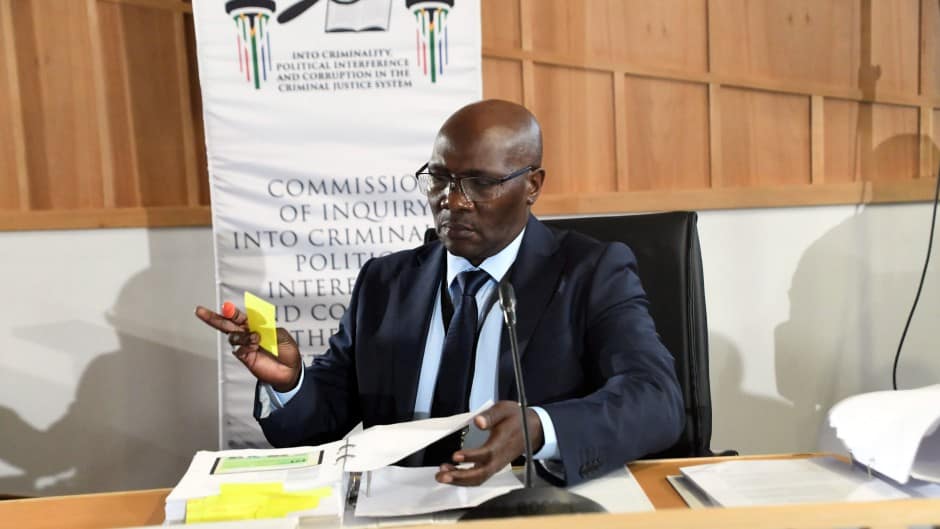
In an unexpected turn of events, the high-profile Madlanga Commission of Inquiry was forced to adjourn for the day after a key witness, Crime Intelligence head Lieutenant-General Dumisani Khumalo, was unable to testify due to a sudden illness. The postponement has temporarily halted what has been one of the commission’s most explosive lines of inquiry, leaving a packed hearing room in a state of suspended anticipation.
Khumalo, the fourth witness to appear before the commission, was in the midst of delivering crucial testimony that had begun to peel back the layers of a sophisticated criminal network with alleged ties to the highest echelons of law enforcement. His absence creates a significant pause in the proceedings, which are tasked with investigating allegations of criminality, corruption, and political interference within South Africa’s criminal justice system.
The interruption comes on the heels of a dramatic session on Tuesday, where Khumalo had begun to present a damning digital paper trail. He guided the commission, chaired by retired Constitutional Court Justice Mbuyiseli Madlanga, through a series of text messages that allegedly expose a corrupt relationship between businessman Brown Mogotsi—a known connection of Police Minister Senzo Mchunu—and Vusimuzi “Cat” Matlala, who is currently facing attempted murder charges.
These messages, extracted from Matlala’s phone, are said to reveal a disturbing synergy between alleged criminal activity and political influence. They reportedly detail financial transactions and strategic coordination, offering what investigators believe is concrete evidence of how a powerful syndicate has systematically worked to infiltrate and manipulate law enforcement agencies for its own protection and profit.
The commission’s work has now been put on hold, with proceedings set to resume only upon Khumalo’s recovery. The delay underscores the pivotal nature of his testimony, which is expected to connect the dots between shady financial dealings, political access, and the alleged sabotage of criminal investigations, painting a clearer picture of the “criminal capture” of the state’s security apparatus.
About The Author