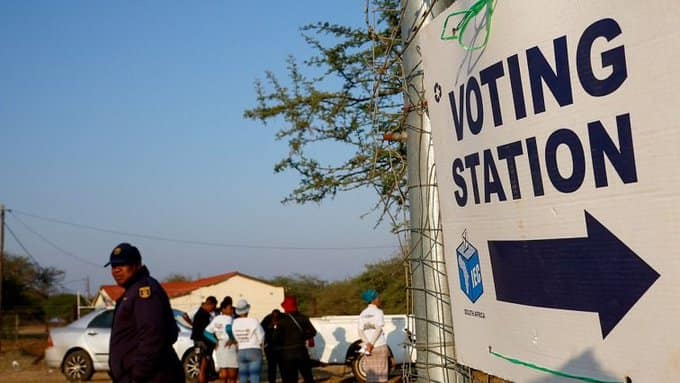
South Africa’s Electoral Commission (IEC) has officially laid the foundational map for the nation’s next critical democratic test, confirming that over 4,400 municipal wards will be contested in the 2026 Local Government Elections. This announcement follows the recent handover of the final ward delimitation report, a process that redraws the electoral boundaries to reflect population shifts captured in the latest census, setting the stage for a fiercely competitive poll that will directly shape service delivery and community governance for the next five years.
The delineation of these wards—the fundamental geographical units for electing local councillors—marks the formal start of the election machinery. “This is the terrain upon which the contest for local representation will be fought,” stated IEC Chairperson Mosotho Moepya at a media briefing in Centurion. “The handover of the ward boundaries is a statutory milestone that transitions our work from planning to active operational readiness. We are now poised to engage with political parties, independent candidates, and most importantly, the voters.”
The 2026 elections arrive at a moment of profound political recalibration, coming just two years after the seismic 2024 national and provincial polls that ended single-party majority rule and ushered in a Government of National Unity (GNU). This new dynamic is expected to cascade down to the local level, where emergent parties and strengthened opposition groups will vie for control of metros, local municipalities, and countless ward seats. The ward system is particularly significant, as it ensures community-specific representation alongside proportional representation, making each of the 4,400+ contests a hyper-local battle with national implications.
For millions of South Africans, these elections represent the most tangible interface with democracy. “This is where the rubber meets the road,” commented political analyst Professor Lebogang Mokoena. “National politics debates ideology and policy, but local government is about the pothole on your street, the reliability of your water supply, the maintenance of your community clinic, and the efficiency of waste collection. The 2026 elections will be a direct referendum on service delivery and a test of whether new political players can translate their national momentum into local governance credibility.”
The IEC’s timeline indicates that the final election date is anticipated for late 2026, likely in October or November. The coming year will see a flurry of activity: voter registration drives—critical in a system where registration is specific to each voting district—the nomination of candidates, and intense campaigning. A key change since the last local elections is the provision for independent candidates to contest ward seats, following recent legislative amendments, potentially injecting new faces and issues into the fray.
Civil society organizations have already begun mobilizing. “The message is clear: communities must seize this opportunity to hold power accountable,” said Noma-Afrika Mbele of the ‘My Vote Counts’ initiative. “The redrawn wards mean residents must verify their registration is correct for their new ward. Informed and active participation is the only path to responsive leadership.”
As the IEC moves into high gear, South Africa’s towns and cities brace for a campaign that will redefine local power structures. Against a backdrop of persistent service delivery protests, crumbling infrastructure in some areas, and high public expectation, the contest for over 4,400 wards is more than an administrative exercise—it is the next chapter in the nation’s ongoing struggle to translate democratic promise into a better quality of life for all its residents.
About The Author