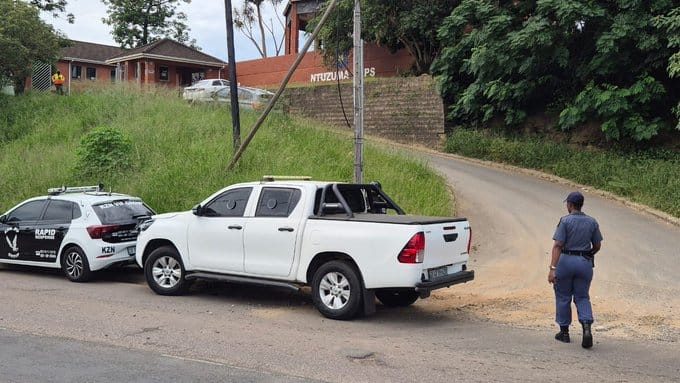
The morning of Monday, March 17, began like any other at the Ntuzuma Police Station, a bustling hub of law enforcement serving a sprawling township north of Durban. Residents queued patiently for help with affidavits, complainants reported crimes, and officers processed the overnight arrests. It was the mundane, orderly rhythm of a police station at work. But just after 9 a.m., that order was shattered by the sound of a struggle, a gunshot, and the screams of civilians and officers alike, plunging the station into a terrifying three-hour hostage crisis that would end with a suspect shot dead by police tactical teams.
According to a detailed account provided by KwaZulu-Natal police spokesperson Colonel Robert Netshiunda, the nightmare began when a 35-year-old suspect, who was in police custody for an undisclosed crime, managed to overpower the officers guarding him. In a split second of chaos, the suspect wrestled a firearm away from a police officer. With a weapon now in his hands, he did not attempt to flee. Instead, he turned it on his captors and the unsuspecting civilians in the charge office, opening fire.
“The situation escalated rapidly,” Colonel Netshiunda explained at a subsequent media briefing. “The suspect discharged the firearm within the charge office, creating a scene of extreme panic and danger. He then took several people hostage, using them as human shields against the police.”
“We Threw Ourselves on the Floor”
Inside the charge office, the sudden eruption of violence was petrifying. Witnesses who were later treated for shock described the moments when the mundane errand of visiting the police station became a fight for survival.
“I was standing in line to report a stolen phone,” recounted a local resident, Thandi Mkhize, her voice still trembling hours later. “Then I heard shouting, and then a loud bang. Everyone screamed and ducked. I saw the man with a gun, waving it around, screaming at the police to back off. I threw myself on the floor behind the counter and prayed.”
For the next several hours, the Ntuzuma Police Station was a locked-down war zone. The immediate area was cordoned off, with officers from the National Intervention Unit (NIU) and the Special Task Force (STF)—the elite tactical response units of the SAPS—being rushed to the scene. Negotiators were deployed, their primary goal to secure the safe release of the hostages without further bloodshed.
The suspect, whose identity has not yet been released pending notification of next of kin, was described by police sources as being in a state of “extreme agitation.” His demands, if any were made, have not been disclosed, but negotiators worked frantically to de-escalate the situation while tactical teams prepared for a potential assault.
The Final Confrontation
As the morning wore on, the standoff reached a critical juncture. While details of the final moments are still subject to an internal investigation by the Independent Police Investigative Directorate (IPD), it is understood that the safety of the hostages deteriorated to a point where immediate action was unavoidable.
At approximately 12:15 p.m., the crisis came to a violent head. Police sharpshooters and tactical teams, having manoeuvred into position, engaged the suspect. In the ensuing exchange of fire, the hostage-taker was shot and killed. Miraculously, given the close quarters and the initial burst of gunfire, no hostages or other officers were physically injured in the final confrontation.
Colonel Netshiunda confirmed the outcome, stating, “The suspect was fatally wounded during the engagement with our tactical response teams. The scene has been secured, and the hostages have been freed. They are receiving necessary medical and psychological support.”
A Community Shaken, A Station Under Scrutiny
In the immediate aftermath, the Ntuzuma Police Station resembled a crime scene, with forensic investigators meticulously combing the charge office for evidence. The area outside was thronged by curious and concerned community members, many of whom had family members or friends who had been inside during the ordeal.
The incident has also raised serious questions about police procedure and the security of firearms within the station itself. How was a suspect in custody able to overpower an officer and gain access to a service pistol? Was the officer in question following proper protocol? These are now central questions for the IPD investigation, which has been mandated to probe the circumstances surrounding the shooting and the events that led to it.
“The IPD has officially opened an inquest docket,” confirmed IPD spokesperson Phaladi Shuping. “Our investigation will look at the conduct of all involved parties, including the police officers, to determine if there was any negligence or misconduct that contributed to this incident.”
For the residents of Ntuzuma, the terror of Monday morning will not be easily forgotten. The police station, a symbol of law and order, was violently penetrated by the very chaos it is meant to contain. While the immediate threat has been neutralized, the psychological scars on the hostages, the officers involved, and the broader community will take far longer to heal. The incident serves as a stark and frightening reminder that in the high-tension world of policing, danger can erupt from the most unexpected places—even from within the holding cells of a police station itself.
About The Author