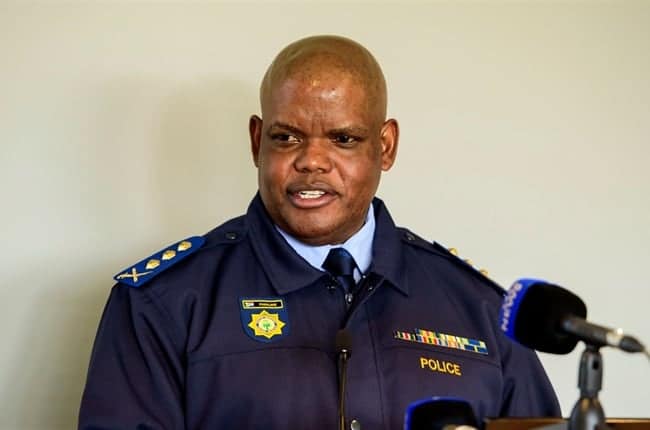
In a landmark moment for South Africa’s ongoing battle against state corruption, former acting national police commissioner Lieutenant-General Khomotso Phahlane is scheduled to take the stand tomorrow before a high-stakes parliamentary inquiry. His testimony is the most anticipated session to date for Parliament’s ad hoc committee, a body specifically established to investigate deep-seated allegations of graft, political manipulation, and systemic criminality within the very heart of the nation’s law enforcement.
The committee, which has spent months gathering evidence from whistleblowers, investigators, and experts, is tasked with untangling a complex web of accusations that suggests the South African Police Service (SAPS) has been compromised at the highest levels. Phahlane, who served as the country’s top cop from 2015 to 2017, is not merely a witness but a central figure in this narrative of alleged institutional decay. His tenure was marked by swirling controversies and a dramatic fall from grace, culminating in his suspension and eventual early retirement amidst multiple probes into his conduct.
The questions awaiting him are expected to cut to the core of the committee’s mandate. Lawmakers will likely press him on several explosive allegations, including:
- The “Blue Lights” Tender Saga: Detailed claims of multi-million-rand corruption in SAPS procurement, specifically around emergency vehicle lighting systems, which previously led to his arrest by the Independent Police Investigative Directorate (IPID) on fraud and corruption charges.
- Allegations of Political Interference: Questions regarding whether operational decisions, appointments, and high-profile investigations were unduly influenced by political figures during his time in office, potentially subverting the independence of the police.
- The “State Capture” of SAPS: Broader inquiries into whether systemic looting and the placement of compromised individuals in strategic positions undermined the service’s integrity, a pattern consistent with the findings of the Zondo Commission on state capture in other government departments.
- Obstruction of Internal Investigations: Accusations that efforts by IPID and other oversight bodies to probe senior officers were systematically blocked or sabotaged from within the police leadership.
Phahlane’s appearance is seen as a critical test for the parliamentary committee’s authority and resolve. His testimony could either provide a damning insider’s account of institutional failure or become a defensive rebuttal that seeks to deflect blame. Legal analysts suggest he may attempt to frame himself as a reformer who encountered entrenched resistance, or as a target of a politicized campaign.
Security and law enforcement experts emphasize that the outcome of this inquiry has profound implications beyond political scandal. “A police service perceived as corrupt and politically manipulated loses the public trust essential for its function,” noted one criminologist. “Phahlane’s testimony isn’t just about the past; it’s about diagnosing a cancer within the system so that genuine reforms can begin.”
The session, which will be broadcast live, is expected to draw intense public and media scrutiny. It represents a pivotal chapter in South Africa’s arduous journey to restore credibility to its key institutions. Whether it leads to clearer accountability or deeper obfuscation will depend heavily on the questions asked by MPs and the answers provided by the former commissioner. Tomorrow’s hearing is more than just testimony; it is a measure of Parliament’s power to hold even the most powerful former officials to account.
About The Author