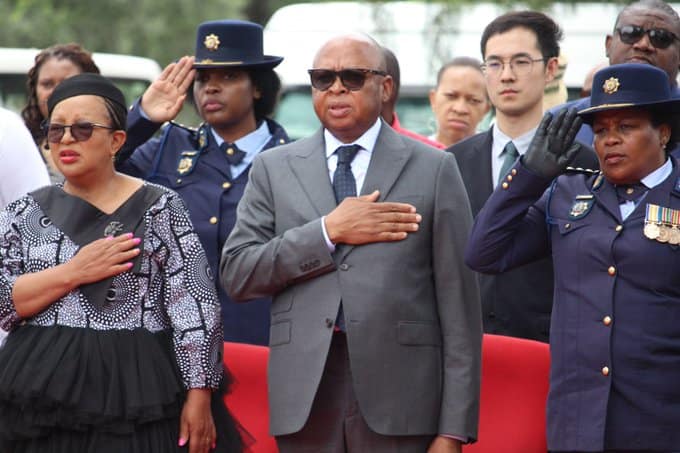
Under the solemn shade of blue and the quiet weight of memory, the South African Police Service (SAPS) in the Free State gathered today for a poignant commemoration service to honor its fallen heroes. Held at the Parkweg Police Station, a site central to policing in Bloemfontein, the ceremony, themed “Gone But Not Forgotten,” served as a powerful, collective moment of remembrance for the brave men and women who paid the ultimate price in the line of duty.
The atmosphere was one of dignified grief and profound respect, as active officers in crisp uniforms stood shoulder-to-shoulder with the families of the departed, veterans, and community leaders. The service transcended mere ritual; it was a raw and emotional testament to the human cost of the relentless war on crime, held deliberately during the festive season—a period of heightened danger and sacrifice for law enforcement.
Honoring Sacrifice, Recalling Names
The ceremony was led by the Provincial Commissioner of the Free State, Lieutenant General Baile Motswenyane, who spoke with a voice heavy with both sorrow and resolve. One by one, the names of officers lost over the past year—and in years prior—were read aloud, each syllable hanging in the air like a bell toll. For every name, a colleague or family member stepped forward, some with tears streaming freely, to receive a symbolic blue rose and a certificate of honor.
“The thin blue line is not just a concept; it is a covenant, a promise made by extraordinary individuals to stand between order and chaos,” General Motswenyane stated, addressing the gathered crowd. “When that line is broken by a bullet, an act of violence, or a tragic accident in the service of our people, the entire nation feels the tear. These officers did not just lose their lives; they sacrificed them for our collective safety. We are here today to ensure that sacrifice is never, ever forgotten.”
A Community’s Shared Grief
The service notably included not just tributes from command, but heartfelt testimonies from partners, children, and fellow station members who served alongside the fallen. One sergeant, his voice breaking, recalled his partner’s unwavering courage during a confrontation. A teenage daughter, wearing her father’s medal, spoke of her pride amidst the pain. These personal reflections painted vivid portraits of the individuals behind the badges—fathers, mothers, friends, and community pillars—whose absence leaves a void no award can fill.
The Parkweg Memorial Wall, inscribed with the names of Free State officers killed on duty, was the focal point. Wreaths of blue and white flowers were laid at its base, and a lone bugler played the haunting notes of “The Last Post,” followed by a moment of silence so profound it seemed to still the city’s distant hum.
A Pledge to the Living and the Dead
Beyond remembrance, the ceremony served as a stark reminder of the ongoing perils faced by police. General Motswenyane used the platform to renew a pledge to officer safety, vowing to intensify efforts to provide better training, equipment, and psychological support for those still on the front lines. “The best way to honor our fallen is to protect the living who continue their work,” she declared.
The memorial concluded with a ceremonial parade and the singing of the national anthem, its words carrying a renewed weight. As the families departed, clasping their tokens of remembrance, and officers returned to their patrols, the message of the day was clear. The officers of Parkweg and the Free State SAPS may bear the scars of loss, but their resolve, forged in memory, remains unbroken. Their colleagues are gone, but as the ceremony affirmed with unwavering conviction, they are not, and will never be, forgotten.
About The Author