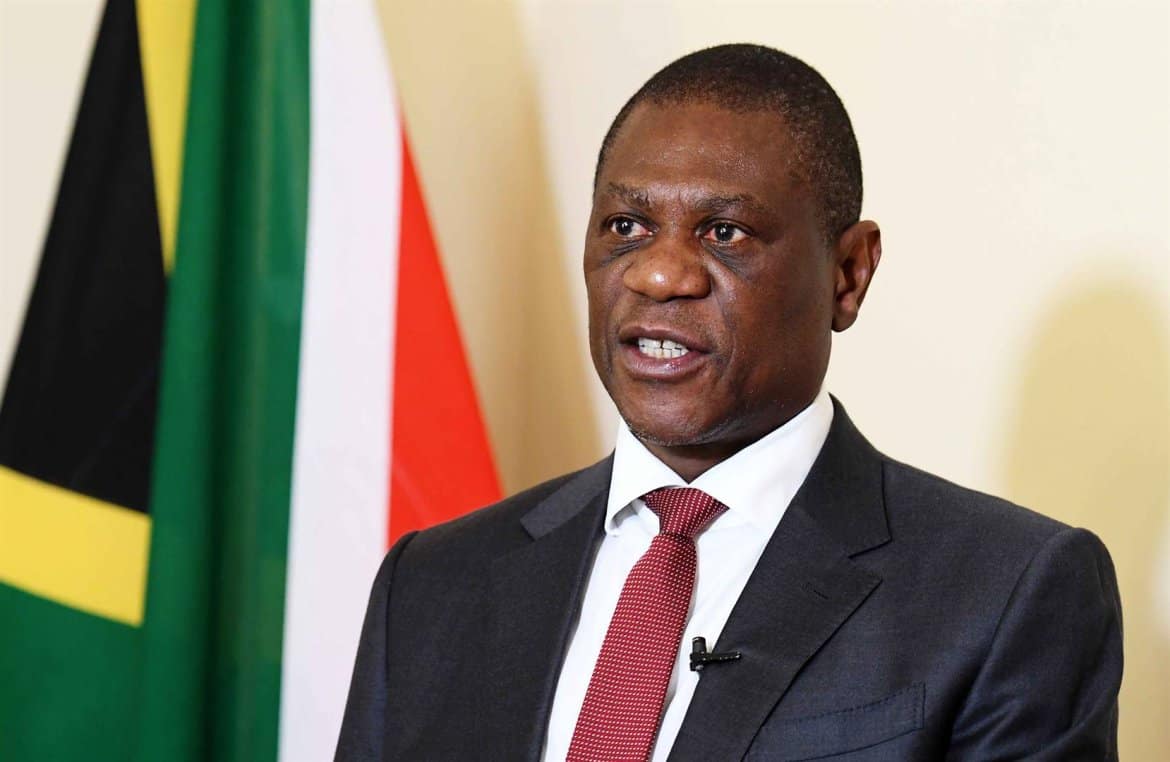
In a powerful virtual address that underscored a national priority, Deputy President Paul Mashatile has issued a clarion call for a more robust and synergistic partnership between government, the private sector, labour, and local communities to ignite a new era of inclusive and sustainable economic growth in the Garden Route and beyond. Speaking at the Garden Route Economic Coordination Roundtable Dialogue on Thursday, the Deputy President framed such collaboration not as a mere option, but as an imperative for tackling South Africa’s most pressing challenges: unemployment, inequality, and poverty.
The high-level dialogue, a follow-up to the momentum generated by last year’s Knysna Regional Investment Conference, served as a strategic checkpoint. Mashatile lauded the region’s steadfast commitment to maintaining the drive initiated at that conference, noting that the sustained effort is methodically transforming the Garden Route’s reputation from a scenic paradise into a formidable hub for strategic investment and high-value tourism.
From Scenic Corridor to Economic Engine
“The work you are doing here in the Garden Route is a testament to what can be achieved when a region takes ownership of its economic destiny,” Mashatile stated. He highlighted that the ongoing collaboration is not just about attracting capital but about “building an economy that works for everyone, one that creates jobs, fosters entrepreneurship, and ensures that the benefits of growth are broadly shared.”
Central to this vision is the implementation of a clear, actionable programme of action that moves beyond dialogue to delivery. The Deputy President outlined key pillars for this growth, including:
- Tourism as a Catalyst: Acknowledging the region’s natural beauty as a foundational asset, Mashatile urged for an upgrade and diversification of the tourism offering. This includes promoting eco-tourism, adventure sports, and cultural heritage experiences to attract a wider range of visitors and extend their average stay.
- Unlocking Agri-Processing: He emphasised the need to move beyond primary agriculture by investing in local agro-processing facilities. This would add significant value to the region’s agricultural output—from citrus and dairy to seafood—creating more jobs and retaining more wealth within local municipalities.
- Investing in Foundational Infrastructure: The address stressed that economic growth is hamstrung without reliable infrastructure. Mashatile called for collaborative investments in areas like digital connectivity, water management, and energy security, noting that public-private partnerships (PPPs) are crucial for bridging the funding gap.
The “How”: A Partnership in Practice
The roundtable dialogue delved into the practical mechanics of these partnerships. Discussions focused on creating a more predictable and conducive regulatory environment for business, while also ensuring that corporate investments are aligned with local community needs, such as skills development and local procurement.
“The government’s role is to create an enabling environment, to be a responsive and reliable partner,” the Deputy President affirmed. “The private sector brings innovation, capital, and efficiency. And our communities hold the local knowledge and provide the social license to operate. When these three forces are aligned, there is no limit to what we can achieve.”
By positioning the Garden Route as a national blueprint for regional economic development, Mashatile’s address signals a concerted effort to replicate such coordinated, multi-stakeholder models across South Africa. The success of this initiative in the Western Cape is being watched closely as a potential template for turning localised economic potential into nationwide, inclusive prosperity.
About The Author