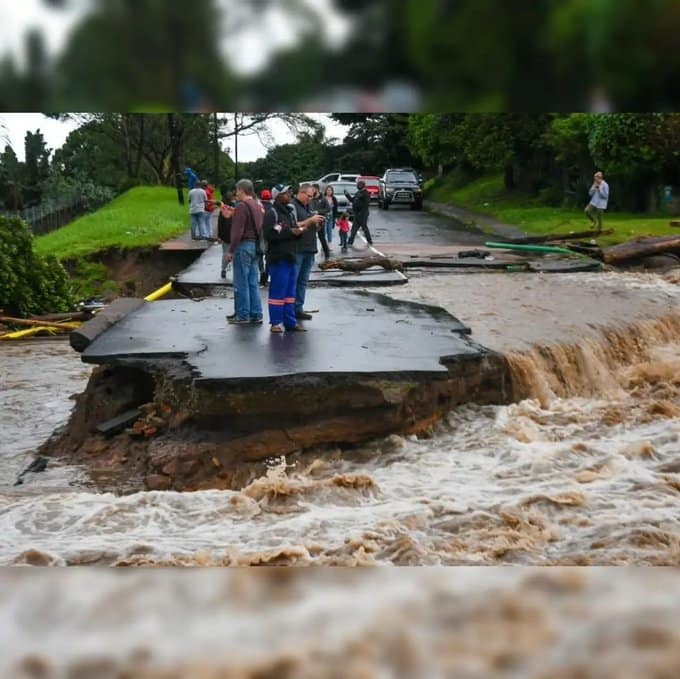
The human tragedy of Limpopo’s catastrophic floods has taken another heartbreaking turn, with the desperate search intensifying for two young children reported missing from the flood-ravaged village of Mashishimale, on the outskirts of Phalaborwa.
The siblings, identified by community leaders as a 9-year-old boy and his 6-year-old sister, were last seen on Tuesday evening near their home, which lies perilously close to the banks of the Klaserie River. According to distraught family members, a sudden, violent surge of floodwater—caused by the relentless downpours upstream—breached the river’s banks in the dead of night, inundating the low-lying settlement within minutes.
“The water came like a thief. It was dark, and the noise was terrible—like a train,” recounted a neighbour, her voice trembling. “We heard the family shouting, but by the time we tried to help, the space between the houses was already a deep, fast river. The children were there one moment, and then they were gone.”
The incident marks a devastating escalation in a provincial disaster that has already claimed numerous lives, displaced thousands, and isolated entire communities. While official death tolls continue to be revised, this latest disappearance has cast a renewed pall of anguish and fury over a province buckling under the weight of the deluge.
A Frantic, Hampered Search
Rescue efforts, coordinated by the South African Police Service’s K9 and Dive units alongside community volunteers, have been severely hampered by the very conditions that caused the tragedy. Continued heavy rain, dangerously strong currents, and vast expanses of debris-choked floodwaters have turned the search into a painstaking and perilous operation.
“We are using every available resource, but this is a needle-in-a-haystack scenario complicated by ongoing bad weather and incredibly dangerous water conditions,” said Limpopo Police spokesperson, Colonel Malesela Ledwaba. “The force of the water can carry objects—and people—for kilometres. We are searching the riverbanks, submerged areas, and all downstream tributaries.”
The children’s parents, who were rescued from the roof of their partially collapsed home, are being treated for shock and minor injuries at a local clinic, surrounded by family and social workers from the Department of Social Development.
A Community’s Anguish and a Broader Crisis
In Mashishimale, a close-knit community now draped in a fog of grief, the disappearance has transformed widespread fear into focused fury. Residents point to long-ignored pleas for proper drainage and riverbank reinforcement, arguing that the disaster was not merely natural but compounded by neglect.
“We have been saying for years that when the rains come hard, this river kills,” said village elder Thomas Baloyi. “They promised to clear the drainage canals and strengthen the banks. Nothing was done. Now we are losing our children.”
The tragedy in Mashishimale underscores the acute vulnerability of informal and rural settlements in the path of the floods. As provincial and national disaster teams focus on major towns and cut-off highways, smaller villages often bear the brunt with the least immediate support.
Limpopo Premier Stanley Mathabatha, who visited the broader Phalaborwa area earlier today, acknowledged the growing despair. “The loss of a child is an unimaginable pain, and our prayers are with this family and this community. This devastating event reinforces the urgent need for not only immediate rescue and relief but also for a long-term, serious commitment to climate-resilient infrastructure and early warning systems in our most vulnerable areas.”
As night falls again over Limpopo, the search for the two children continues—a sombre race against time and the unforgiving waters, symbolising the profound human cost of a province underwater.
About The Author