The party leader suspends his deputy for defying him, while a political analyst warns Zuma’s “despotic” and “spaza shop” style of leadership could destroy the party before next year’s elections.
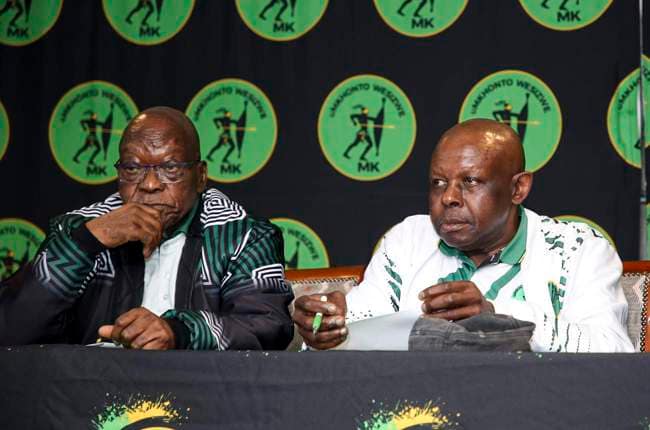
JOHANNESBURG – The Umkhonto weSizwe (MK) Party is engulfed in a public power struggle after leader Jacob Zuma suspended his deputy, Dr John Hlophe, for allegedly removing the party’s chief whip without consultation—a move Hlophe has defiantly challenged by daring Zuma to expel him outright.
The crisis erupted when Hlophe, the party’s parliamentary leader, unilaterally removed Colleen Makhubele as chief whip and replaced her with Des van Rooyen. Zuma, who was out of the country at the time, swiftly reversed the decision upon his return and issued a “precautionary suspension” against Hlophe.
In a bold act of defiance, Hlophe took to social media, asking the party’s head of presidency to request Zuma “to terminate his party membership rather than suspend him.” He also reportedly notified members he would not attend a crucial plenary session, signalling an open rebellion.
Analyst Warns of Electoral ‘Suicide’
The public feud has drawn sharp criticism from political analysts, who see it as a symptom of a deeper crisis within the party. Dr Ntsikelelo Breakfast stated that Zuma’s “despotic running of his party will have serious implications for it in the local government elections next year.”
“This persisting instability in the party is suicidal,” Breakfast warned. “People will not vote for a party that is unstable, like this one. The (party’s) constitution must clearly guide members on how to operate, right now it looks like Zuma does as he pleases.”
He accused Zuma of “destroying the party he founded by running it as his spaza shop.”
A Power Struggle Months in the Making
The clash is not entirely unexpected. Hlophe’s influence was seen to be diminishing after Zuma recently appointed former ANC NEC member Tony Yengeni as a second deputy president. At that announcement, Zuma revealed that Hlophe would focus solely on parliamentary work, while Yengeni would assist in running the party externally—a move widely interpreted as a demotion for Hlophe.
The MK Party, in its official statement, stood by the suspension, citing Hlophe’s failure to consult. However, the party spokesperson did not respond to questions about the damage the fallout is causing.
The turmoil threatens to destabilise the MK Party’s operations in Parliament and undermine its credibility with voters just months before a critical electoral test, raising questions about its ability to present a united and disciplined front.
About The Author