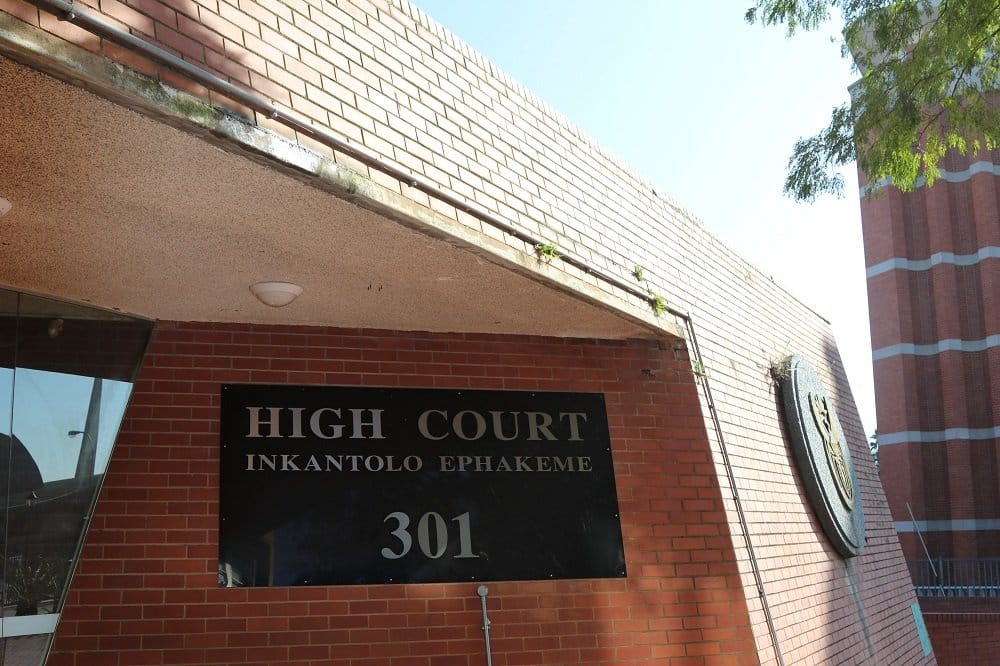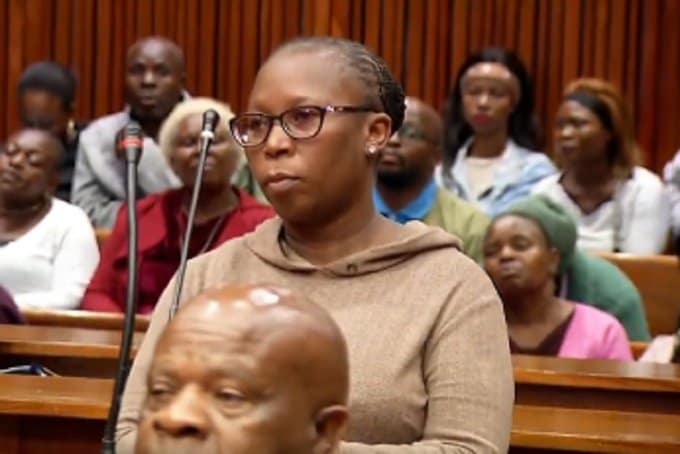
The gallery of the Polokwane High Court was packed to capacity on Tuesday morning, but for the family of Frans Mogashoa, the world had shrunk to the dimensions of the wooden dock where four accused persons stood waiting. For three long years, they had lived with a gaping wound—the murder of a man who had dedicated his life to shaping young minds. Now, finally, the silence was about to break.
In a development that stunned even seasoned court observers, the four suspects accused of killing the Limpopo education official chose not to fight. Instead of a protracted trial filled with denials and legal wrangling, they stood before the judge and spoke a single word that would change everything: guilty.
The courtroom, usually a place of procedural monotony, erupted into a murmur of disbelief. For the Mogashoa family, seated in the front row, the moment was surreal. They had braced themselves for a long, painful legal battle. They had prepared to hear denials, to watch the accused shift blame, to relive the trauma through cross-examination. Instead, they got something they had almost stopped hoping for: accountability.
Frans Mogashoa was a man known across the province. As a senior education manager in the Limpopo Department of Education, he was responsible for overseeing curriculum implementation in one of the country’s most under-resourced regions. Colleagues describe him as passionate, dedicated, and unafraid to speak truth to power. His work took him to remote villages and underperforming schools, always with the goal of improving outcomes for children who had little else.
In February 2023, that work came to a violent end. Mogashoa was shot dead in what police initially described as a robbery gone wrong. But as the investigation deepened, a more sinister picture emerged. The killing, it transpired, was not random. It was a contract killing, allegedly orchestrated by individuals who saw Mogashoa as an obstacle to their corrupt schemes within the education department.
The details that emerged during the bail hearings and preliminary inquiries painted a chilling picture of premeditation. The accused, according to the charge sheet, had tracked Mogashoa’s movements, studied his routine, and lay in wait for him on the fateful evening. When he arrived home, they struck. The motive, prosecutors alleged, was his refusal to sign off on fraudulent tenders and ghost appointments that would have lined the pockets of the conspirators.
On Tuesday, as the four accused stood to enter their pleas, the lead accused spoke in a clear voice: “Guilty, my lord.” One by one, the others followed. Guilty of murder. Guilty of conspiracy to commit murder. Guilty of robbery with aggravating circumstances. The admissions rolled over the family like waves, each one bringing a mix of relief and renewed pain.
For Mogashoa’s widow, the moment was overwhelming. She had sat through every court appearance, her face a mask of stoic endurance. But when the final guilty plea was entered, the mask slipped. She bowed her head, her shoulders shaking with silent sobs. Beside her, her daughter reached for her hand, her own eyes brimming with tears.
“It is a strange thing to feel relief when someone admits to killing your husband,” the widow said later, her voice trembling but steady. “For three years, we have lived with questions. Why Frans? Who did this? Why would anyone want to hurt a man who only wanted to help children? Today, we got some answers. They admitted it. They looked us in the eye and said they did it. That matters.”
The guilty pleas mean the family will be spared the agony of a trial. There will be no need for Mogashoa’s colleagues to testify about his final days, no need for forensic experts to describe the wounds in graphic detail, no need for the family to sit through weeks of evidence that would force them to relive the trauma. Instead, the proceedings will move directly to sentencing, where the accused will make their case for leniency and the State will argue for the harshest possible penalty.
Legal experts following the case note that guilty pleas in contract murder cases are relatively rare. “Often, these cases go to trial because the stakes are so high,” explained criminal defence attorney Karabo Sebata. “A conviction for murder, especially premeditated murder, carries a mandatory life sentence. There is every incentive for the accused to fight. When they plead guilty, it suggests either a change of heart, a deal with the State, or a recognition that the evidence against them is overwhelming.”
Outside the court, the reaction among Mogashoa’s former colleagues was one of grim satisfaction mixed with sorrow. A group of teachers who had travelled from his home village to support the family stood in a huddle, speaking in hushed tones. “He was one of the good ones,” said a principal who had worked closely with him. “He fought for us. He fought for the children. And they killed him for it. Today, the law has begun to speak. We hope it will speak loudly when it comes to punishment.”
The case has also sent shockwaves through the provincial education department, where questions remain about how deep the corruption went. Mogashoa’s murder exposed a shadowy network of officials and businesspeople who allegedly manipulated the system for personal gain. His refusal to cooperate made him a target. His killing was meant to send a message. Instead, it sparked an investigation that has now led to multiple arrests and convictions.
As the family left the courthouse, they were surrounded by supporters, journalists, and curious onlookers. The widow paused at the top of the steps, the late afternoon sun casting long shadows across the plaza. She looked back at the building, then at the small crowd.
“We will never have Frans back,” she said quietly. “But today, we have justice. Not complete justice—that is impossible when a life is lost. But accountability. They admitted what they did. They cannot hide anymore. And for that, we are grateful.”
The sentencing proceedings are expected to take place in the coming weeks. The family will be there, as they have been every step of the way. They will listen to the pleas for mercy, the arguments about mitigation, the attempts to explain the inexplicable. And then, finally, they will hear the judge pronounce the punishment.
For the Mogashoa family, the guilty pleas are not the end of the journey. But they are a significant milestone on a long, painful road. The man who dedicated his life to education is gone. But his legacy—and the fight for justice in his name—lives on.
About The Author