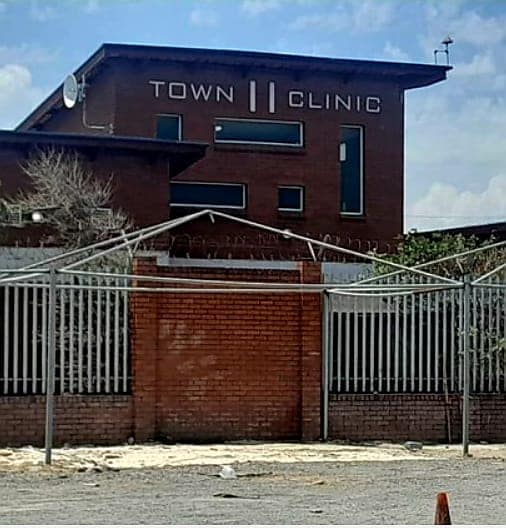
A critical community health centre in Site C, Khayelitsha, has been forced to shut down indefinitely after brazen extortion demands from a local criminal gang, leaving thousands of residents without access to primary healthcare and exposing the severe vulnerability of essential public services to organized protection rackets.
The crisis unfolded on Monday when a group of armed men entered the bustling Site C Community Health Centre and confronted its management. They delivered a chilling ultimatum: a substantial weekly “protection fee” must be paid, or the clinic and its staff would face severe consequences. The demand was specifically directed at the private security company contracted to guard the facility.
A Standoff Over Safety
In a move that precipitated the immediate closure, the security firm refused to capitulate to the gang’s demands. According to sources within the Western Cape Department of Health and Wellness, the company took a principled stand, arguing that paying extortion would only embolden the criminals and make the clinic a permanent target.
This defiance, however, came at an immediate cost. Following the refusal, the armed men issued direct threats against the safety of healthcare workers, administrative staff, and the security personnel themselves. Faced with a credible and imminent threat to human life, the department and clinic management made the agonizing decision to suspend all services.
“The choice was between operating under the barrel of a gun, or closing to protect our staff and patients. We chose the latter, as no one should have to work or seek care in an environment of terror,” said a senior department official, speaking on condition of anonymity due to the sensitivity of the situation.
Community Impact: A Healthcare Desert Widens
The closure has created a healthcare emergency for one of Cape Town’s most populous townships. The Site C clinic is not a minor outpost; it is a vital node in the public health system, providing essential services to an estimated 15,000 to 20,000 people per month. These include:
- Chronic medication collection for HIV, tuberculosis, diabetes, and hypertension.
- Maternal and child health services, including immunizations.
- Basic emergency care and treatment for minor ailments.
- Health screening and counseling.
Residents are now being redirected to the already overburdened Khayelitsha District Hospital and other satellite clinics, which are ill-equipped to absorb the sudden influx. For the elderly, disabled, and those without reliable transport, the longer distances are a prohibitive barrier.
“Where must I go now? I collect my ARVs here every month,” said a distraught resident, Nomalanga Mbeki. “The hospital is far, and the queues are already from sunrise. These criminals are not just stealing money; they are stealing our health.”
The “Protection” Racket: A Metastasizing Crisis
This incident is not isolated. It highlights a metastasizing crisis of criminal extortion, known locally as “izinkabi” or “protection fees,” targeting businesses, construction sites, and now, alarmingly, public infrastructure across the Western Cape. Gangs systematically identify sites and demand payments, using violence and intimidation as enforcement tools.
Western Cape Minister of Police Oversight and Community Safety, Reagen Allen, condemned the act, stating, “This is a new low. Attacking a healthcare facility is an attack on the most vulnerable in our society. It shows these gangs have no respect for life or community. We are working closely with SAPS to ensure a swift and forceful response.”
A Precarious Stalemate and a Call for Action
The clinic remains closed as a tense stalemate holds. The Western Cape Department of Health, SAPS, and law enforcement agencies are in urgent talks to devise a security plan robust enough to allow the clinic to reopen safely. This may involve reinforcing the security presence, potentially with specialized police units, and conducting intelligence-driven operations against the specific gang involved.
Health activists and community leaders are demanding immediate government intervention. “This is a failure of the state to guarantee a safe environment for the constitutional right to healthcare,” said Vuyiseka Mahlati, a local community organizer. “We need more than just police; we need a coordinated strategy involving community policing forums, the City, and the province to root out this extortion economy before it cripples every public service we have.”
The locked doors of the Site C clinic stand as a stark monument to the power of fear. Until a solution is found, thousands of Khayelitsha residents will pay the price, not in cash to criminals, but in the rapidly deteriorating currency of their own health.
About The Author