The independent Madlanga Commission of Inquiry, tasked with investigating corruption and criminality within the Ekurhuleni Metropolitan Police Department (EMPD), heard explosive and deeply troubling allegations on Monday, shifting the focus from financial malfeasance to claims of a toxic culture of sexual predation allegedly protected by the department’s highest ranks.
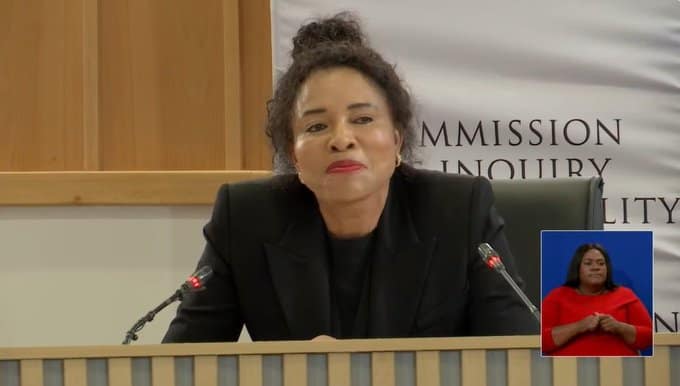
The commission, chaired by retired Constitutional Court Justice Yvonne Madlanga and established amid growing public outcry over law enforcement integrity, listened as former Ekurhuleni metro employee relations manager, Nompumelelo Mashazi, delivered charged testimony. Her appearance, anticipated for its insights into internal disciplinary processes, instead unveiled allegations of systematic abuse.
Allegations of Harassment and Assault
Mashazi, who oversaw employee welfare, vehemently denied claims that she had protected the current acting EMPD chief, Julius Mkhwanazi, from internal discipline. Instead, she turned the spotlight on a former head of the EMPD, Isaac Mapiyeye, accusing him of creating an environment of fear where female officers were subjected to harassment and, in severe cases, rape.
“Female officers lived in terror,” Mashazi testified, her voice steady but firm. “There were multiple instances of unsolicited advances, intimidation, and outright assault reported to me in confidence. The most grave involved allegations of rape by Mr. Mapiyeye himself.”
When pressed by evidence leaders on why these allegations never culminated in formal internal or criminal investigations, Mashazi pointed to a crippling culture of silence and fear of reprisal. She suggested that the power dynamics and the perceived invulnerability of the accused prevented victims from coming forward officially, leaving her with hearsay and informal complaints she felt powerless to act upon unilaterally.
A Contentious Exchange and a Defense of Actions
The testimony grew tense during cross-examination, with evidence leaders challenging Mashazi on the efficacy of her response. They questioned whether her actions—which she cited as including the promotion of some affected women to move them away from direct reporting lines to the alleged perpetrator—were sufficient or constituted a form of quiet complicity.
Mashazi defended her position, arguing that within a broken system, her interventions were pragmatic steps to protect individuals when formal channels seemed inaccessible or hostile. “I worked within the constraints of a system that protected powerful men,” she asserted. “Promoting those women was a lifeline, a way to get them to safety when laying a charge seemed like a career death sentence.”
Broader Implications for the Commission
The testimony has significantly raised the stakes for the commission, moving it beyond audits of procurement and into the fraught territory of institutional culture and gender-based violence within a law enforcement agency. It poses urgent questions about the mechanisms for reporting abuse, the protection of whistleblowers and victims, and the accountability of those in command.
The commission continues this week with testimonies from other pivotal figures, including former Ekurhuleni mayor and current Minister of Public Enterprises, Senzo Mchunu, and the acting EMPD chief, Julius Mkhwanazi. Their responses to these allegations will be closely scrutinized.
For the residents of Ekurhuleni, long plagued by concerns over both crime and police conduct, Mashazi’s testimony validates deeply held suspicions about internal rot. The commission’s ultimate findings and recommendations on these governance and ethical failures will be a critical measure of whether true reform is possible for the EMPD, or if the culture of impunity remains entrenched.
About The Author