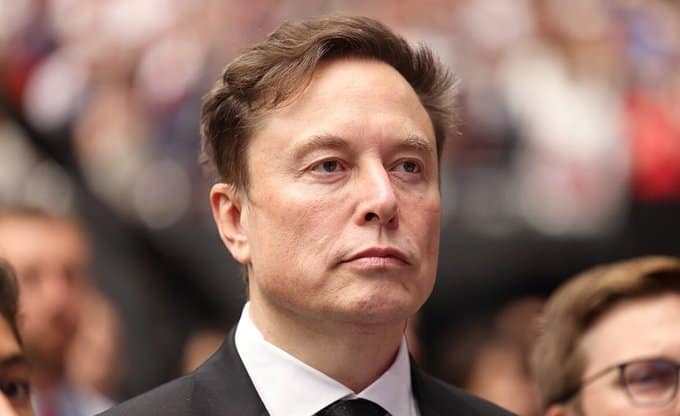
In a remark that has ignited a firestorm of condemnation and debate, billionaire tech mogul Elon Musk has drawn a direct comparison between South Africa’s post-apartheid Black Economic Empowerment (B-BBEE) policies and the racially oppressive laws of the apartheid era. The controversial statement came mere hours after a contentious government gazette was published, easing equity requirements for global satellite operators like his own Starlink—a move already under fierce criticism from the Economic Freedom Fighters (EFF) and other observers.
Musk, responding on his social media platform X to a user discussing South Africa’s race-based laws, stated, “There are just too many parallels for comfort. Replacing one system of racial exclusion with another, even if aimed at redress, is morally wrong.” Though he did not name specific statutes, the context pointed squarely at B-BBEE and employment equity laws, designed to redress decades of systemic exclusion under apartheid.
Presidential Office Delivers Sharp Rebuke
The reaction from the South African government was swift and severe. Presidential spokesperson Vincent Magwenya issued a statement late Saturday, calling Musk’s comments “profoundly irresponsible and racist.”
“To equate the oppressive, violent, and dehumanizing laws of apartheid—which stripped the majority of their land, dignity, and basic human rights—with democratic laws designed to correct those very injustices is a gross distortion of history and reality,” Magwenya stated. “Our transformative policies are voluntary in framework and restorative in intent, unlike the coercive, brutal racism of the past.”
The Core of the Debate: 140 Provisions vs. Apartheid’ 100+ Laws
The controversy hinges on a complex legal and moral comparison. Analysts note that post-1994 South Africa has enacted over 140 race-related provisions across various sectors to promote Black ownership, management control, and skills development. These include the Broad-Based Black Economic Empowerment Act and the Employment Equity Act.
Critics, both domestic and international, often label these policies as “reverse racism.” However, historians and legal scholars emphasize the fundamental distinction in nature and intent.
“Apartheid’s over 100 laws—the Population Registration Act, the Group Areas Act, the Land Acts—were tools of violent dispossession and social engineering designed to entrench white minority rule,” explained political analyst Lebohang Mokoena. “They were compulsory and punitive. Today’s B-BBEE codes, while sometimes rigid, are fundamentally voluntary economic incentives aimed at inclusive growth. Conflating the two is not just inaccurate; it erases the lived trauma of apartheid.”
The Starlink Irony: A Context of Accused Privilege
The timing of Musk’s comments has been labeled “breathtakingly ironic” by his critics. They came on the same day that Minister of Communications and Digital Technologies Solly Malatsi published the controversial gazette proposing a new licensing category for global satellite operators. This move, slammed by the EFF as “unlawful,” is widely seen as creating a pathway for Starlink to operate without meeting the standard 30% ownership by historically disadvantaged groups (HDGs), instead potentially allowing for alternative equity investment schemes.
“Here is a billionaire, whose company appears to be benefiting from a last-minute, contested regulatory concession, comparing the laws he seeks to bypass to apartheid,” said EFF spokesperson Leigh-Ann Mathys. “It is the ultimate display of privilege: to benefit from the bending of a nation’s rules, while vilifying the very principles those rules were built upon.”
Global Echoes and Divided Reactions
The incident has reverberated globally, becoming a flashpoint in wider culture wars. Musk’s supporters have amplified his comments, using them to critique diversity, equity, and inclusion (DEI) initiatives worldwide. Meanwhile, many South Africans, across racial lines, have expressed outrage at the analogy.
“My parents lived under pass laws. They watched friends forced from their homes. For a foreign businessman to equate that with a policy meant to give my children a fair shot is insulting,” said Nomsa Dlamini, a small business owner in Soweto.
Yet, some commentators and opposition figures have echoed Musk’s sentiment regarding the complexity and sometimes problematic implementation of empowerment policies. “While the apartheid comparison is hyperbolic and offensive, it should force us to have an honest conversation about whether our current policies are creating broad-based opportunity or a new elite,” said a columnist for a major financial paper.
A Deepening Crisis of Perception and Principle
The confluence of events—the disputed gazette, the EFF’s legal threats, and Musk’s inflammatory comparison—has plunged South Africa’s telecoms policy and racial reconciliation narrative into a deep crisis. It raises uncomfortable questions about global corporate power, national sovereignty, and the unresolved pains of history.
As the public comment period on the Starlink-enabling gazette opens, the debate is no longer just about bandwidth and market share. It has become, explosively, about memory, morality, and who gets to define justice in a country still grappling with the long shadow of its past. The government now faces the dual challenge of defending its transformative agenda while navigating the intense pressure to modernize its economy—a tension laid bare by a billionaire’s tweet and a minister’s gazette.
About The Author