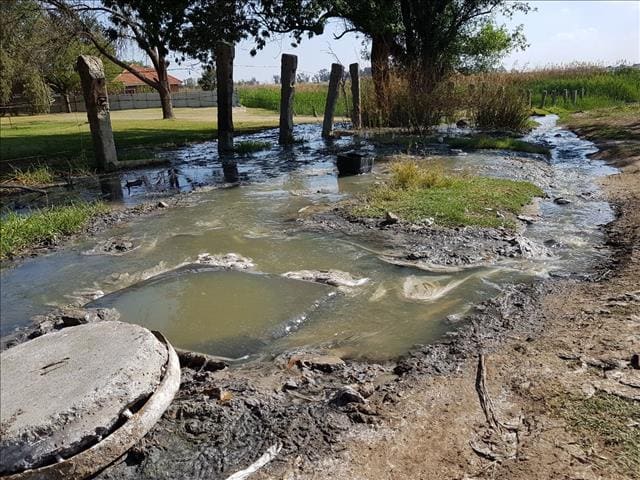
The morning commuter in Welkom does not think about R68 million. She thinks about the crater that has consumed half of Stateway Road, the same crater that swallowed a minibus taxi’s front wheel last Thursday, the same crater that the municipality promised to repair in 2022, in 2023, in 2024, and again in January of this year. She thinks about the smell that rises from the cracked sewer pipe on Buiten Street, the smell that has become the permanent perfume of the central business district, the smell that tourists from Johannesburg remark upon with poorly concealed horror.
She does not think about R68 million because R68 million is an abstraction. R68 million is a number in a legal document, a figure in a forensic report, a line item in a budget that bears no relation to the reality of her daily life. R68 million is what the Matjhabeng Local Municipality has spent on legal fees since 2021—fighting cases, settling claims, defending officials, appealing judgments, and losing.
The Economic Freedom Fighters, standing on a flatbed truck parked at the intersection of Stateway and Buiten, are attempting to connect the abstraction to the reality.
“R68 million!” bellowed regional organizer Thabo Khoabane, his voice amplified by speakers borrowed from a local events company. “Sixty-eight million rand that should have fixed every pothole in this municipality! Sixty-eight million rand that should have replaced every collapsed sewer pipe! Sixty-eight million rand that our people paid in service fees, in taxes, in the sweat of their labour, and where has it gone? It has gone to lawyers! It has gone to advocates! It has gone to defending the indefensible!”
The crowd, assembled from the surrounding neighborhoods of Thabong, Bronville, and Riebeeckstad, responded with the particular energy of people who have waited a very long time to hear their grievances articulated with official force. They raised fists. They shouted agreements. They held aloft cellphones recording the moment for posterity and for evidence.
But beneath the political theater, beneath the slogans and the sound bites and the carefully calibrated outrage, lay something more profound: the slow-motion collapse of a municipality that was once the economic engine of the Free State goldfields.
The Anatomy of a Municipality
Matjhabeng Local Municipality was established in 2000 through the amalgamation of several smaller towns: Welkom, Virginia, Odendaalsrus, Allanridge, Hennenman, and Ventersburg. The merger was intended to create economies of scale, to consolidate administrative capacity, to rationalize service delivery across a region that had historically been fragmented along both racial and economic lines.
Instead, it created a leviathan.
The municipality encompasses approximately 3,600 square kilometers—roughly the size of the island of Mallorca. It serves a population of approximately 400,000 people, though the precise figure is contested and the last credible census was conducted in 2011. Its economy, once anchored by the gold mines that dotted the landscape between Welkom and Virginia, has contracted severely as ore grades have declined, shafts have flooded, and international investors have redirected capital to more profitable jurisdictions.
“We are a post-industrial city without an industrial successor,” said Professor Thabo Ntloana, a specialist in urban governance at the University of the Free State. “The mines built these towns. The mines employed these people. The mines paid the rates and taxes that funded the infrastructure. Now the mines are closing, or operating at reduced capacity, and the municipalities are left with the maintenance obligations and none of the revenue base.”
The result is visible everywhere: in the potholes that have expanded into sinkholes, in the sewage that flows through stormwater drains, in the streetlights that have remained dark for years, in the municipal buildings whose air conditioning units have been cannibalized for spare parts.
The R68 Million Question
The EFF’s figure of R68 million in legal costs requires context. It is not, as the party’s rhetoric sometimes suggests, a single sum that was embezzled by a single corrupt official. It is, instead, the accumulated expenditure of a municipality that has been engaged in continuous litigation across multiple fronts for several years.
There are labour disputes: dismissed officials challenging their terminations, unions demanding compliance with collective agreements, employees claiming unpaid overtime and incorrect grading. There are commercial disputes: contractors alleging non-payment for work completed, suppliers seeking judgments for goods delivered and never compensated, former service providers pursuing damages for breach of contract. There are regulatory disputes: the municipality challenging decisions of the National Treasury, the provincial government, the Department of Water and Sanitation, the South African Local Government Association.
About The Author