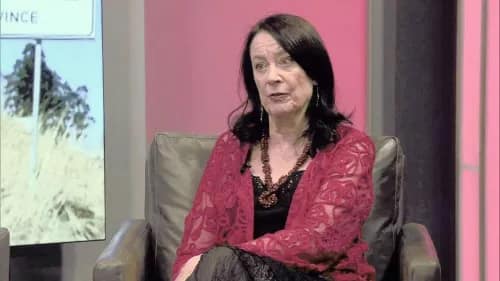
In a charged session before Parliament’s Ad Hoc Committee that laid bare the treacherous fault lines between civic duty and state power, renowned KwaZulu-Natal researcher and crime activist Dr. Mary de Haas delivered a defiant testimony, firmly refusing to divulge the identities of her informants and citing credible, life-threatening fears of police-backed retaliation.
The appearance, which transformed a procedural parliamentary hearing into a high-stakes drama over morality and safety, saw the veteran academic and whistleblower ally stand her ground against pointed questioning, asserting that compliance with the committee’s demand would make her “complicit in the persecution, or worse, of those who trusted her.”
A Chamber Gripped by Tension
From the outset, the atmosphere in the committee room was thick with anticipation. Dr. de Haas, a figure known for her decades-long, dogged documentation of political violence and police collusion in KwaZulu-Natal, presented not as a supplicant witness but as a principled adversary to what she described as a compromised system. Her opening statement was a stark accusation.
“For months, I have provided this committee and its predecessors with detailed, evidence-based accounts of police criminality, of the weaponization of state resources for political and personal vendettas, and of the systematic interference in investigations that implicate powerful individuals,” Dr. de Haas stated, her voice steady. “The response to these disclosures has not been a swift and impartial investigation, but rather a pattern of intimidation and a concerted effort to uncover and silence my sources.”
The Core of the Conflict: Protecting the Vulnerable
The confrontation reached its peak when committee members, representing the ruling ANC, pressed her to provide the names of police officers and civilians who had provided her with evidence of misconduct, arguing that it was essential for their investigation and for “following due process.”
Dr. de Haas’s refusal was absolute. “You ask me to betray the very people who risk everything to expose the truth,” she countered, her tone shifting from analytical to impassioned. “These are not anonymous ‘sources’; they are police officers who have consciences, community activists who fear for their families, and victims who have already been failed by the system. To give you their names is to hand them a death sentence, and I will not have that on my conscience.”
She elaborated on her fears, detailing a climate in KwaZulu-Natal where being identified as a whistleblower leads to immediate targeting, including death threats, suspension from work on spurious charges, and in some tragic cases, assassination.
A Clash of Principles: Parliamentary Authority vs. Ethical Imperative
The exchange highlighted a fundamental conflict: the committee’s asserted right to all evidence versus the ethical imperative to protect confidential sources, a cornerstone of investigative journalism and human rights work.
Some committee members grew visibly frustrated, insisting that without the ability to verify her claims directly with the sources, her testimony remained “hearsay.” One member argued, “How can we craft legislation or hold institutions accountable based on information we cannot independently corroborate?”
Dr. de Haas responded by pointing to the extensive paper trail—affidavits, internal police documents, and crime scene photographs—that she has submitted over the years, which she argued provided ample corroboration without exposing individuals to danger. “The evidence exists. The will to act on it, it seems, does not,” she stated bluntly.
A Defining Moment for Civic Courage
As she concluded her testimony, a silence fell over the room. Dr. de Haas had not only defended her stance but had put the committee itself on trial, accusing it of being either unwilling or unable to provide the protection necessary for true accountability.
Her defiance resonated far beyond the parliamentary chamber. Civil society groups and fellow researchers immediately voiced their support, hailing her as a guardian of the fragile trust that allows corruption to be exposed. Conversely, her critics within the state apparatus may view her stance as an act of obstruction.
The standoff remains unresolved. But one thing is clear: Dr. Mary de Haas has drawn a line in the sand, choosing the safety of her informants over the demands of Parliament, and in doing so, has become a powerful symbol of the perilous fight for truth in South Africa.
About The Author