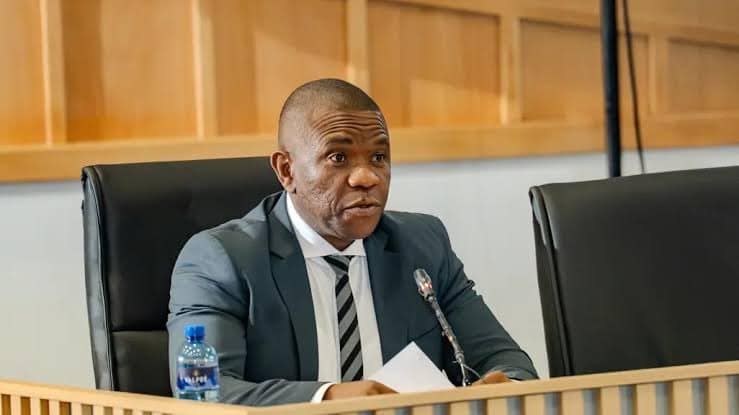
In a move signaling the escalating political and institutional tensions within South Africa’s law enforcement agencies, KwaZulu-Natal Police Commissioner, Lieutenant General Nhlanhla Mkhwanazi, is set to address the media this afternoon. The 1 p.m. briefing, to be held at the provincial headquarters in Durban, will delve into the complex and controversial criminal history of Stuart James Scharnick, a figure whose name has become central to the ongoing Madlanga Commission of Inquiry.
The briefing, strategically timed during a recess in the commission’s proceedings, is poised to provide the first official, on-the-record police account of the allegations swirling around Scharnick. These allegations were thrust into the national spotlight by the testimony of Crime Intelligence head, Lieutenant General Dumisani Khumalo.
The Commission’s Explosive Testimony
The Madlanga Commission, established to investigate the suspension of former State Security Agency Director-General, Arthur Fraser, has unexpectedly become a stage for a bitter feud within the South African Police Service (SAPS). Last week, Lt. Gen. Khumalo took the stand and delivered a bombshell testimony. He alleged that Scharnick, a close associate of the also-suspended deputy national police commissioner, Lieutenant General Shadrack Sibiya, was involved in serious criminal activities.
Khumalo testified that Scharnick had links to a vehicle hijacking syndicate and, more critically, that he was in possession of multiple firearms without the proper licenses. For a figure connected to top-tier police leadership, these claims struck at the heart of public trust in the SAPS.
A Counter-Attack and Deepening Rifts
The situation intensified dramatically when Stuart Scharnick, rather than retreating from the spotlight, launched a bold legal counter-offensive. Shortly after Khumalo’s testimony, Scharnick filed criminal charges against the Crime Intelligence chief at a Durban police station. The charges—perjury and criminal defamation—allege that Khumalo knowingly lied under oath to the commission with the intent to damage Scharnick’s reputation.
This legal salvo has transformed the Scharnick probe from a behind-the-scenes investigation into a public, high-stakes conflict between two powerful factions within the police. It pits Khumalo, a senior figure in the national Crime Intelligence division, against the network associated with Lt. Gen. Sibiya, who is himself suspended and under scrutiny.
The Focus of Today’s Briefing
All eyes are now on Lt. Gen. Mkhwanazi, who, as the provincial commissioner for KZN, holds direct jurisdiction over the investigations. His briefing is expected to cover several critical areas:
- The Status of Investigations: A detailed update on the progress of probes into Scharnick’s alleged criminal history, specifically the hijacking and firearm possession claims.
- Firearm Licensing Scrutiny: Clarification on the exact nature of the “firearm licensing issues” raised by Khumalo. This will likely involve whether Scharnick’s firearms were ever legally licensed and if any police officials facilitated improper licensing.
- The Context of the Feud: While Mkhwanazi is expected to stick to operational facts, the briefing will inevitably be seen through the lens of the Sibiya-Khumalo rivalry, underscoring the deep-seated factions plaguing the SAPS.
- Police Integrity: Ultimately, the commissioner’s address is a crucial test for the perceived integrity of the police service in KZN. His ability to present a clear, transparent account will be closely watched by the public, the commission, and his colleagues nationally.
The Scharnick saga has become a microcosm of the broader challenges facing South African policing: allegations of criminality within connected circles, bitter internal rivalries, and the use of legal and commission processes to settle scores. Today’s briefing by General Mkhwanazi is not merely a procedural update; it is a pivotal moment that could either calm the waters or further roil the already turbulent landscape of the country’s criminal justice system.
About The Author