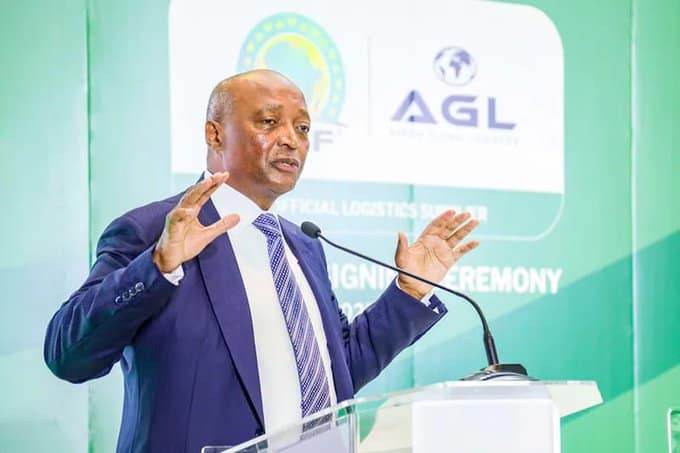
As shockwaves continue to reverberate across African football following Senegal’s dramatic disqualification from the 2025 Africa Cup of Nations (AFCON) title and Morocco’s subsequent declaration as champions on a 3-0 forfeit, sources close to the Confederation of African Football (CAF) have moved to distance President Patrice Motsepe from the explosive decision.
According to insiders with direct knowledge of the appeals process, the South African mining magnate and CAF president played no direct role in the ruling that has sparked intense debate, conspiracy theories, and diplomatic tension between two of the continent’s football powerhouses.
The clarification comes as speculation mounts that Motsepe’s influence—either through direct intervention or perceived pressure—may have shaped the outcome of an appeals process that saw Senegal stripped of the continental crown over alleged regulatory infractions.
The Controversial Ruling
The drama began when Senegal, who had initially been crowned champions following a hard-fought tournament, were found to have breached CAF regulations related to player eligibility and administrative protocols during the competition. Following an initial investigation and subsequent appeal by the Moroccan Football Federation, CAF’s appeals board ruled that Senegal would forfeit the title, awarding it to Morocco with a 3-0 scoreline.
The decision sent shockwaves through the football world. Senegal’s players, who had celebrated their victory with millions of jubilant fans, were left stunned and devastated. The Senegalese government expressed outrage, with some officials accusing CAF of bias and calling for an independent investigation into the process.
Morocco, meanwhile, celebrated the reversal, with fans taking to the streets in Rabat, Casablanca, and beyond to welcome the unexpected coronation.
‘Motsepe Was Strictly Hands-Off’
In the aftermath, fingers have pointed in various directions. However, sources speaking to journalists in Rabat this week insisted that CAF President Motsepe was not among those who influenced the outcome.
“The President was strictly hands-off throughout the entire appeals process. He made it a point of principle not to involve himself in judicial or disciplinary matters,” said a senior CAF insider who requested anonymity due to the sensitivity of the issue. “The appeals board operates independently. This was a decision made entirely by the relevant statutory bodies, applying the regulations as they saw fit.”
The source emphasized that Motsepe, who took over the CAF presidency in 2021 with a mandate to clean up the organization’s image following years of corruption scandals under his predecessor, Ahmad Ahmad, has consistently sought to distance himself from operational and disciplinary decisions.
“Motsepe has been very clear: his role is strategic and developmental. He is focused on commercial growth, infrastructure, and restoring trust in CAF. He does not pick up the phone to influence appeals boards or disciplinary committees. To suggest otherwise is to misunderstand how the organization now operates,” the source added.
The Context: Rebuilding Trust
Motsepe’s presidency has been defined by efforts to professionalize CAF and move past the controversies that plagued the organization under previous leadership. Since taking office, he has overseen significant commercial partnerships, expanded the AFCON format, and advocated for greater investment in women’s football and youth development.
However, the Senegal-Morocco controversy has tested the limits of that reform agenda. The decision has been met with widespread skepticism, with critics arguing that CAF’s appeals process lacks transparency and that the timing of the ruling—months after the tournament concluded—was highly irregular.
Some observers have pointed to the broader geopolitical dynamics at play. Morocco, under King Mohammed VI, has invested heavily in football infrastructure and diplomacy, leveraging the sport to enhance its continental and global standing. The country is set to co-host the 2030 FIFA World Cup with Spain and Portugal, further cementing its position as a football powerhouse.
Senegal, meanwhile, has emerged as a football force in its own right, with its 2025 AFCON victory seen as a crowning achievement for a generation of players who have brought pride to the West African nation.
Conflicting Narratives
Not all sources agree on the extent of Motsepe’s involvement. A separate source, speaking on condition of anonymity, suggested that while the CAF president may not have personally intervened, the broader political and commercial weight of Morocco as a strategic partner for CAF and FIFA cannot be ignored.
“Motsepe may not have called the appeals board, but everyone in African football knows where the power lies. Morocco is a major commercial partner for CAF. They have world-class stadiums, they are hosting major tournaments, and they have the ear of FIFA. It would be naive to think that context does not influence outcomes,” this source said.
Others have pointed to Motsepe’s close ties with both the Moroccan and Senegalese football establishments, suggesting that his neutrality may have been tested regardless of his personal intentions.
CAF’s Official Position
CAF has maintained a measured public stance on the controversy, issuing brief statements confirming the appeals board’s decision but declining to elaborate on the specifics of the case or the involvement of its president. The organization has emphasized that due process was followed and that all member associations are bound by CAF regulations.
In a brief statement, CAF spokesperson Lux September reiterated the independence of the organization’s judicial bodies: “CAF’s disciplinary and appeals processes are conducted by independent bodies in accordance with the CAF Statutes and Regulations. The President does not interfere in these matters.”
What Comes Next?
For Senegal, the road ahead may involve further appeals, potentially to the Court of Arbitration for Sport (CAS) in Lausanne, Switzerland. The Senegalese Football Federation has indicated it is reviewing its legal options, with government backing.
For Morocco, the title—however controversially obtained—represents a significant achievement and a boost for football in the country as it prepares for its World Cup hosting duties.
For Motsepe and CAF, the episode has highlighted the delicate balance between reform and realpolitik. The president’s defenders argue that he has done precisely what he promised: stay out of operational matters and allow CAF’s institutions to function independently. His critics contend that the controversy has exposed the fragility of those institutions and the lingering perception of favoritism toward powerful member associations.
As one long-time African football observer put it: “Motsepe came in to clean house. But the house is still standing on foundations built over decades of politics, patronage, and power plays. Whether he can truly change that without getting his hands dirty remains the central question of his presidency.”
About The Author