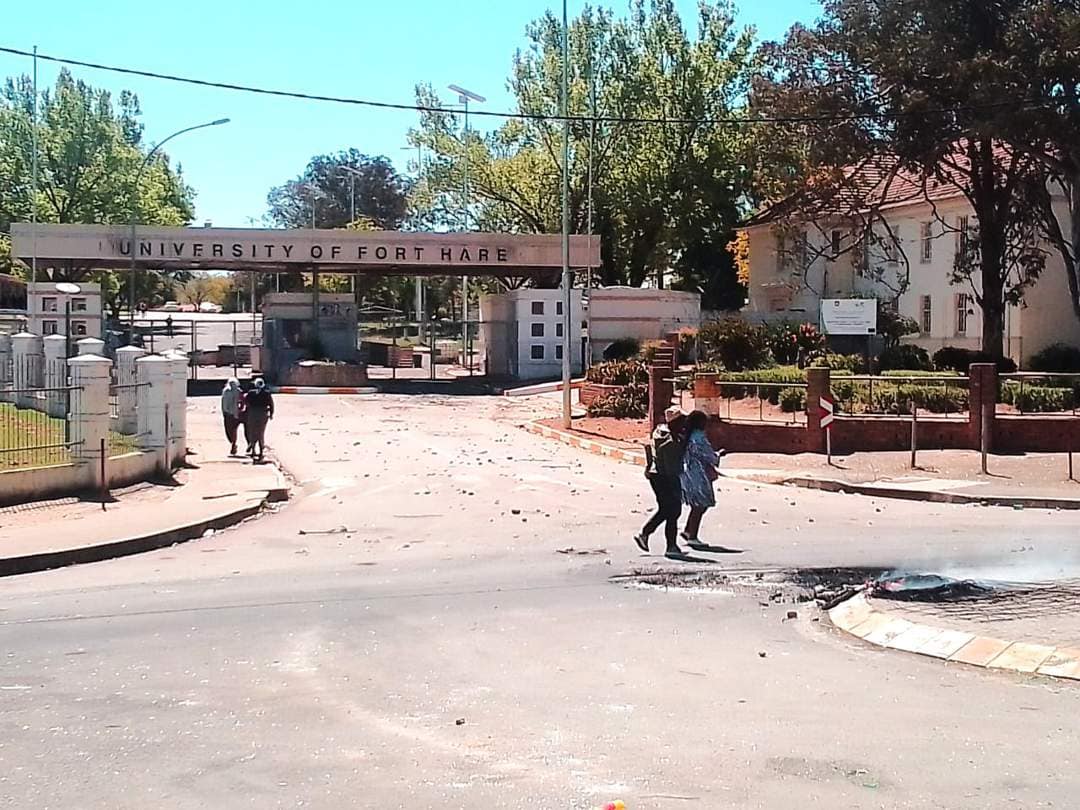
EAST LONDON – A tense calm has descended upon the University of Fort Hare, following a week of violent clashes between protesting students and police that saw parts of the historic campus engulfed in flames. The unrest, which led to the arson of several university buildings, is rooted in a single, escalating demand from the student body: the immediate removal of Vice-Chancellor Professor Sakhela Buhlungu.
The protests, which erupted earlier this week, swiftly escalated from demonstrations into direct confrontations. Students, armed with grievances over what they describe as systemic mismanagement and profound governance failures, allegedly set fire to administrative blocks and other key facilities. The acrid smell of smoke and the charred remains of buildings now stand as a stark testament to the depth of their frustration.
While the bricks and mortar were ablaze, the real fuel for the protest is a growing list of student grievances. Protesters and student representatives have publicly accused Professor Buhlungu’s administration of financial mismanagement, a lack of transparency, and failing to address critical issues such as student funding through the National Student Financial Aid Scheme (NSFAS), accommodation shortages, and inadequate academic support. They hold him directly responsible for what they see as the institution’s decline.
The response from law enforcement was swift and forceful. Police were deployed to the campus to quell the violence, leading to running battles with students. The use of rubber bullets and stun grenades to disperse crowds was reported, marking one of the most significant outbreaks of violence at the university in recent years.
In a report from the scene, eNCA reporter Ronald Masinda noted that while the immediate fires have been extinguished and the streets are now quiet, the underlying issues remain entirely unresolved. The university management has yet to issue a formal response to the students’ primary demand for the Vice-Chancellor’s removal.
This latest crisis is not an isolated incident for Fort Hare. The university, an iconic institution known for educating many of South Africa’s liberation heroes, has been plagued by repeated scandals, including ongoing investigations by the Special Investigating Unit (SIU) into corruption and maladministration. The current student uprising suggests that these systemic issues have reached a boiling point, threatening to paralyze the academic project entirely.
As the clean-up begins, the question hanging over the campus is whether the temporary calm will be used for meaningful dialogue or if it is merely the eye of the storm, with further turmoil inevitable until the students’ fundamental demands are met.
About The Author