The name Magudumana has become synonymous with scandal in South Africa, a shorthand for the intersection of celebrity, criminality, and the peculiar moral confusion of a society where fame and infamy increasingly resemble each other. Nandipha Magudumana, the celebrity doctor whose association with convicted killer and rapist Thabo Bester captivated the nation for months, has occupied the public imagination as a figure of almost Gothic fascination—the beautiful physician who abandoned her practice, her patients, and apparently her moral compass for a man who had escaped from prison and was living as a fugitive.
Now her brother, Nkosinathi Sekeleni, has added another layer to the family’s tragic trajectory. On Saturday night, February 7, 2026, Sekeleni was involved in an altercation that ended in the death of another man. By Monday morning, he had been charged with murder, his face joining his sister’s in the rogues’ gallery of a family whose encounters with the criminal justice system have become disturbingly frequent.
The Sekeleni family home in Bloemfontein, already battered by the relentless media attention surrounding Nandipha’s case, braced for another storm. The irony was not lost on those who have followed the family’s trajectory: a brother now accused of taking a life, while his sister awaits trial for her alleged role in covering up a death and facilitating the continued criminal career of a man who had taken multiple lives himself.
The Night of Violence
The incident occurred in the Johannesburg suburb of Linden, an area of tree-lined streets and modest middle-class homes that rarely features in crime reports. According to police statements and preliminary witness accounts, Sekeleni was involved in an argument with another man—identified in court documents only as “the deceased”—that escalated from verbal confrontation to physical violence.
The details remain contested. What is not contested is that the altercation ended with the other man dead, his life extinguished by injuries sustained during the encounter. Sekeleni was arrested at the scene, his clothing reportedly bearing evidence of the struggle, and transported to the Linden police station for processing.
By Sunday morning, the news had begun to circulate through the networks that track such things: police sources, crime reporters, the informal intelligence systems that monitor the intersection of celebrity and criminality. The name Sekeleni triggered immediate recognition. The connection to Nandipha Magudumana, already a household name through her association with the Thabo Bester case, transformed a routine murder investigation into a media sensation.
“Any death is tragic,” said a police spokesperson, carefully modulating his language to avoid inflaming an already sensitive situation. “Our condolences go to the family of the deceased. Our investigation is ongoing, and we are following all available leads. The accused has been charged and will appear in court at the appropriate time.”
The Family’s Shadow
Nkosinathi Sekeleni has lived, until this weekend, in the shadow of his sister’s notoriety. While Nandipha’s face adorned magazine covers and her name dominated news cycles, Nkosinathi remained in the background—a supporting character in a family drama that had already produced more than enough protagonists.
But the shadow was never entirely benign. The Magudumana-Sekeleni family has been under intense scrutiny since Nandipha’s arrest in Tanzania alongside Thabo Bester in April 2023. The circumstances of their flight from South Africa, their capture, and their subsequent extradition raised questions that extended beyond Nandipha herself: Who knew what? Who assisted? Who bore responsibility for facilitating the continued freedom of a convicted murderer?
Nkosinathi was never formally implicated in those events. He maintained a low profile, avoiding the media attention that consumed his sister and, to a lesser extent, other family members. He appeared occasionally in photographs outside court proceedings, his expression guarded, his presence minimal. He seemed determined to remain peripheral to the central drama.
That determination ended on Saturday night. The peripheral figure has become the central subject. The shadow has stepped into the light, and the light reveals a man accused of killing another human being.
The Victim
The deceased has not been identified in media reports, pending notification of his family and the completion of formal identification procedures. What is known is fragmentary and unofficial: he was a resident of Johannesburg, apparently known to Sekeleni, and the argument that preceded his death arose from some prior interaction whose nature remains unclear.
“These cases are always complex,” said criminal defense attorney Sarah Randera, who is not involved in the matter but has followed its emergence with professional interest. “The line between murder and culpable homicide, between intention and recklessness, between self-defense and aggression—these are questions that can only be answered through careful investigation and, ultimately, through the judicial process. We do not yet know what the evidence will show.”
The victim’s family, still processing the shock of sudden and violent loss, has made no public statement. They are, for now, the invisible presence in this drama—the people whose grief will be processed in private, whose loss will be measured not in news cycles but in the empty spaces where a loved one used to sit, used to speak, used to exist.
The Legal Landscape
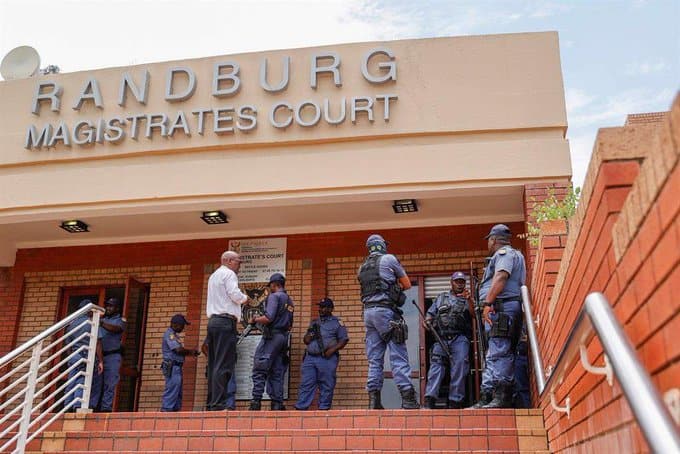
Sekeleni appeared briefly in the Johannesburg Magistrates’ Court on Monday morning, his face visible through the glass of the prisoner’s dock, his expression unreadable. The proceedings were brief: the charge was formally put, the State indicated its intention to oppose bail, and the matter was postponed for further investigation.
The bail hearing, when it occurs, will provide the first substantial insight into the State’s case. Prosecutors will outline the evidence they have assembled, the witnesses they intend to call, the circumstances they believe establish probable cause. The defense will respond with its own account, challenging the State’s narrative and arguing for Sekeleni’s release pending trial.
About The Author