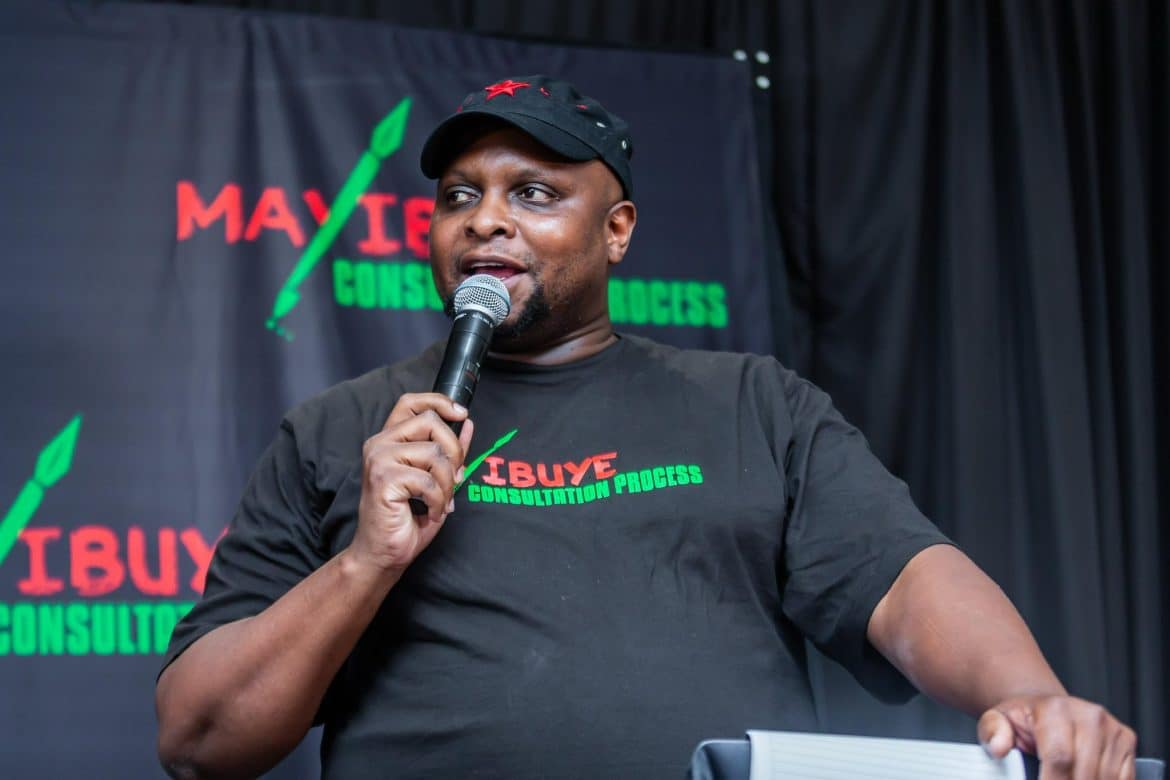
In a move designed to sharply differentiate his new political venture from the established order, Floyd Shivambu, leader of the fledgling Afrika Mayibuye Movement (AMM), has issued a clarion call for a special Commission of Inquiry dedicated solely to eradicating Black poverty in South Africa. The demand was the centrepiece of a public meeting held in Midrand, north of Johannesburg, which served as both a progress update and a rallying cry for the party’s growing base.
Shivambu, a former high-profile figure in the EFF known for his economic polemics, framed the commission as a necessary intervention to redirect the national conversation. He argued that South Africa is dangerously preoccupied with what he termed “palace politics”—the internal squabbles, factional battles, and scandals within the Union Buildings and Luthuli House that dominate headlines but do little to put food on the tables of the masses.
“While they are fighting over positions and tenders in the palaces of power, millions of our people remain in a state of permanent economic dispossession,” Shivambu told the gathering, his rhetoric echoing the foundational grievances that have long defined his political career. “We need a forensic, national focus on the structural and systemic nature of Black poverty. This is not about poverty in the abstract; it is about the specific, enduring poverty of the Black majority, which is the direct legacy of colonialism and apartheid.”
A Movement Defining Its Battle Lines
The public meeting was a strategic effort to build momentum for the AMM, which Shivambu launched after his departure from the EFF. The movement’s slogan, “Total Freedom and Emancipation Now,” anchors a platform that is unapologetically radical in its economic demands. Its pillars include:
- Comprehensive Land Redistribution: Going beyond the current constitutional framework to expedite the return of land to Black communities.
- Radical Industrialisation: A state-led drive to re-industrialise the economy and create mass employment.
- Decolonised Education: Overhauling the curriculum to break from what it calls “Eurocentric knowledge systems.”
- Respect for Traditional Leaders: Positioning traditional institutions as key stakeholders in governance and development.
The call for a Commission of Inquiry into Black Poverty is a tactical masterstroke, serving multiple purposes. It positions the AMM as a party focused on substantive, bread-and-butter issues, it directly challenges the record of the ruling ANC, and it creates a clear point of contrast with his former political home, the EFF, which he may argue has become mired in the very “palace politics” he now decries.
Scepticism and the Credibility Challenge
However, the movement’s bold ambitions are shadowed by persistent questions regarding its funding and organisational credibility. As a new entrant into an already crowded opposition space, the AMM lacks the established donor networks and membership dues of older parties. Shivambu’s own history, including past controversies surrounding his brother’s business dealings, ensures that his financial probity will remain under intense scrutiny.
Political analyst Letta Mthembu commented, “Shivambu is a brilliant political strategist with a keen understanding of the economic marginalisation that resonates with a significant portion of the electorate. However, the transition from a fiery opposition voice to building a credible, structured political machine is a monumental task. The call for a commission is a powerful narrative, but voters and observers will be watching closely to see if the AMM can build a transparent and sustainable organisation itself.”
The movement is preparing for its first national convention next month, an event that will be critical in solidifying its policy positions, leadership structures, and strategic direction for the upcoming election cycle. Shivambu’s push to place Black poverty at the centre of the national debate is a bold opening gambit, signaling his intent to reclaim the mantle of South Africa’s most radical economic voice. Whether this call will translate into a significant political movement or become another footnote in the country’s turbulent political landscape is a story that has only just begun.
About The Author