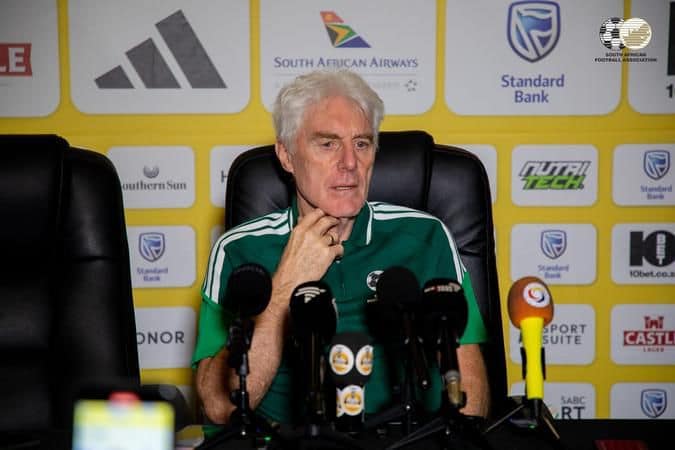
Bafana Bafana head coach Hugo Broos finds himself at the centre of a major controversy, with the United Democratic Movement (UDM) lodging a formal complaint of racism and sexism against him to the South African Human Rights Commission (SAHRC). The complaint stems from remarks Broos made at a press conference on Tuesday regarding 20-year-old Orlando Pirates forward Mbekezeli Mbokazi, who arrived late to the national team’s AFCON training camp.
The incident unfolded as Broos, known for his direct and often brusque coaching style, expressed visible frustration with Mbokazi’s delayed arrival. The young star, who recently completed a high-profile transfer to Major League Soccer’s Chicago Fire, reported to camp two days later than requested due to personal commitments linked to his move.
In his remarks, the 71-year-old Belgian coach stated, “He arrives late, acting like a big star already because of America. But the star here is the team, not one player.” Broos then specifically targeted Mbokazi’s representative, adding, “And he listens to his agent—a nice little woman—who doesn’t understand that football priorities are AFCON and the World Cup, not commercial appearances right now.”
The UDM’s complaint, filed by party leader Bantu Holomisa, alleges that Broos’s comments were “deeply offensive, racially charged, and blatantly sexist.” The complaint argues that referring to a Black player as acting like a “star” in a derogatory context plays into racist tropes about arrogance, while the description of the agent as a “nice little woman” is demeaning and perpetuates gender stereotypes, implying women are incapable of understanding professional football.
“Coach Broos’s statements violate Section 9 of the Constitution, the Promotion of Equality and Prevention of Unfair Discrimination Act, and the ethos of our national team,” Holomisa said in a statement. “They are unacceptable from a figure entrusted with leading a symbol of our national unity. We demand accountability.”
The South African Football Association (SAFA) has acknowledged the complaint and stated it is “reviewing the matter internally.” SAFA President Danny Jordaan is expected to consult with both Broos and the legal department before issuing a formal response.
Broos’s supporters, including several sports analysts and former players, have defended his comments as a harsh but fair disciplinary measure, not an expression of prejudice. “Broos is old-school. He was making a point about priorities and discipline ahead of a major tournament. The colour or gender of the people involved is irrelevant to his frustration,” argued former Bafana captain Aaron Mokoena on a sports radio talk show. “We cannot coach with kid gloves if we want to compete against Senegal and Ivory Coast.”
Mbekezeli Mbokazi has not commented publicly on the controversy, but sources close to the player say he is focused on training and reconciling with the coach. His agent, Noma Dube, released a brief statement: “My professional track record speaks for itself. My focus is solely on my client’s wellbeing and career. I will not dignify the coach’s personal remarks with a further response.”
The SAHRC has confirmed receipt of the complaint and will decide whether to launch a full investigation. The controversy erupts at a delicate time for Bafana Bafana, who are preparing for their Africa Cup of Nations (AFCON) group stage matches against Uganda, Congo, and Senegal. It raises immediate questions about team morale and the federation’s ability to manage a crisis that intersects sport, identity, and social justice just weeks before a major tournament.
About The Author