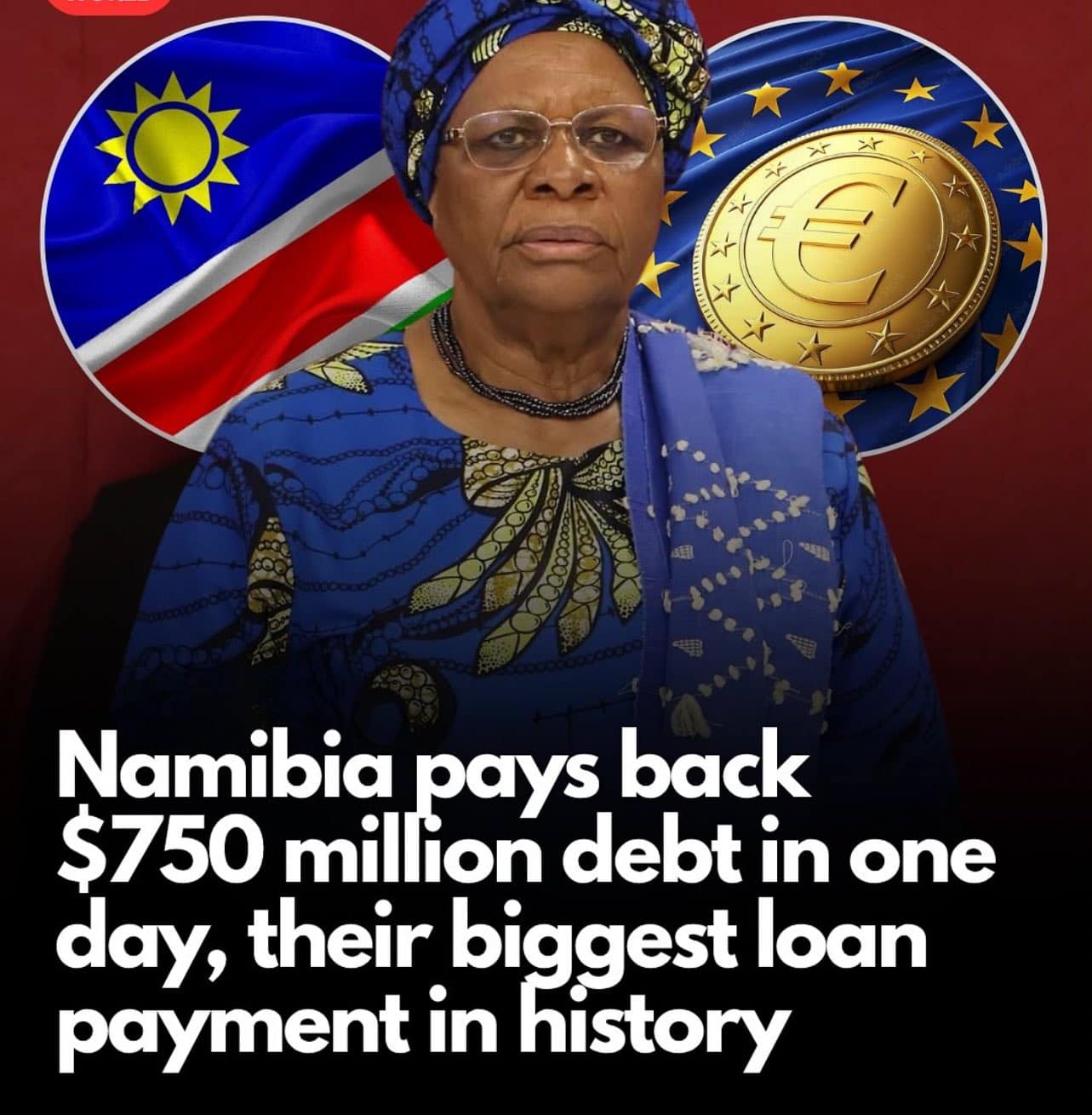
In a decisive move that has captured the attention of international financial markets and regional policymakers, the Republic of Namibia has successfully and fully redeemed its $750 million Eurobond, clearing the obligation in a single day and signaling a profound shift in the nation’s fiscal strategy. The transaction, executed on October 29, 2025, is being hailed not merely as a debt settlement, but as a masterclass in proactive economic management under the nascent administration of President Netumbo Nandi-Ndaitwah.
This strategic liquidation, which utilized a combination of a pre-established sinking fund and new domestic borrowing, is designed to fortify Namibia’s economic resilience, reduce its exposure to volatile global interest rates, and assert greater control over its financial future.
A Deliberate and Prudent Financial Engineering
The redemption of the 2025-maturity bond was achieved through a carefully calibrated two-pronged approach:
- The Sinking Fund ($444 million): For years, the Namibian government had been strategically allocating resources to a dedicated “sinking fund” specifically for this bond’s maturity. This forward-thinking measure, a hallmark of fiscal discipline, allowed the state to cover a significant 59% of the total debt without needing to scramble for last-minute external financing or deplete its critical foreign reserves.
- Domestic Bridge Financing ($306 million): The remaining balance was sourced not from international capital markets, but from within Namibia’s own borders. The government secured loans from a consortium of local commercial banks. This crucial element of the strategy accomplishes two key objectives simultaneously: it fulfills the Eurobond obligation while actively stimulating the domestic financial sector and keeping the debt servicing within the national economy.
Preserving Reserves, Inspiring Confidence
A central achievement of this operation is its positive impact on Namibia’s balance of payments. By avoiding the need to use a large portion of its foreign reserves for the repayment, the government has successfully maintained a robust reserve position of $2.7 billion projected by year-end. These reserves are a vital buffer, protecting the Namibian Dollar (pegged to the South African Rand) and ensuring the country can cover essential imports and withstand external economic shocks.
Finance Minister Ericah Shafudah was unequivocal about the broader significance of the move. “This is more than a transaction; it is a testament to our commitment to fiscal stability and sound economic governance,” she stated. “By meeting our obligation ahead of schedule and through a prudent structure, we send a powerful message to the global investment community: Namibia is a credible and reliable partner. This will undoubtedly lower our country’s risk profile and reduce borrowing costs in the future.”
The “Nandi-Ndaitwah Shift”: A Pivot to Domestic Markets
The Eurobond repayment is the clearest indication yet of a new fiscal direction under President Nandi-Ndaitwah, Namibia’s first female president. Dubbed the “Nandi-Ndaitwah Shift” by some economists, this policy consciously moves future sovereign borrowing away from expensive foreign-currency-denominated debt and towards the domestic capital market.
This pivot offers several strategic advantages:
- Reduced Exchange Rate Risk: Borrowing in Namibian Dollars eliminates the peril of a weakening local currency dramatically increasing the real cost of foreign debt.
- Strengthened Local Markets: It deepens the domestic financial system by providing local banks with high-quality government paper, fostering a more vibrant and self-sufficient capital market.
- Enhanced Policy Sovereignty: It insulates the country from the often-onerous conditions and shifting sentiment of international bondholders, giving Windhoek greater control over its economic destiny.
A Beacon in a Challenging Continental Context
Namibia’s successful maneuver stands in stark contrast to the debt distress plaguing several other African nations. While other countries are grappling with restructuring talks and the threat of default under the weight of expensive Eurobonds, Namibia has navigated its way to a clean exit.
This achievement positions the Southern African nation as a case study in fiscal responsibility and long-term planning. It demonstrates that with disciplined governance and strategic foresight, African economies can not only meet their international obligations but can also craft innovative solutions to enhance their resilience against global headwinds, setting a new benchmark for economic stewardship on the continent.
About The Author