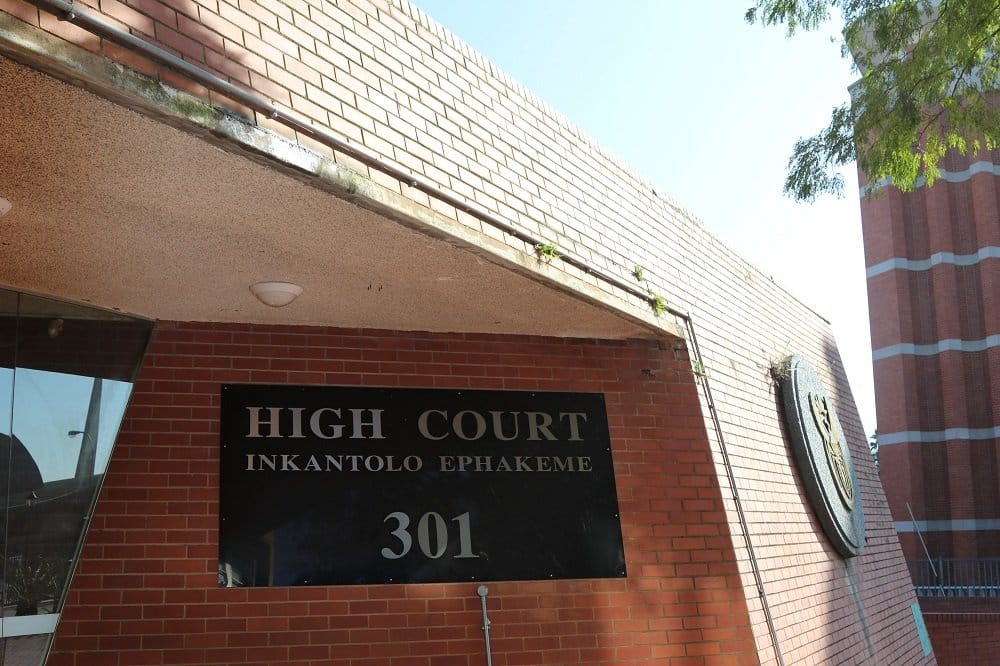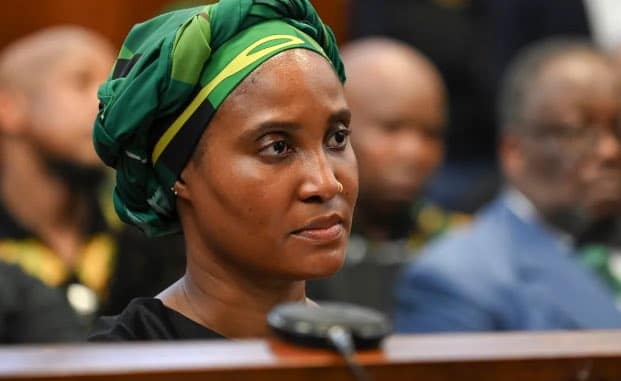
In a courtroom charged with the weight of recent history, the high-stakes trial of Duduzile Zuma-Sambudla commenced today at the Durban High Court, a proceeding that strikes at the heart of one of post-apartheid South Africa’s most traumatic and unresolved chapters: the July 2021 civil unrest.
Nearly four years after a wave of violence and looting swept through KwaZulu-Natal and Gauteng, leaving more than 350 people dead and scarring the national psyche, the daughter of former President Jacob Zuma is now at the defendant’s table. She faces grave charges of incitement to commit public violence and the even more serious charge of incitement to commit terrorism, with the state alleging her social media activity served as a digital torch to a tinderbox of public frustration.
The trial, slated to run until November 21, 2025, is more than a criminal proceeding; it is a national reckoning. It forces the country to confront the chaotic days that followed her father’s imprisonment for contempt of court, a period that exposed profound social fractures, economic disparities, and the volatile intersection of politics and digital communication.
The Charges: A “Watertight” Case of Digital Incitement
The National Prosecuting Authority (NPA) presented its case with a tone of grim determination. Prosecutors will argue that Zuma-Sambudla’s posts on X (formerly Twitter) were not mere political commentary but constituted a deliberate and reckless campaign to fuel lawlessness. The evidence catalogue, presented in a detailed charge sheet, includes a series of messages posted under the hashtag #FreeJacobZuma.
Specific posts under scrutiny allegedly praised the emergence of “protest hotspots,” shared calls for a national shutdown, and featured videos of burning trucks and ransacked malls, sometimes accompanied by celebratory or approving commentary. The state’s case hinges on drawing a direct line from this online activity to the physical violence that caused an estimated R75 billion in damage, brought the economic heartland of KZN to a standstill, and led to countless lives being lost, both in the chaos and in the ensuing hunger.
“The evidence will show a pattern of incitement that crossed the line from protected speech to criminal conduct,” a representative for the NPA stated outside the court, reiterating their confidence in what they have described as a “watertight” case. This trial is believed to be a landmark first in South Africa, testing the legal system’s ability to hold individuals accountable for terrorism-related charges based solely on their social media posts.
The Defence: A Counter-Narrative of “Political Persecution”
The defence, led by the prominent and often controversial Advocate Dali Mpofu, launched an immediate and forceful counter-offensive. After Zuma-Sambudla entered a plea of “not guilty,” Mpofu framed the trial not as a quest for justice, but as a politically motivated witch-hunt.
He argued that the charges are a proxy for a state-sanctioned campaign to harass and silence the Zuma family and its political allies, specifically targeting the growing influence of the uMkhonto weSizwe (MK) Party. Zuma-Sambudla, who now serves as a Member of Parliament for the MK Party, is portrayed as a political shield for her father.
“The timing, the nature of these charges, and the relentless focus on the Zuma name make it clear that this is not about justice for the victims of 2021,” Mpofu asserted in his opening remarks. “It is about persecuting a political opponent and criminalizing dissent.” This sentiment was echoed in a fiery statement from the Jacob Zuma Foundation, which condemned the trial as “political persecution” and an attempt to break the spirit of the former president’s family.
A Nation Watching: The Stakes of the Verdict
The trial unfolds against a backdrop of still-simmering political tensions. The 2021 unrest laid bare the limitations of state security and intelligence services, and for many victims and business owners, the scars—both physical and psychological—remain fresh. For them, this trial represents a long-overdue attempt at accountability for the architects of the chaos.
Legal experts note that the court’s task is monumental. It must navigate the delicate balance between the constitutional right to freedom of expression and the state’s duty to prevent speech that incites imminent lawless action. The prosecution must prove beyond a reasonable doubt that Zuma-Sambudla’s posts were not only inflammatory but were made with the specific intention to incite the public violence and terrorism that ensued.
As the first witnesses are called and the social media posts are displayed on courtroom screens, the nation watches. The outcome of the State vs. Duduzile Zuma-Sambudla will not only determine the fate of one individual but will also set a crucial legal precedent and, perhaps, offer a measure of closure—or fuel further division—for a nation still grappling with the painful legacy of those nine days in July.
About The Author