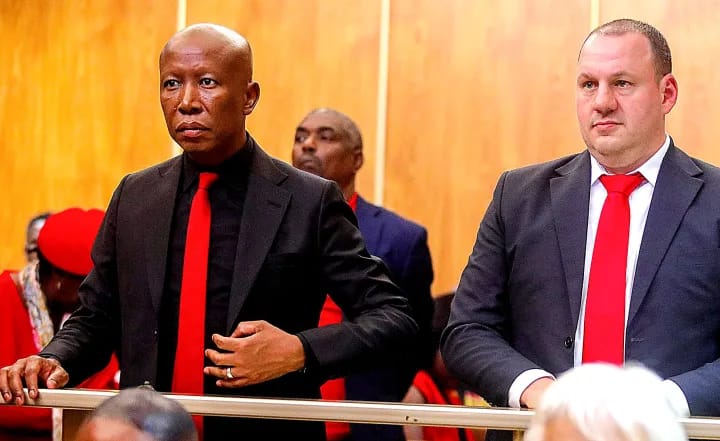
The political and legal future of Economic Freedom Fighters (EFF) leader Julius Malema now hangs in the balance of a sentencing hearing, following his conviction on five firearm-related charges. While the offences carry a daunting minimum prescribed sentence of 15 years’ imprisonment, a complex legal calculus involving judicial discretion, precedent, and the spectre of a political career’s end makes a direct, lengthy prison term highly improbable.
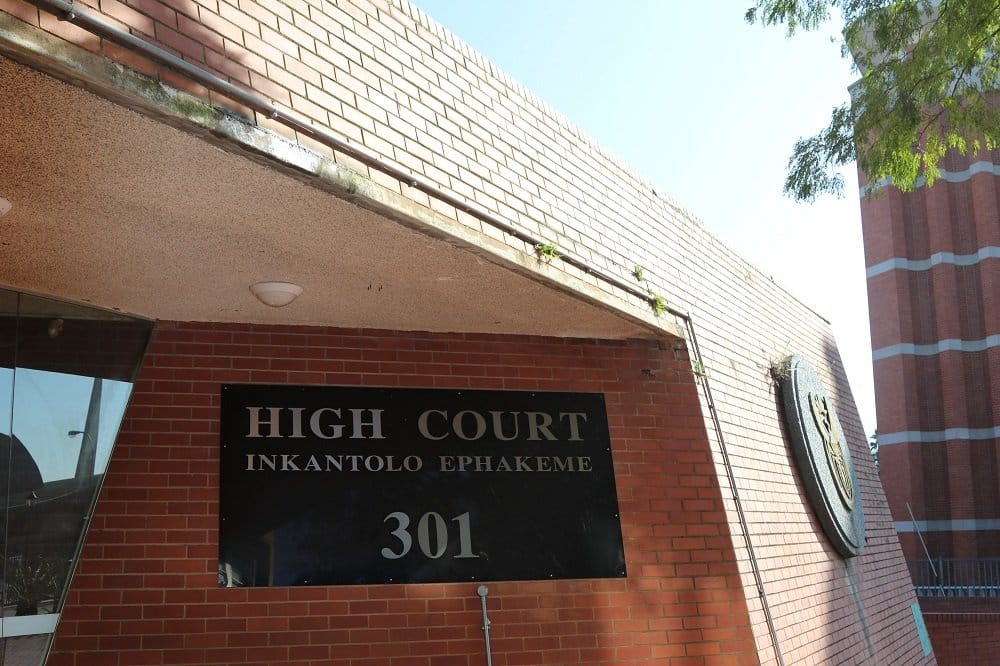
On Wednesday, 1 October 2025, the East London Magistrates’ Court found Malema guilty of the unlawful possession of a firearm and ammunition, discharging a firearm in a built-up area, and reckless endangerment. The convictions stem from the EFF’s 2018 fifth-anniversary celebrations at the Sisa Dukashe Stadium in Mdantsane, where video evidence showed Malema firing an assault rifle into the air from a stage. The court rejected his defence that the weapon was a toy gun loaded with blanks.
The Weight of the Law and the Path to a Lighter Sentence
The Criminal Law Amendment Act prescribes a minimum 15-year sentence for the unlawful possession of a semi-automatic firearm. However, this is not an absolute mandate. Legal experts point to a critical escape clause: the court can impose a lesser sentence if it finds “substantial and compelling circumstances” that justify a deviation.
According to attorney Tyrone Maseko, sentencing is a tripartite balance: the seriousness of the offence, the interests of the community, and the personal circumstances of the accused. “Generally, a first-time offender on a gun charge, in which there was no attempt on anybody’s life, was unlikely to receive a sentence of direct imprisonment,” Maseko told Daily Maverick. He predicts a more likely outcome is a suspended sentence for five years, coupled with a fine, which would only activate if Malema re-offends within that period.
This view is supported by academic research. A 2020 study by Professor Pieter du Toit noted that courts often find the 15-year minimum “unduly harsh” for standalone possession charges unlinked to violent crimes like murder or robbery. While judicial sentiment is hardening, sentences in the range of seven to ten years are more common, with even lighter penalties for cases where the risk of actual harm was lower.
Political Survival and the Court of Public Opinion
The sentencing outcome carries immense political consequences. The South African Constitution stipulates that anyone sentenced to more than 12 months in prison without the option of a fine is ineligible to serve as a Member of Parliament for five years after completing the sentence. Therefore, a direct prison sentence would effectively remove Malema from his parliamentary seat and severely curtail his political platform. A suspended sentence or a fine would allow him to retain his position.
Malema’s conduct outside the courtroom may yet influence the proceedings. Legal analyst Ulrich Roux suggested that Magistrate Twanet Olivier might view Malema’s post-verdict address—in which he accused her of racism and was generally defiant—as a lack of remorse. This could be used to argue that he requires “lengthy rehabilitation,” potentially weighing against a wholly suspended sentence.
For now, the National Prosecuting Authority (NPA) is holding its cards close, with spokesperson Luxolo Tyali stating they will wait for the pre-sentence report and the defence’s mitigating factors before announcing what sentence they will advocate.
Undeterred, Malema has already signalled his intention to fight the conviction itself, vowing to appeal all the way to the Constitutional Court if necessary. This ensures that regardless of the magistrate’s decision on 23 January 2026, the legal and political drama surrounding the EFF leader is far from over.
About The Author