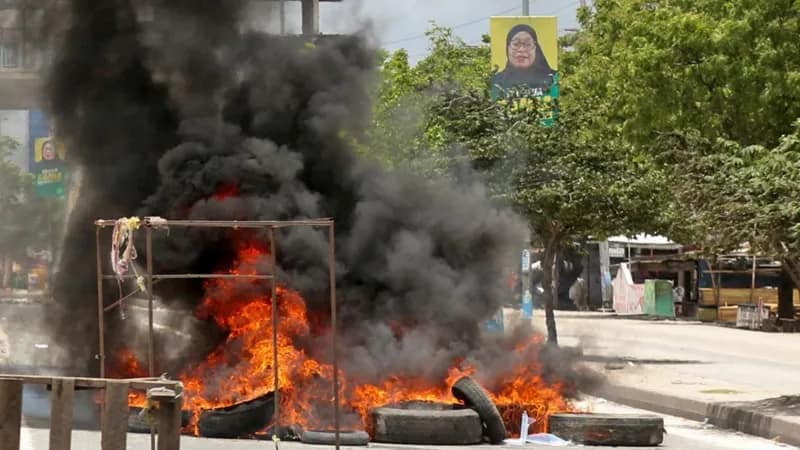
Tanzania has been plunged into a deepening political crisis as widespread protests erupt in major cities, with opposition supporters condemning this week’s presidential and parliamentary elections as a fraudulent “sham.” The unrest, marked by deadly clashes and severe internet restrictions, underscores a dramatic breakdown of democratic processes in the East African nation.
The turmoil escalated on Thursday as the electoral commission began announcing results showing President Samia Suluhu Hassan with a commanding lead—nearly 95% of the vote in one province. This outcome was widely anticipated after the main opposition leader, Tundu Lissu, was jailed on treason charges and another key contender was disqualified on legal technicalities, leaving Samia to face only fringe parties.
Cross-Border Unrest and “Running Battles”
The anger has spilt beyond Tanzania’s borders. In a significant development, hundreds of protesters crossed into Kenya at the border town of Namanga, barricading roads, lighting bonfires, and tearing down posters of President Samia. Kenyan police reported that two people died after fleeing “running battles” with Tanzanian security forces.
Within Tanzania, the situation remains volatile. Gunfire and tear gas were reported in the northern city of Mwanza, while the capital, Dodoma, and the commercial hub, Dar es Salaam, saw heavy security deployments and blocked major roads. An eyewitness in Mwanza described scenes of chaos to the BBC: “After barely 10 minutes, we started hearing gunfire and tear gas explosions… We see some injured people are being evacuated.”
International Condemnation and a Crackdown on Information
The European Union did not mince words, with its lawmakers labelling the election a “fraud” that had been “unfolding for months.” Meanwhile, the Tanzanian government has imposed a night-time curfew in Dar es Salaam and ordered civil servants to work from home as tensions escalate.
Amid reports of casualties and a surge in hospital admissions, a severe internet disruption across the country has raised alarm. Amnesty International warned that restricting information access could further inflame the situation, noting that protesters are now reportedly using walkie-talkie apps to coordinate.
President Samia, who initially won praise for easing repression after taking office in 2021, now faces a formidable challenge to her legitimacy. With the political space having narrowed significantly, this election—described by critics as a “coronation, not a contest”—has ignited a firestorm that threatens the nation’s stability.
About The Author