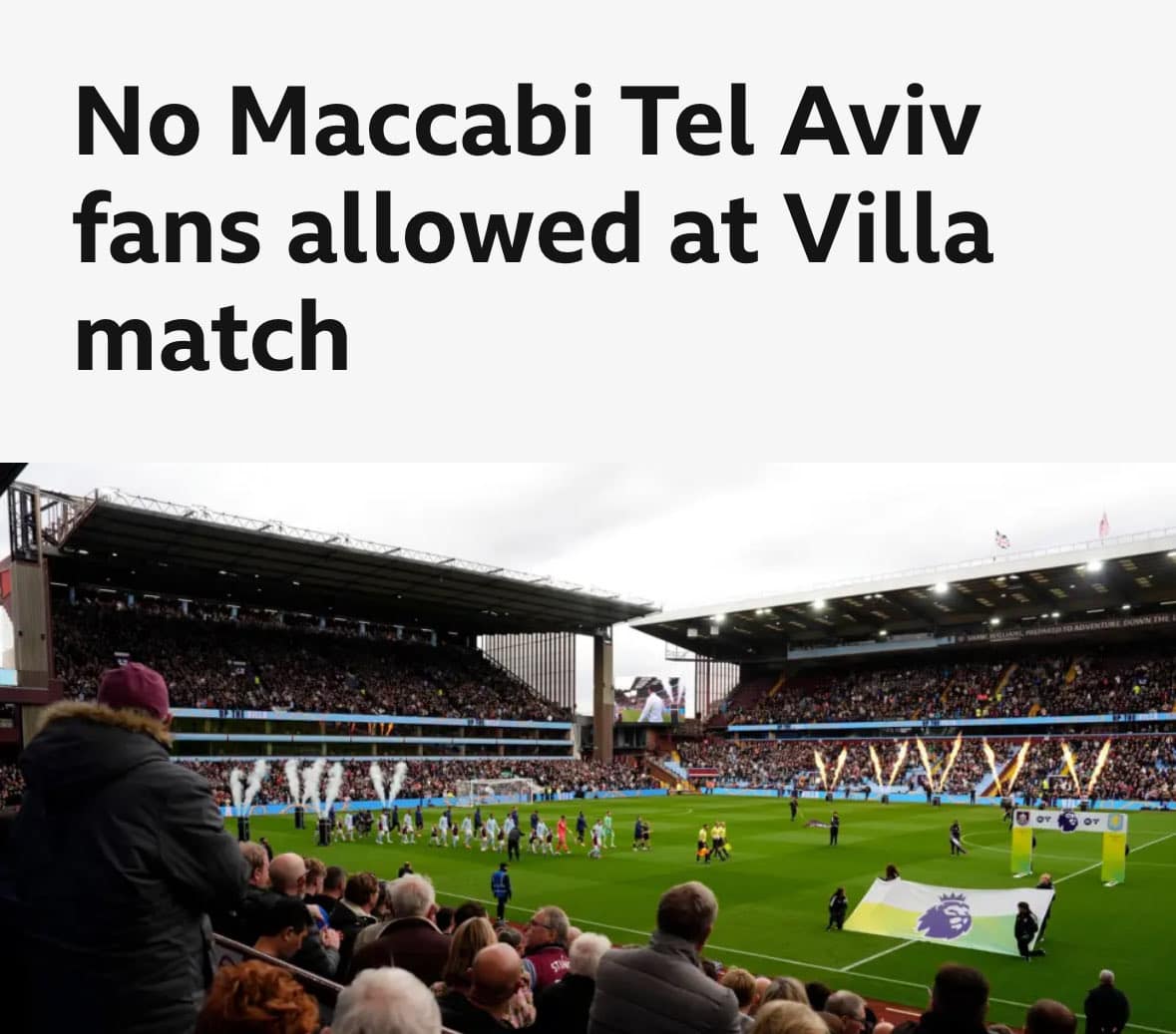
A decision by UK police to bar all Maccabi Tel Aviv supporters from attending an upcoming European football match has ignited a fierce national debate, drawing in the Prime Minister and raising profound questions about the balance between public safety and the fight against antisemitism.
The controversy centers on the UEFA Europa League match between Aston Villa and Maccabi Tel Aviv, scheduled for November 6 at Villa Park in Birmingham. The West Midlands Police force issued the prohibition, stating it was a “necessary and proactive” measure based on specific intelligence. The intelligence indicated a “real and credible threat” of violence and disorder targeting the Israeli club’s supporters, citing the serious clashes that erupted during Maccabi’s previous away game in the Netherlands against AZ Alkmaar. In Amsterdam, rival fans attempted to storm a section where Jewish supporters were gathered, leading to arrests and widespread condemnation.
In a statement, the police force defended its position, arguing that the unique and volatile nature of the threat, exacerbated by the ongoing conflict in the Middle East, made it impossible to guarantee the safety of traveling Maccabi fans using standard security protocols. “This was not a decision taken lightly,” a spokesperson said, “but the safety of all attendees, including home and away supporters, is our paramount concern.”
The ban, however, was immediately met with a powerful and swift backlash. Prime Minister Keir Starmer directly intervened, stating that the decision was “wrong” and vowing to address it. “I have ordered officials to work with the police and relevant authorities to urgently review this decision,” Starmer stated, framing the issue as a matter of principle. “The right of fans to attend football matches without fear of discrimination or violence is fundamental. We cannot allow antisemitism to dictate events in the UK.”
This high-level condemnation was echoed by a rare show of cross-party unity, though with differing emphases. Several MPs from both the Labour and Conservative parties joined Jewish community leaders in condemning the ban as a form of collective punishment that effectively capitulates to the threat of antisemitic violence. They argued that it sets a dangerous precedent where Jewish fans are barred from a public event because of the perceived actions of others.
Conversely, a smaller number of local MPs and community figures publicly supported the police’s difficult position, prioritizing the immediate, tangible risk of violence in Birmingham over the broader symbolic implications. They argued that in a climate of heightened tensions, the primary duty of the police is to prevent physical harm, even if the measures are imperfect and deeply unfortunate.
The situation presents a stark dilemma for UEFA, European football’s governing body, which has strict rules against discrimination. The ban has placed Aston Villa FC in a difficult position, caught between supporting their own local police and upholding the spirit of sporting competition, which includes welcoming away fans.
As the November 6 match date approaches, the UK government’s review adds a layer of high-stakes political pressure. The outcome will be closely watched, not just for its impact on this single fixture, but for the message it sends about how Western nations navigate the intersection of security, free movement, and the protection of Jewish citizens in an increasingly fraught global landscape.
About The Author