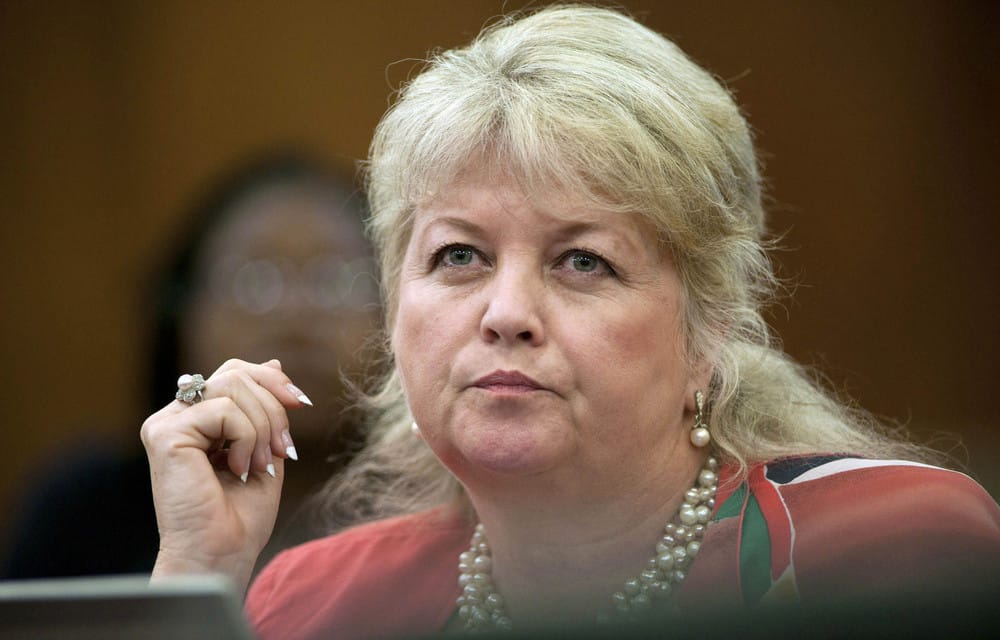
A tense and politically charged confrontation is set to unfold in Parliament on Tuesday as Democratic Alliance (DA) MP Dianne Kohler-Barnard publicly stated she expects an apology from KwaZulu-Natal police commissioner Lieutenant-General Nhlanhla Mkhwanazi, who is scheduled to appear before the Ad Hoc Committee. The anticipated clash stems from explosive allegations made by Mkhwanazi at the Madlanga Commission of Inquiry, which have since ignited a fierce debate over parliamentary oversight, the conduct of senior law enforcement officials, and the boundaries of political accountability.
The roots of the conflict trace back to July, when Lt-Gen Mkhwanazi, during his testimony at the judicial commission chaired by retired Justice Mbuyiseli Madlanga, took the unprecedented step of directly accusing the veteran parliamentarian of serious misconduct. He alleged that Kohler-Barnard had disclosed classified crime intelligence information, thereby breaking the law and acting as part of a “criminal syndicate.” He argued that as a long-serving MP, she should have known to raise her concerns through the confidential channels of the Joint Standing Committee on Intelligence rather than publicly.
These allegations immediately created a firestorm, spilling over into the very parliamentary committee tasked with oversight. Last month, the Ad Hoc Committee became embroiled in a “heated debate” over whether Kohler-Barnard should recuse herself, transforming the body into an arena for a personal and procedural dispute. The controversy raised fundamental questions about potential conflicts of interest and whether such serious public accusations from a senior police figure could intimidate or silence elected officials from performing their constitutional duty of holding the executive to account.
Ahead of the critical session, Kohler-Barnard articulated her position clearly. Speaking to Newzroom Afrika, she expressed her hope that Mkhwanazi would “finally apologise or retract the claim.” She framed the issue as a matter of principle for democratic governance, stating, “Certainly we cannot have SAPS members attempting to shut down parliamentarians doing their job.”
However, revealing her skepticism about a resolution, she added that she was “not holding her breath for an apology.” This expectation of a non-apology sets the stage for a potentially contentious hearing. The outcome will be closely watched, as it carries significant implications not just for the individuals involved, but for the fragile balance of power between South Africa’s law enforcement agencies and its legislative oversight bodies. The confrontation is more than a personal feud; it is a test of whether a senior police official can be held directly accountable by Parliament for public statements made about one of its members.
About The Author