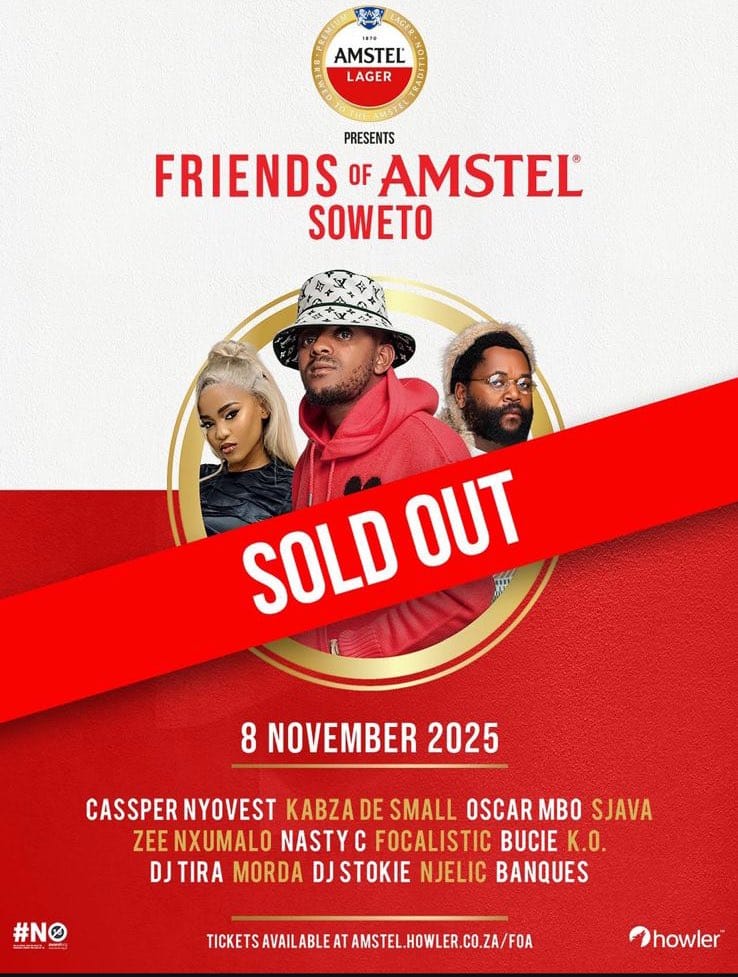
The very soul of Soweto’s social scene was at the center of a fiery public debate this week, as tickets for the highly anticipated Friends of Amstel Soweto 2025 event sold out in a stunning 30 minutes. The unprecedented demand, however, was shadowed by a wave of criticism and disappointment from the very community the event seeks to celebrate, marking a pivotal moment for one of the township’s most beloved brands.
The core of the controversy lies in a fundamental shift in strategy: for the first time, organizers moved from a free-access model to a paid-ticket system, with entry prices starting at R500. This decision has ignited a complex conversation about accessibility, brand loyalty, and the economic realities of modern-day Soweto.
The End of an Era: From Free Jols to Premium Experience
For years, the Friends of Amstel Soweto event has been a cornerstone of the township’s cultural calendar, a premier, high-energy “jol” known for its electric atmosphere, top-tier sound, and a sense of communal access. The announcement of paid entry represents a dramatic departure from this tradition. While organizers have positioned the move as a necessary step towards “enhancing the overall experience and production value,” many longtime fans perceive it as a betrayal of the event’s foundational spirit.
“The spirit of the ‘jol’ is being gentrified,” one social media user commented, a sentiment echoed by many who argue that the R500 price point is exclusionary. “How do you take an event built on the people of Soweto and price them out? We are in a township, not Sandton.”
Economic Reality vs. Brand Ambition
The criticism goes beyond mere nostalgia. Many residents were quick to highlight the stark contrast between the ticket price and the daily economic challenges faced in Soweto, including high unemployment and a rising cost of living. The R500 entry fee, for a significant portion of the community, is not just an expense but a barrier that transforms a communal celebration into a luxury good.
Further fueling the discontent is the event’s lineup. While featuring A-list amapiano and house artists like Njelic, Bucie, and Kabza De Small, it was noted for its significant overlap with past, free iterations of the event. For critics, this raised a pointed question: “Why are we now paying a premium for artists we have seen for free on this very stage before?”
The 30-Minute Sell-Out: Miracle or Marketing Tactic?
The blistering speed of the sell-out itself became a point of contention. While a testament to the event’s enduring popularity, it also sparked skepticism. Amidst the celebratory posts from the brand and successful ticket buyers, a chorus of suspicion emerged online.
Many questioned the authenticity of the sell-out, suggesting it was a marketing ploy to create artificial scarcity or that a substantial portion of tickets had been pre-allocated to influencers, celebrities, and corporate partners, leaving only a limited number for the general public. “Thirty minutes? In this economy? Something doesn’t add up,” tweeted one frustrated fan. “They’ve taken our event and given it to the connected few.”
A Defensive Stand: The Case for Paid Entry
In the face of this backlash, a contingent of supporters defended the new model. Their arguments centered on the belief that paid entry is a sustainable path toward a superior event. They pointed to the potential for improved security, better facilities, more elaborate stage production, and an overall more curated experience, benefits that are often logistically and financially unfeasible with a free, open-access format.
“Nothing of quality is free forever,” argued one commenter. “If we want world-class events in the township, we have to be willing to support them financially. This is progress.”
A Pivotal Moment for Township Events
The Friends of Amstel Soweto 2025 saga is more than a dispute over ticket prices; it is a microcosm of a larger tension playing out in cultural hubs across the country. It pits the grassroots, accessible nature of township culture against the commercial ambitions of the brands that operate within it.
As the debate rages on social media, one thing is clear: the event in November 2025 will be more than just a party. It will be a litmus test. Has Amstel successfully evolved its brand to offer a premium, sustainable experience? Or has it, in the eyes of its most loyal base, alienated the very community that gave the event its iconic status in the first place? The answers will be written not in online comments, but in the atmosphere on the day, and in whether the event can reclaim the unifying spirit that once made it a legend.
About The Author