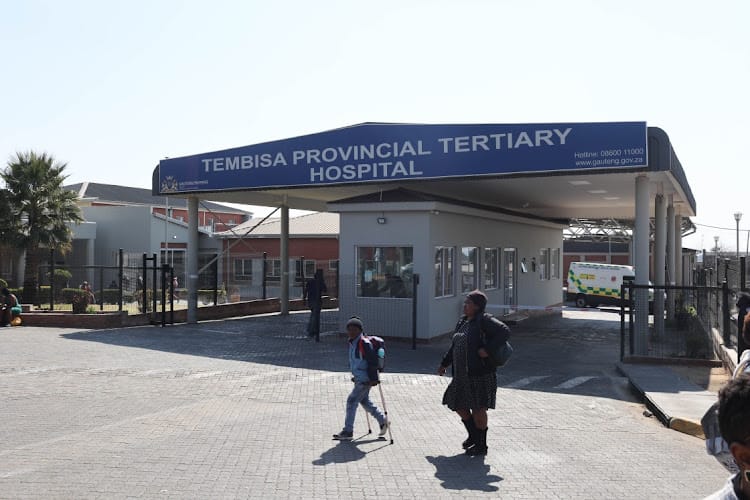
In a whirlwind 72 hours that have shaken South Africa’s political and judicial landscape, a series of seismic events unfolded with a synchronicity that demands scrutiny. As the week began, the nation was on the cusp of several revelations: the SIU’s interim report on the Tembisa Hospital scandal was still under wraps, the South African ambassador to France was alive, and the devastating evidence of the Madlanga Commission had yet to be publicly laid bare. By Wednesday afternoon, the landscape had irrevocably shifted. The SIU report was public, the ambassador was dead in an apparent suicide, and EFF leader Julius Malema was convicted on a seven-year-old firearm charge.
While Malema’s conviction may be the only random coincidence in this sequence, the public release of the SIU’s interim report appears to be a calculated act of political damage control—one with dangerously counterproductive consequences.
Telegraphed Punches and the Art of Hiding Loot
The core failure of the SIU’s strategy lies in its most baffling aspect: why publicly release an interim report? By doing so, the unit has effectively telegraphed its search and seizure plans to the very individuals implicated in the R2 billion looting of Tembisa Hospital. This is not sophisticated detective work; it is a warning shot that allows those with stolen assets to promptly hide their loot, move it offshore, or complexify its paper trail, thereby severely undermining the SIU’s own future efforts to recover public funds.
This misstep is particularly galling given the timeline of the malfeasance. The corruption at Tembisa Hospital dates back to at least 2018. It is a scandal for which Babita Deokaran, a brave whistle-blower, was assassinated in a hail of bullets over four years ago. The SIU’s own investigation is scheduled to continue until 2027. In this context, the decision to issue a public interim report now seems not just premature, but strategically incoherent, sacrificing the element of surprise for a short-term public relations gain aimed at countering the damning narrative emerging from the parallel Madlanga Commission.
A Culture of Impunity and the Urgent Need for an Independent Body
The tragic death of Ambassador Nathi Mthethwa, who was named in the Madlanga testimony, adds a layer of human collateral to this unfolding drama. It underscores the high-stakes environment in which these investigations operate and the desperate lengths to which some may go to avoid accountability.
This entire episode points to a deeper, systemic pathology: a “comradely culture of corruption with impunity.” This culture will only be broken when the state’s capacity to investigate and prosecute is fundamentally restructured, as mandated by the Constitutional Court. The court’s requirement for a single, independent anti-corruption body staffed by specialists and operating entirely outside of executive control has never been more urgent. The current fragmented approach, where units like the SIU may be susceptible to political pressure or poor tactical judgment, consistently proves inadequate against a sophisticated and entrenched network of graft.
The events of this week are not merely a series of unrelated news items. They are interconnected symptoms of a justice system struggling to hold power to account. The SIU’s public report, rather than being a triumph of transparency, may well be remembered as a costly tactical error that protected the corrupt at the expense of the public and the memory of a fallen whistle-blower.
About The Author