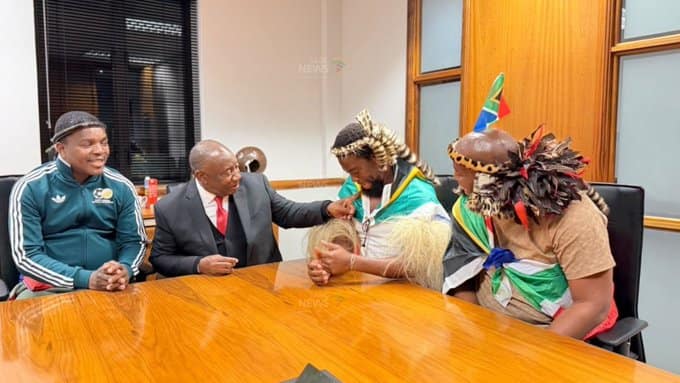
President Cyril Ramaphosa convened a pivotal high-level engagement on Monday, 29 June 2026, in Pretoria, bringing together a diverse coalition of traditional kings, izinduna, and grassroots community leaders from across the nation’s nine provinces. The closed-door session, held at the Union Buildings, was urgently called to address a trio of interlinked crises that have increasingly strained the country’s social fabric: the complex dynamics of migration, escalating public safety anxieties, and the fiercely defended constitutional right to protest.
For nearly four hours, the President listened to impassioned testimonies from leaders representing host communities in Gauteng, the Eastern Cape, and KwaZulu-Natal, who voiced growing frustrations over strained public services, housing shortages, and competition for informal trading opportunities—tensions often flaring along xenophobic fault lines. Traditional leaders, wielding their moral authority as custodians of customary law, urged the government to adopt a more localized, culturally sensitive approach to integration, warning that top-down policies were failing to address grassroots grievances. Simultaneously, community representatives from areas like Diepsloot and Alexandra raised urgent alarms about vigilante groups forming in response to perceived police inaction, a development that threatens to unravel constitutional order.
In his keynote address, President Ramaphosa struck a deliberate, conciliatory tone, acknowledging the legitimate security concerns of citizens while firmly reiterating the constitutional supremacy that guarantees the right to peaceful assembly. He unveiled a proposed three-pillar framework designed to harmonize public order with fundamental freedoms: first, an overhaul of community policing forums to include traditional leaders in conflict mediation; second, a rapid-response task team to investigate and decriminalize socioeconomic grievances that fuel protest; and third, a national dialogue on migration policy that moves beyond punitive measures toward humane, data-driven management. The President emphasized that while the state has a duty to protect all persons and property, it must never do so at the expense of silencing dissenting voices, as robust protest is a cornerstone of South Africa’s hard-won democracy. The meeting concluded with a commitment to establish regional peace committees, ensuring that the voices of traditional custodians and community elders remain central to forging a more inclusive, stable, and just society moving forward.
About The Author