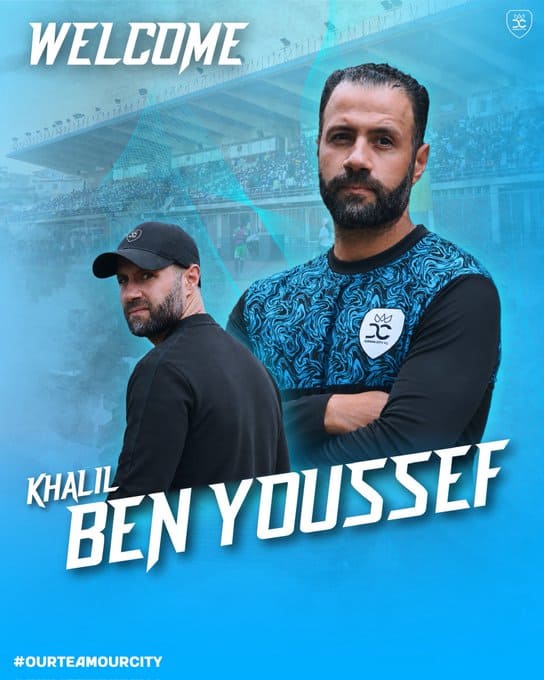
The humid coastal air of Durban carries more than the scent of the Indian Ocean these days—it carries the promise of a new footballing dawn. Durban City FC, a club still basking in the afterglow of a historic promotion and a fairy-tale Cup triumph, has unveiled its latest architect of ambition: Khalil Ben Youssef, a 37-year-old Tunisian tactician whose continental pedigree belies his relatively young age. Announced just hours ago, the appointment marks a bold new chapter for the KwaZulu-Natal outfit, one that signals their intent to not merely survive in the Betway Premiership, but to thrive.
Ben Youssef arrives with a curriculum vitae that reads like a whirlwind tour of African football’s most intriguing outposts. Holding the prestigious CAF A Licence—a credential that places him among the continent’s most qualified coaches—he has plied his trade across Morocco, Tanzania, Tunisia, and Saudi Arabia, absorbing tactical philosophies from North African rigor to East African flair. Most recently, he served as co-coach at Kaizer Chiefs, one of South Africa’s most iconic and demanding clubs, where he navigated the intense pressures of Soweto football and gained invaluable insight into the unique rhythms of the Betway Premiership. That experience, club insiders suggest, was instrumental in his selection, as Durban City’s hierarchy sought a leader who could hit the ground running in the top flight.
The timing of Ben Youssef’s arrival is as dramatic as it is sudden. He steps into the shoes of Pitso Dladla, the beloved coach who etched his name into the club’s folklore by guiding them to promotion and orchestrating a breathtaking 2-1 comeback victory over TS Galaxy in the Cup—a match that will be replayed in fans’ memories for years to come. Dladla’s departure just two days ago sent shockwaves through the squad and the supporter base, leaving many to wonder whether the club could sustain its momentum. In Ben Youssef, however, chairman Farook Kadodia sees not a replacement but an evolution. “Khalil brings a rare combination of technical knowledge and leadership maturity,” Kadodia declared at the unveiling press conference, his voice carrying the weight of a man who knows the stakes. “He understands the African game inside and out, and he has the tactical acumen to elevate our squad. This is a statement of our ambition.”
For his part, Ben Youssef cut a composed figure as he faced the media glare for the first time in his new colours. Speaking with the measured confidence of a coach who has studied the league’s nuances, he acknowledged the enormity of the task ahead but refused to be cowed by it. “I know what this club means to its people,” he said, his words punctuated by a quiet intensity. “Promotion is a dream realized, but survival is not our target. We want to compete, to challenge, to build a squad that reflects the fighting spirit of Durban itself.” With the Betway Premiership season kicking off on 1-2 August, Ben Youssef has little more than a month to assemble a competitive roster, assess his inherited squad, and imprint his tactical philosophy—a race against time that he appears to embrace rather than dread.
Yet questions linger beneath the surface of this optimistic announcement. Can a coach whose career has been a patchwork of short stints across multiple countries truly settle in and build a lasting project? Will the players, who adored Dladla, buy into the methods of a foreign tactician with no prior head-coaching experience in South Africa? And can Durban City, with its modest resources relative to the league’s giants, survive the brutal financial and physical demands of the Premiership? Kadodia, however, brushed aside such doubts with characteristic defiance. “We don’t make decisions to please the critics,” he said. “We make them to win.”
As the clock ticks toward August, the streets of Durban hum with anticipation. The faithful who packed the stadium for that unforgettable Cup comeback now turn their gaze to Ben Youssef, hoping that he can channel the same magic. In a league where foreign coaches have often floundered, the Tunisian stands as an enigma—a gamble, perhaps, but one that the club’s hierarchy believes is worth taking. Only time will tell whether this bold appointment will be remembered as the masterstroke that propelled Durban City into the upper echelons of South African football, or as a cautionary tale of ambition outstripping reality. For now, the stage is set, and Khalil Ben Youssef is ready to write his own script.
About The Author