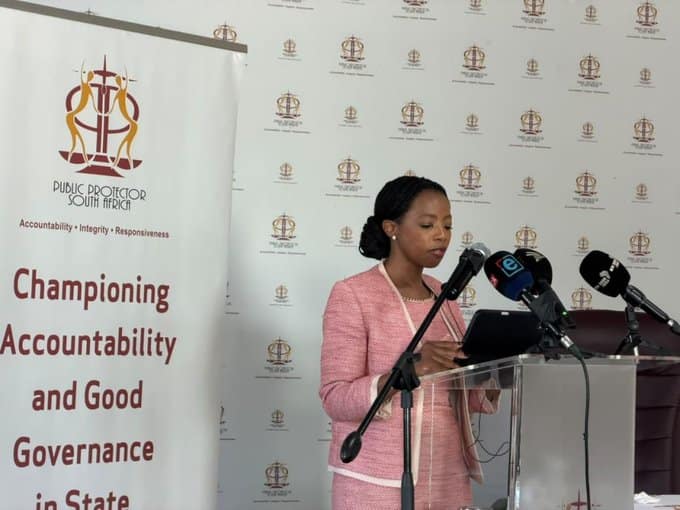
Higher Education and Training Minister Buti Manamela has given his full backing to the Public Protector’s recently released report, which lays bare the systemic and chronic failures plaguing the National Student Financial Aid Scheme (NSFAS), the government’s primary vehicle for funding tertiary education. In a statement issued on Wednesday, Manamela acknowledged that the damning findings come as no surprise, noting that the governance, administrative, and operational deficiencies highlighted in the report have been a persistent source of concern for his office for years.
The Public Protector’s investigation, which followed years of complaints from students, universities, and civil society organizations, detailed a litany of problems, including mismanagement of funds, delays in disbursement of allowances, inadequate oversight of institutional governance, and a lack of accountability for non-performing officials. The report also raised questions about procurement irregularities and the failure to address the scheme’s ballooning debt burden, now standing at over R49 billion.
Manamela, who has been vocal about the need for reform at NSFAS, described the report as a “wake-up call that must not be ignored.” He committed to implementing the Public Protector’s recommendations, including strengthening the board’s governance structures, improving financial controls, and accelerating the transition to a more efficient digital payment system for student allowances. “We cannot afford to fail our students,” Manamela said. “The time for excuses is over. The time for decisive action is now.”
Student representative bodies have welcomed the Minister’s endorsement, but have urged him to move beyond rhetoric and deliver tangible reforms before the start of the 2027 academic year. Opposition parties have also weighed in, calling for a full parliamentary inquiry into NSFAS’s operations. As the Department of Higher Education begins the process of implementing the report’s recommendations, the burden of proof now rests on Manamela to show that this time, the promise of change is more than just another headline.
About The Author