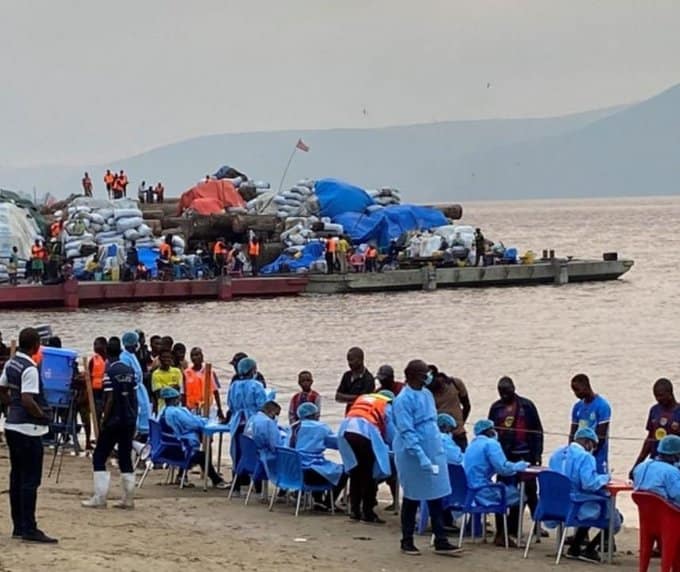
The Democratic Republic of Congo has reached a harrowing new threshold in its ongoing public health emergency, with the Ministry of Health confirming that the Ebola virus has now claimed 2,011 lives since the outbreak was declared just three months ago. The figure, released by the country’s National Institute of Biomedical Research, underscores the unprecedented velocity with which the disease has torn through communities across five provinces, leaving a trail of devastation that has overwhelmed health systems and stretched international response mechanisms to their breaking point.
The latest epidemiological update reveals 4,381 confirmed cases, making this the fastest-spreading Ebola outbreak since the virus was first identified in 1976. Unlike previous epidemics that were largely contained to remote rural areas, this iteration has infiltrated densely populated urban centers, including parts of the capital Kinshasa, dramatically complicating containment efforts. Health officials have cited a combination of factors driving the accelerated transmission: delayed detection, community resistance to vaccination and safe burial practices, and the cross-border movement of infected individuals.
“We are in a race against time,” said a senior World Health Organization official stationed in the region. “The virus is moving faster than our response, and we are running out of oxygen in terms of resources and manpower.” The WHO has deployed hundreds of specialists and dispatched millions of vaccine doses, but logistical hurdles, security challenges, and persistent vaccine hesitancy have hampered the rollout.
As the death toll continues to climb, neighboring countries have heightened border surveillance and vaccination drives, fearing spillover. Meanwhile, humanitarian agencies are pleading for urgent funding to support contact tracing, treatment centers, and community education. For the people of the DRC, the numbers are not just statistics—they are fathers, mothers, children, and communities being erased at a speed that feels almost unimaginable. And with no end in sight, the question is no longer if the outbreak will be contained, but at what cost.
About The Author