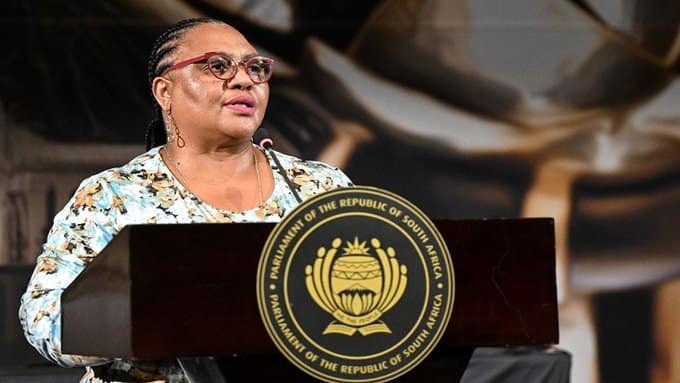
The parliamentary chambers in Cape Town have become the epicenter of a fresh political storm, as National Assembly Speaker Thoko Didiza finds herself squarely in the crosshairs of the Democratic Alliance (DA). The opposition party has launched a blistering attack on Didiza following her controversial decision not to oppose President Cyril Ramaphosa’s urgent court application—a legal maneuver designed to halt the impeachment proceedings that have dogged his presidency since the infamous Phala Phala farm scandal first broke into the public consciousness.
For the DA, Didiza’s passivity is not a procedural footnote but a glaring abdication of her constitutional duties. The party’s leadership argues that the Speaker, as the guardian of parliamentary independence, had a solemn obligation to defend the legislature’s processes against any executive overreach. Instead, by declining to challenge Ramaphosa’s interdict, Didiza has effectively rolled out a red carpet for the President to circumvent accountability, raising troubling questions about whose interests she truly serves. “The Speaker has failed the people of South Africa,” a senior DA official declared, his voice laced with indignation. “She was elected to uphold the integrity of Parliament, not to stand idly by while the executive bulldozes over it.”
The Phala Phala scandal, which centers on allegations that the President covered up a massive cash theft at his game farm and misled authorities, has already inflicted deep wounds on Ramaphosa’s moral authority. The impeachment process, while politically charged, represented for many the last institutional bulwark against a presidency they believed had become too insulated from scrutiny. Didiza’s decision, the DA contends, has stripped that bulwark of its strength, sending a chilling signal that parliamentary sovereignty can be bent to the will of the executive.
Critics have been quick to point out that Didiza’s silence on the matter speaks louder than any speech she could deliver. Some political analysts have even suggested that her move may have been calculated to avoid a direct confrontation with the President, potentially preserving her own standing within the ruling African National Congress (ANC). Yet in the ruthless calculus of South African politics, such pragmatism can easily be mistaken for complicity.
As the legal battle unfolds, the DA has made it clear that it will not let this matter rest. They have vowed to exhaust every parliamentary and legal avenue to ensure that Didiza answers for her decision, and that Ramaphosa’s interdict does not go unchallenged. For a nation already weary of institutional decay, this latest clash is not merely about one scandal or one Speaker—it is about whether the promises of constitutional democracy will hold firm against the weight of political expediency. The eyes of the country, it seems, are fixed firmly on Cape Town, waiting to see if justice will prevail or if the halls of power will once again prove impervious to accountability.
About The Author