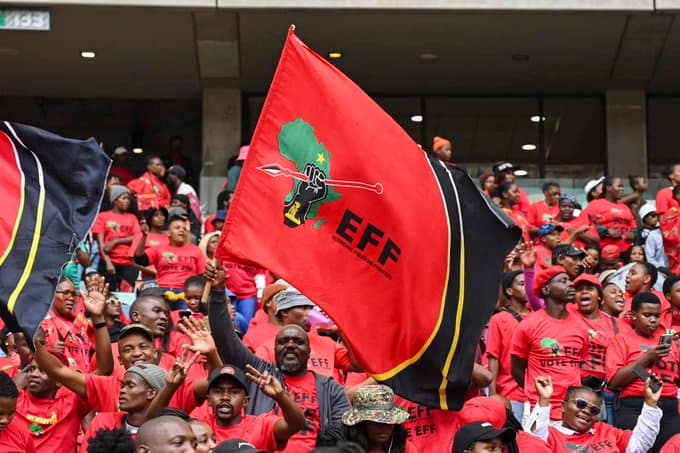
The blistering heat of a Germiston afternoon did little to temper the fiery rhetoric echoing from the EFF’s provincial headquarters. Just hours after the City of Ekurhuleni’s proposed R71 billion budget suffered its third consecutive defeat in council, the red berets gathered to declare a significant political victory. For the EFF, this was not merely a fiscal rejection; it was a damning indictment of what they see as the ANC’s arrogant and ineffective minority rule in one of Gauteng’s most critical municipalities.
The scene outside the council chambers was a spectacle of calculated defiance. EFF members, clad in their trademark red regalia, sang and toyi-toyied, their chants of “Ayisafani” – “it is no longer the same” – slicing through the air. Addressing the crowd, the party’s provincial chairperson, who had led the opposition to the budget, was scathing. He framed the third rejection as a clear signal that the ANC-led administration has lost its moral and political authority to govern. “For three times they have come to us with the same song, a budget that prioritizes the interests of private capital over the hungry children of Wattville and the unemployed youth of Tembisa,” he declared. “They are a minority government pretending to have a mandate, and we are here to remind them that they have none.”
The political battle in Ekurhuleni has been simmering for months, exposing the fragile coalitions that hold the metro together. The ANC, which runs the city with a razor-thin grip, has found itself repeatedly outmaneuvered by a united opposition. For the EFF, the budget’s defeat is a strategic coup, a chance to demonstrate that they are the true guardians of the working class. They argued that the fiscal plan was a recycled document that failed to address the core issues of land, housing, and basic service delivery. “How can you present a budget that keeps the wealthy suburbs of Edenvale swimming in resources while the townships are drowning in potholes and sewage spills?” the chairperson continued, his voice rising over the cheers.
Yet, the triumph is tinged with strategic anxiety. The rejection of the budget paralyzes the city’s ability to function, potentially leading to a shutdown of critical services. The EFF has scored a political point, but the victory is a hollow one if it comes at the cost of the very communities they claim to champion. The party now faces a high-stakes game of chicken: they have successfully blocked the ANC’s plan, but they must now offer a viable alternative or risk being seen as obstructionists. As the sun set over the East Rand, the EFF’s celebration was a stark reminder of the shifting political landscape, where the old guard’s authority is constantly challenged, and every budget vote becomes a referendum on the future of governance.
About The Author