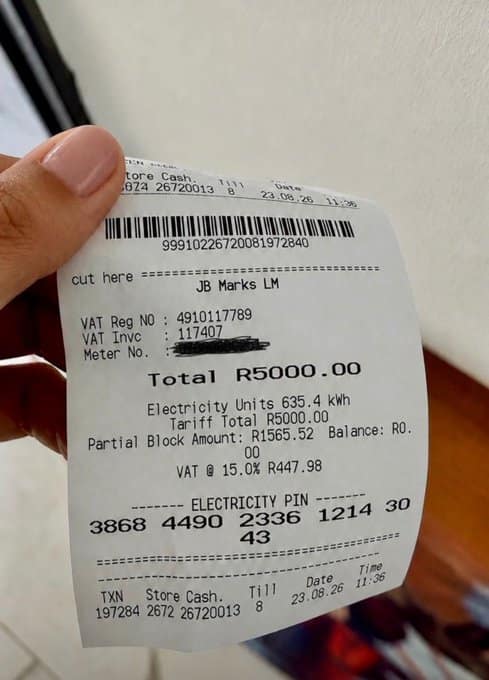
A prepaid electricity receipt from the JB Marks Local Municipality in the North West has become the latest flashpoint in South Africa’s ongoing energy affordability crisis, after a user shared a photo of a staggering R5,000 bill for just 635 kilowatt-hours (kWh) of electricity. The receipt, which quickly went viral on social media, laid bare the punishing reality of the municipality’s inclining block tariff (IBT) structure, where the cost per unit escalates sharply with consumption.
According to the receipt, the first 50 units are charged at a relatively modest R2.06 per kWh, but the price rapidly climbs, exceeding R4.60 per kWh once consumption passes the 600-unit threshold. When value-added tax (VAT) and various municipal service fees are added, the total skyrockets—leaving many households questioning how they can afford to keep the lights on. The post prompted a wave of responses from other residents, many of whom noted that smaller vouchers purchased more frequently offered better value, as they allow users to stay within the lower-cost tariff blocks each month. “Buy just enough to get through the month, and never top up late,” advised one user.
The frustration has also accelerated interest in alternative energy solutions. Photos of newly installed solar panel systems have been circulating alongside the receipt, with many users declaring that the cost of a solar setup is rapidly becoming more attractive than continued reliance on the grid. South Africa’s solar market, already one of the fastest-growing in the world, is projected to expand dramatically through the rest of the decade, driven by tariff hikes, load-shedding, and a growing desire for energy independence.
For now, the JB Marks receipt stands as a stark symbol of the impossible choices facing ordinary South Africans—pay exorbitant rates for inconsistent power, or take on debt to finance a solar future. Either way, the cost of energy is reshaping household budgets, and the breaking point may be closer than anyone imagines.
About The Author