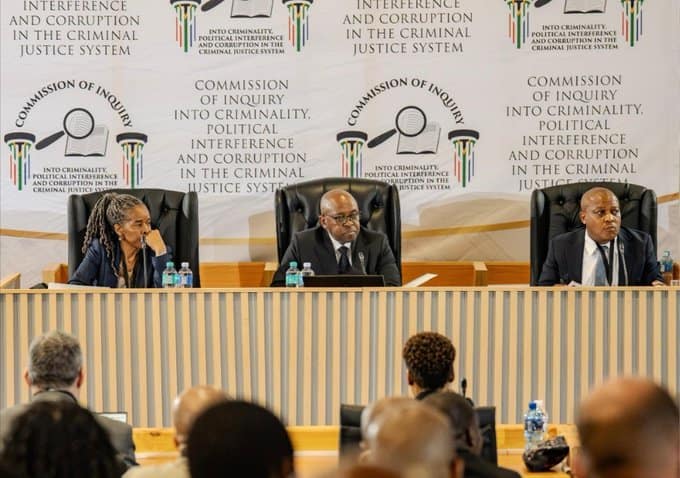
In a development that could have far-reaching implications for South Africa’s ongoing reckoning with institutional corruption, President Cyril Ramaphosa has indicated that he is open to extending the tenure of the Madlanga Commission of Inquiry if its members require additional time to complete their exhaustive investigation. The announcement comes as the commission, which has already sat for several months, continues to unearth deeply troubling allegations of criminal infiltration and systemic rot within the country’s justice system.
The commission, chaired by retired Constitutional Court Justice Zak Yacoob and named after the late Justice Mbuyiseli Madlanga, was established to probe claims that organized crime syndicates and corrupt officials have successfully compromised key pillars of the judiciary and law enforcement. Over the course of its hearings, the commission has heard explosive testimony from whistleblowers, former prosecutors, police officers, and intelligence operatives, painting a grim picture of captured state institutions where case dockets are allegedly manipulated, witnesses silenced, and prosecutions derailed to protect powerful interests.
President Ramaphosa, speaking on the margins of a government event in Pretoria, acknowledged the weight and complexity of the evidence being considered. “We are committed to ensuring that this commission has the space and the time it needs to do its work thoroughly,” the President stated. “If the commissioners come to us and say they need more time to get to the bottom of these serious matters, we will be receptive to that request. Justice must not be rushed.” His remarks have been welcomed by legal experts and civil society organizations, many of whom have expressed concern that a premature conclusion to the inquiry could leave critical threads unresolved and allow perpetrators to evade accountability.
While the commission’s original deadline is still weeks away, speculation has been mounting that an extension will be formally requested, given the voluminous evidence still to be examined and the number of high-profile witnesses yet to testify. The Presidency has not specified how long any extension might be, but Ramaphosa’s willingness to consider the move signals his administration’s determination to see the investigation through to a conclusive and credible end. For a nation still reeling from the state capture era, the commission’s final report is widely seen as a pivotal moment in the fight to restore integrity to South Africa’s battered justice system.
About The Author