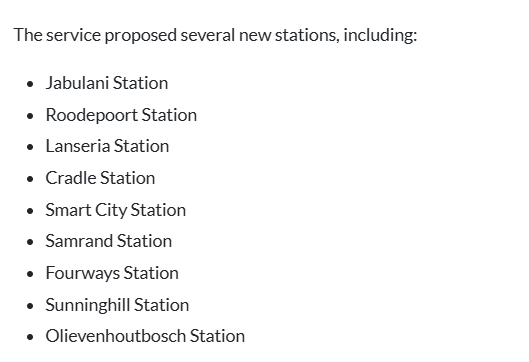
The Gautrain has entered a new chapter in its history, with Sihamba Sonke Mobility officially taking over operations on 28 September 2026 following the conclusion of the original 15-year concession. The new operator, backed by a consortium of heavyweight investors including Old Mutual’s African Infrastructure Investment Managers, Alstom, and RATP Dev, has announced ambitious plans to expand the fleet, enhance service frequency, and extend the network to underserved areas such as Soweto, Roodepoort, and Fourways.
Under the new concession, the fleet will grow from 24 to 32 trains, with a focus on boosting off-peak service, extending operating hours, and improving overall reliability. The expansion is part of the broader Gauteng Rapid Rail network vision, which aims to connect more communities to economic opportunities and reduce reliance on private vehicles. The addition of a station in Jabulani, Soweto, is particularly significant, as it will bring the rapid rail system to one of the province’s most populous townships for the first time.
Commuters have reacted with a mixture of excitement and scepticism. Some have welcomed the promised upgrades and the fact that Sihamba Sonke Mobility is a women-led company, viewing it as a positive step toward transformation in the transport sector. Others have raised questions about the new operator’s rapid formation and recent service disruptions linked to the transition, expressing concern that the changeover could bring instability before improvements materialise.
Officials have moved to reassure the public, promising smooth continuity and a phased approach to the enhancements. “We are committed to delivering a world-class service that meets the needs of Gauteng’s commuters,” a spokesperson said. “The transition has been carefully managed, and we will continue to engage with stakeholders to ensure minimal disruption.”
For daily commuters, the promise of a more reliable, expansive, and modern Gautrain network is an enticing prospect. For the new operator, the challenge is to deliver on those promises while navigating the inevitable teething problems of a major transition. As the first trains under the new concession roll out, all eyes will be on whether Sihamba Sonke Mobility can turn ambition into reality, and whether the Gautrain’s next 15 years will be as transformative as its first.
About The Author