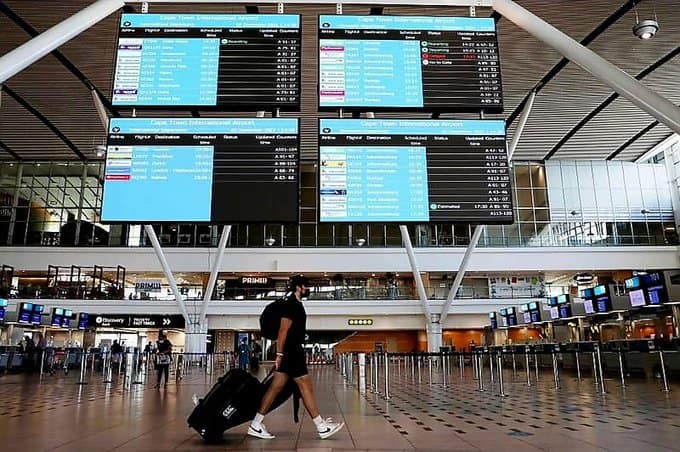
South Africa’s major airports remain mired in what aviation insiders are calling a “systemic crisis” of operational instability, with ongoing flight delays, baggage handling failures, and chronic staff shortages disrupting travel plans daily. Industry experts now warn that without an urgent and sweeping leadership overhaul at key state-owned entities, the situation will continue to deteriorate, causing lasting damage to the country’s economy and global reputation.
The warning follows months of visible dysfunction at OR Tambo International, Cape Town International, and King Shaka International airports, where passengers have faced cascading delays, last-minute gate changes, and extended queues at check-in and security. Data from the Airports Company South Africa (ACSA) for the first quarter of 2026 shows that on-time performance across its hubs has fallen to an average of 64%, one of the lowest rates in a decade.
“A Failure of Governance, Not Just Operations”
Speaking at a transport sector briefing in Sandton on Tuesday, aviation analyst Dr. Noma Mbele did not mince words: “What we are seeing is not a temporary glitch or seasonal pressure. This is a direct result of years of poor governance, unstable executive appointments, and a lack of strategic foresight at both ACSA and the broader aviation administration. The current leadership structures are simply not equipped to run a modern, efficient airport system.”
Mbele pointed to the high turnover in key positions—including the repeated vacancies and acting appointments in the roles of ACSA CEO and Chief Operations Officer—as a primary cause of the operational disarray. “How can you implement long-term infrastructure plans or crisis management protocols when the person in charge changes every 18 months? There is no continuity, no accountability, and no clear mandate.”
Cascading Effects on Tourism and Business
The ongoing instability is hitting South Africa’s economy where it hurts most. The Tourism Business Council of South Africa (TBCSA) reported a 12% increase in complaints from international tour operators in the last six months, many citing airport chaos as a major deterrent for future bookings.
“First impressions matter,” said TBCSA Chairperson, Ms. Thandiwe Nkosi. “When visitors land and are met with hours of delays, lost luggage, and exhausted staff, it colours their entire experience of our country. We are losing repeat visitors and premium tourism business because our gateways are failing.”
Business travel has also been severely impacted, with corporate travel managers reporting a rise in missed meetings and additional costs due to rescheduled flights.
Unions and Staff Voice Frustration
On the ground, airport employees describe a demoralized and under-resourced workforce. A baggage handler at OR Tambo, who asked to remain anonymous, said, “We are working with outdated systems, not enough staff, and constant mixed messages from management. Every day is crisis management. We want to help passengers, but the structure is broken.”
The National Union of Metalworkers of South Africa (NUMSA), which represents many aviation workers, has linked the operational failures to what it calls “corporate governance failures and wasteful expenditure” at the highest levels. “You cannot expect stability on the tarmac when there is instability in the boardroom,” stated NUMSA’s aviation sector coordinator.
Call for an “Aviation Rescue Package”
Experts are now urging the Department of Transport to intervene with what some term an “Aviation Rescue Package.” Key demands include:
- The immediate, transparent appointment of permanent, qualified, and experienced executives at ACSA, backed by clear performance contracts.
- An independent, forensic-style audit of operational bottlenecks and procurement processes within ACSA.
- The establishment of a multi-stakeholder crisis committee, including representatives from airlines, tourism, labour, and ACSA, to develop and monitor a 90-day recovery plan.
- Fast-tracked public-private partnerships to upgrade critical airport infrastructure, particularly baggage handling and digital management systems.
“The solution is not another committee or a reassuring statement,” concluded Dr. Mbele. “It is decisive, skilled leadership and a commitment to run our airports as the critical national assets they are, not as sites of political patronage or administrative neglect. Until that changes, the delays, the frustration, and the economic damage will only continue.”
Passengers are advised to allow for significantly extended pre-flight times and to monitor flight status closely as the situation remains fluid.
About The Author