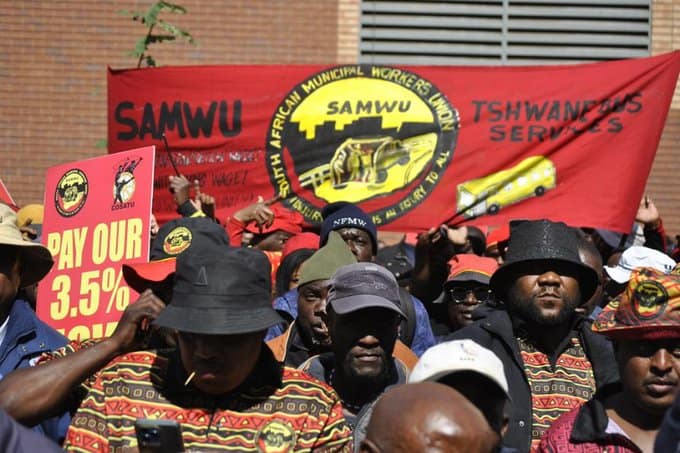
The industrial action that has brought the uMsunduzi Municipality to a grinding halt shows no signs of abating, as the South African Municipal Workers Union (SAMWU) digs in its heels and vows to continue the strike indefinitely until its members’ demands are met. The union, representing thousands of municipal workers across the region, has adopted an unwavering stance, declaring that the protest will persist until the city’s leadership delivers a satisfactory response to their grievances over unfair pay and the lack of proper job grading.
Pietermaritzburg, the administrative heart of KwaZulu-Natal, has become a battleground of chants, placards, and silent municipal offices as workers downed tools weeks ago, leaving essential services in disarray. Refuse collection has ground to a halt, piling up in the streets and posing a health hazard to residents. Water and electricity repair services have been severely curtailed, and frustrated citizens have found themselves caught in the crossfire of a labour dispute that shows no sign of resolution. SAMWU representatives have been adamant that the strike is not merely a demand for higher wages but a fight for dignity and fairness. The union has accused the municipality of using outdated and opaque job grading systems that leave workers performing complex duties while being paid for far lower-ranked positions. “We are tired of being treated as second-class employees when we are the backbone of this city’s operations,” said a union official, speaking through a loudhailer to a crowd of cheering strikers.
Despite multiple rounds of negotiations, the municipality and the union remain deadlocked. The city’s leadership has cited budgetary constraints and competing financial pressures, while SAMWU accuses the administration of mismanagement and a lack of political will. “We have been patient. We have followed every process. But enough is enough,” the union official added, as workers sang struggle songs that echoed through the streets of the city.
The prolonged strike has drawn sharp criticism from local businesses, which have seen their operations disrupted, and from residents who are growing increasingly impatient. The city has attempted to hire temporary workers to maintain essential services, but SAMWU has picketed these sites, warning that such attempts constitute union-busting and will be met with fierce resistance. As the strike drags on, the economic and social costs mount. The uMsunduzi Municipality faces the prospect of a deepening crisis, with the potential for further violence and public anger. SAMWU has made its position crystal clear: there will be no retreat until fair pay and proper job grading are secured. For now, the streets of Pietermaritzburg remain a stage for defiance, and the long wait for a breakthrough continues.
About The Author