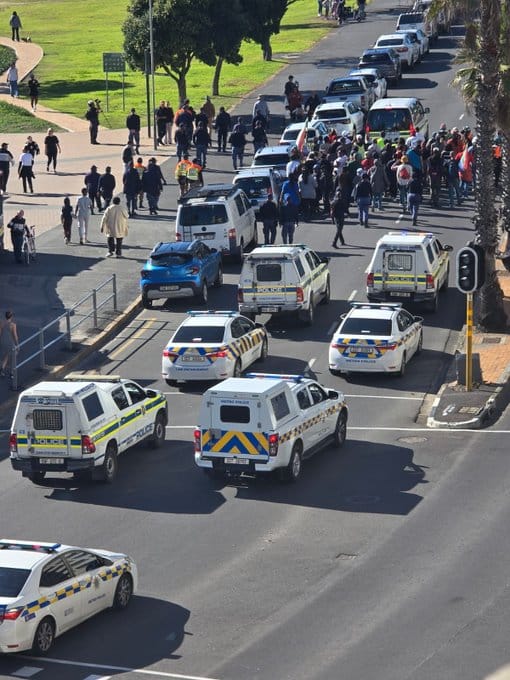
The usually serene seaside suburb of Sea Point, known for its sweeping ocean views and tranquil promenades, was transformed into a tense theater of protest on Tuesday as hundreds of demonstrators from the militant March and March movement took to the streets. The air was thick with chants and the rhythmic beat of toyi-toyi, but overshadowing the cacophony was an unmistakable, heavy police presence that signaled just how high the stakes had become for this picturesque Cape Town enclave.
Clad in full riot gear, officers from the South African Police Service lined the main thoroughfares, their armored vehicles parked strategically at every major intersection. The show of force was not merely theatrical; it was a direct response to the inflammatory nature of the protest’s central demand. The March and March movement, which has gained notoriety for its hardline stance on immigration, mobilized its supporters to call for tougher, more aggressive action against undocumented foreign nationals residing in the country. Banners reading “Our Jobs, Our Future” and “Secure Our Borders” were hoisted high, while others bore more provocative slogans that drew sharp criticism from human rights observers.
For hours, the march snaked its way through the suburb, with protesters waving placards and delivering fiery speeches at designated stopping points. The atmosphere was charged but largely peaceful, thanks in no small part to the meticulous planning of law enforcement. Police helicopters buzzed overhead, monitoring the crowd’s movements, while rapid response units remained on standby to quell any potential flare-ups. Local business owners along the route boarded up their windows, and residents watched from behind drawn curtains, uncertain of what the demonstration might unleash.
The march, however, is just the visible tip of a much deeper and more divisive national conversation. South Africa has long grappled with xenophobic violence and tensions between citizens and foreign nationals, many of whom run small businesses and contribute to the informal economy. Critics of the March and March movement accuse it of fueling hatred and inciting vigilantism, while its supporters argue that the government has failed to enforce immigration laws, leading to overcrowding and competition for scarce jobs in a country battling near-record unemployment.
As the sun dipped below the horizon and the protesters began to disperse, the heavy police presence remained, a stark reminder that while the march may have ended, the underlying frustrations have not. For the residents of Sea Point, the sound of chanting and sirens echoed long into the night, leaving behind a community shaken by the political storm that had washed ashore. The debate over immigration in South Africa is far from settled, and if Tuesday’s protest is any indication, the battle lines have only been drawn sharper.
About The Author