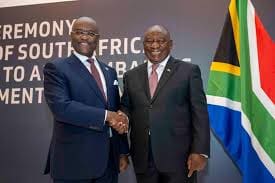
In a strategic move signaling a profound deepening of its economic commitment to the African continent, South Africa has formally elevated its partnership with the African Export-Import Bank (Afreximbank) by becoming a Class A shareholder. The milestone was sealed during a high-level signing ceremony at the Department of International Relations and Cooperation on Tuesday, positioning the continent’s most industrialized economy at the core of Africa’s premier trade finance institution.
The upgrade, which entails a substantial capital contribution, moves South Africa from a lower shareholder class into the bank’s most influential tier—alongside founding and major contributors such as Nigeria, Egypt, and Algeria. This grants Pretoria greater voting power, enhanced access to the bank’s vast financial instruments, and a stronger voice in shaping the institution’s strategic direction.
A Strategic Lever for Industrial Growth and Trade
Officials hailed the move as a direct catalyst for South Africa’s industrial ambitions, particularly under the government’s renewed focus on economic diplomacy and the African Continental Free Trade Area (AfCFTA).
“This is not merely a financial transaction; it is a strategic investment in our own industrial future and in the integrated growth of our continent,” declared the Minister of Finance, who presided over the signing alongside senior officials from Afreximbank. “By moving into Class A, we are unlocking a powerful toolkit to de-risk cross-border trade, finance critical infrastructure, and support our exporters and manufacturers in accessing new African markets.”
The partnership is expected to deliver tangible benefits across several key sectors:
- Export Finance: South African companies, especially in manufacturing, agro-processing, and value-added services, will gain improved access to Afreximbank’s trade facilitation programmes, including buyer credits, supplier credits, and export development finance. This is pivotal for businesses looking to scale across the AfCFTA’s single market.
- Infrastructure Development: The bank’s project finance and advisory services will be more readily available for strategic regional infrastructure projects involving South African firms, particularly in energy, transport, and digital connectivity.
- Localization and Value Chains: The move supports South Africa’s objective to position itself as a hub for continental value chains. Afreximbank’s funds can be leveraged to bolster local industrial capacity that serves regional markets, moving beyond raw material exports to finished goods.
- Crisis Buffer: As a major shareholder, South Africa enhances its ability to collaborate with the bank in responding to continental economic shocks, leveraging instruments like the bank’s Crisis Response Facility.
Afreximbank’s Expanding Role and Mutual Benefit
For Afreximbank, South Africa’s elevated commitment represents a significant endorsement and strengthens its capital base for ambitious continental initiatives. The bank has been at the forefront of developing the Pan-African Payment and Settlement System (PAPSS), a critical platform for reducing dollar-dependency in intra-African trade, a system South African businesses are now poised to integrate with more deeply.
“The commitment by South Africa marks a new chapter in our collaboration,” said Prof. Benedict Oramah, President and Chairman of the Board of Directors of Afreximbank. “South Africa’s industrial and financial sophistication, combined with Afreximbank’s continental reach and specialized instruments, creates a formidable partnership. Together, we can accelerate the industrialization of Africa and the integration of its markets.”
A Calculated Move in a Competitive Landscape
Analysts view the decision as a calculated and necessary step in a rapidly evolving geo-economic landscape. As global powers and other emerging economies deepen their engagement with Africa, South Africa is leveraging institutional partnerships to maintain its competitive edge and secure its position as a gateway for investment and trade.
“This shores up South Africa’s ‘Pivotal State’ strategy in Africa,” noted political economist Dr. Mzo Dlomo. “It provides Pretoria with greater structural influence in the financial architecture of African trade. The real test, however, will be in how effectively the government and private sector can utilize these new levers to drive tangible job creation and industrial diversification at home.”
The signing ceremony concluded with a commitment to establish a joint technical committee to fast-track the implementation of co-financed projects and market the new opportunities to South Africa’s business community. As the ink dries on the agreement, the focus shifts to execution, with the nation’s industrial and export sectors watching closely for the promised infusion of growth and partnership.
About The Author