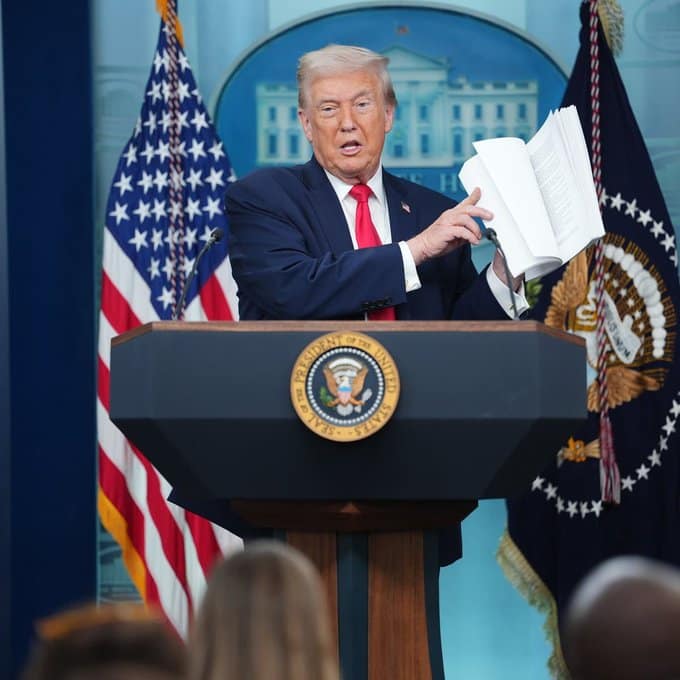
In a remarkable and sprawling display of his unfiltered political persona, former President Donald Trump held court in the White House briefing room for a marathon 105-minute session on Tuesday, marking the one-year anniversary of his unprecedented return to office. The event, part victory lap, part grievance airing, and part policy pronouncement, defied all modern norms for presidential communication, offering a raw and combative snapshot of a leader wholly confident in his own narrative.
A Stage for Self-Proclaimed Triumphs
Trump opened the session not with a prepared statement on policy, but with a litany of self-praise for his administration’s first year back. He pointed to stock market indices, which he claimed had reached “unthinkable” heights since his inauguration, and took credit for what he called “the greatest border security in history,” citing his administration’s aggressive deportation operations and the rapid completion of sections of the border wall.
“They said it couldn’t be done,” he declared, leaning on the podium. “They said the comeback was impossible. But here we are. America is winning like never before. Our enemies are on the run, our economy is the envy of the world, and we have restored respect in the halls of power.”
Divine Endorsement and the “Fight Against the Deep State”
The briefing’s most headline-grabbing moment came midway through, when a reporter asked about the tenor of his leadership and the intense opposition he still faces. Trump’s response moved swiftly from the political to the profoundly personal and spiritual.
“You know, I look at what we’ve accomplished against the most corrupt and vicious people you can imagine—the deep state, the fake news, the radical left—and I have to say, I think God is very proud of the job I’ve done,” he stated, to a mix of stunned silence and murmured reactions in the room. “We are fighting against true evil. We are saving this country from the abyss. And I believe, truly, that we have a divine mission to complete.”
This assertion of heavenly favor became the central theme he returned to repeatedly, framing his political battles not as mere policy disputes but as a moral and spiritual crusade.
Settling Scores and Issuing Threats
The latter half of the briefing devolved into a familiar series of rants and recriminations. He launched sharp, ad hominem attacks on political foes, both domestic and international.
- On Domestic Opponents: He labeled the ongoing investigations into his conduct as a “witch hunt orchestrated by jealous failures,” specifically naming prosecutors and judges involved. He revived old nicknames for political rivals, calling them “weak,” “crooked,” and “pathetic.”
- On International Allies: In a segment that drew immediate concern from foreign policy analysts, Trump issued stark warnings to long-standing NATO partners, reiterating his stance that the U.S. would not defend nations he deemed to be “delinquent” in their defense spending. He also leveled fresh criticism at Ukraine, suggesting the war with Russia could have been “settled immediately” if not for U.S. interference, and praised President Vladimir Putin as a “very smart” leader.
- On the Media: He engaged in heated back-and-forths with reporters from outlets he frequently disparages, cutting them off, labeling their questions “stupid,” and declaring, “You are the enemy of the people, and the public knows it.”
A Calculated Performance or Unmanaged Id?
Political analysts were divided on the strategic intent behind the unprecedented length and tone of the event.
Dr. Evelyn Sharpe, a presidential historian, noted, “This was not a briefing designed to convey information or govern. This was a campaign rally staged in the people’s house. It served to energize his base by reinforcing the ‘us versus them’ narrative, portraying himself as a divinely-backed warrior besieged by corrupt elites. The length itself is a power move—a demonstration that he controls the narrative and the stage, regardless of convention.”
However, Mark Jennings, a former White House communications director for a Republican administration, saw danger. “There is no control, no message discipline. While his core supporters may love it, these unmoderated rants—threatening allies, alienating independent institutions, and claiming God’s personal endorsement—create profound instability. Allies question our commitments, markets dislike uncertainty, and it fuels the very legal and political fires he claims are persecuting him.”
The Aftermath and the Path Forward
The briefing ended abruptly with Trump declaring, “We’ve done enough today. You have it all. A great year. Thank you,” before turning and exiting without taking the final questions shouted by the press corps.
The fallout was immediate. Editorial boards condemned the performance as “unpresidential and dangerous.” Theological figures from across the spectrum questioned the propriety of claiming divine pride in one’s political work. Diplomatic cables from European capitals likely hummed with renewed anxiety.
Yet, within hours, clips of Trump declaring “God is very proud” and lambasting the media were trending across social media, curated and amplified by his campaign apparatus. For his supporters, the briefing was not a scandal but a testament to a leader who fights, unfiltered and unafraid, against what they see as a corrupt system.
The 105-minute spectacle underscored that the second Trump term operates by its own rules, blending governance, grievance, and self-mythology into a potent political force. It cemented a style of leadership where the traditional boundaries between state, campaign, and personal identity have not just blurred, but have been deliberately erased. As the nation heads into another election cycle, this briefing served as a potent reminder that for Donald Trump, the political and the personal—and now, the spiritual—are one and the same.
About The Author